Skip to content

Lesson 10/10 · 15 words · 0 learned

Urinary and reproductive organs

  1. 1

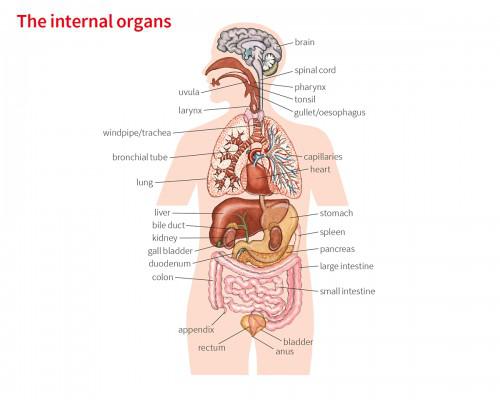
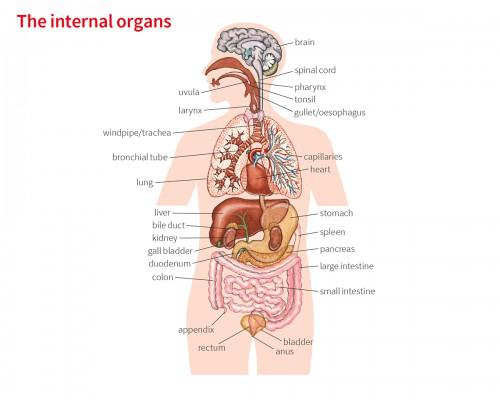
    bladder(noun)

    /ˈblædər/

    the hollow muscular organ in the pelvis that stores urine until it is passed

    A catheter was inserted to drain the bladder.

    Bladder infections are more common in women than in men.

    Synonymsvesicacyst
    AntonymsNone (no direct antonym)
  2. 2

    endometrium(noun)

    /,endə'mi:trjəm/

    the inner lining of the uterus, which thickens each month and is shed during menstruation

    The endometrium thickens each month in preparation for pregnancy.

    Bleeding after menopause may be a sign of disease of the endometrium.

    Synonymsuterine lininguterine mucosa
    Antonymsmyometrium
  3. 3

    kidney(noun)

    /ˈkɪdni/

    one of the two bean-shaped organs at the back of the abdomen that filter waste from the blood and make urine

    Patients with advanced chronic kidney disease may eventually require dialysis.

    The ultrasound showed a stone in the left kidney.

    Synonymsrenal organ
  4. 4

    ovary(noun)

    /ˈəʊvəri/

    one of the two female organs that produce eggs and the hormones estrogen and progesterone

    A cyst was found on her left ovary.

    After menopause, the ovaries stop releasing eggs each month.

    Synonymsfemale gonadegg sac
    Antonymstestis
  5. 5

    prostate(noun)

    /ˈprɑːsteɪt/

    a small gland below the male bladder that surrounds the urethra and produces part of the semen

    An enlarged prostate is common in older men.

    A PSA blood test helps to detect prostate cancer.

    Synonymsmale glandprostatic gland
    AntonymsN/A
  6. 6

    testicle(noun)

    /ˈtestɪkl/

    one of the two male organs in the scrotum that produce sperm and testosterone; also called a testis

    Any painless lump in a testicle should be checked by a doctor.

    Sudden severe pain in a testicle may be caused by torsion.

    Synonymsballgonadstone
    Antonymsuterusovary
  7. 7

    ureter(noun)

    /ˈjʊrədər/

    one of the two tubes that carry urine from the kidneys to the bladder

    A small stone was stuck in the right ureter.

    The surgeon took care not to injure the ureter during the operation.

    SynonymsNone applicable - it's a specific anatomical term
    AntonymsNone applicable - it's a specific anatomical term
  8. 8

    urethra(noun)

    /jʊˈriːθrə/

    the tube that carries urine from the bladder out of the body

    An enlarged prostate can press on the urethra and slow the flow of urine.

    The catheter is passed through the urethra into the bladder.

    Synonymsurinary canalurinary passage
  9. 9

    uterus(noun)

    /ˈjuːtərəs/

    the hollow muscular organ in a woman's pelvis where a baby develops before birth; the womb

    The ultrasound showed fibroids in the wall of the uterus.

    The uterus contracts strongly and regularly during labor.

    Synonymswomb
  10. 10

    cervix(noun)

    /ˈsɜːrvɪks/

    the narrow lower part of the uterus that opens into the vagina

    A smear test checks for abnormal cells in the cervix.

    The cervix dilates to about ten centimeters during labor.

    Synonymsneck of the wombuterine cervix
  11. 11

    nephron(noun)

    /ˈnefrɑːn/

    one of the tiny filtering units in the kidney that remove waste and form urine

    Each healthy kidney contains about one million nephrons.

    Long-term high blood pressure gradually damages the nephrons.

    Synonymsrenal tubulekidney tubule
    AntonymsNone
  12. 12

    glomerulus(noun)

    /ɡləˈmerjələs/

    a tiny ball of capillaries in each nephron where blood is filtered; plural glomeruli

    Blood is filtered as it passes through the glomerulus.

    Inflammation of the glomeruli can cause blood and protein in the urine.

  13. 13

    urinary tract(noun)

    /ˈjʊərɪnəri trækt/

    the system of organs that make, store and pass urine: the kidneys, ureters, bladder and urethra

    Urinary tract infections are especially common in women.

    A CT scan of the urinary tract showed no stones.

  14. 14

    fallopian tube(noun)

    /fəˌləʊpiən ˈtjuːb/

    one of the two tubes that carry eggs from the ovaries to the uterus

    Fertilization usually takes place in the fallopian tube.

    An ectopic pregnancy most often develops in a fallopian tube.

  15. 15

    vas deferens(noun)

    /ˌvæs ˈdefərenz/

    the tube that carries sperm from the testicle towards the urethra

    In a vasectomy, each vas deferens is cut and sealed.

    The vas deferens can be felt in the scrotum as a firm cord.