Lezione 4/10 · 15 parole · 0 imparate
Bones and joints
Ossa e articolazioni
cartilagine
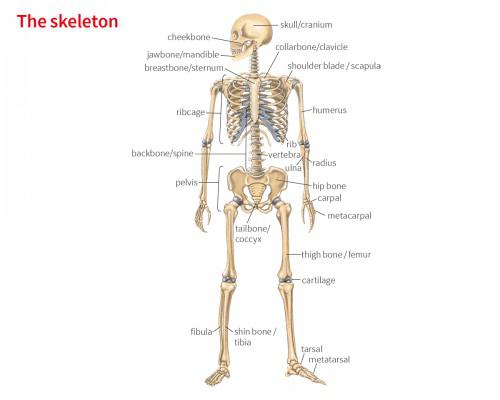
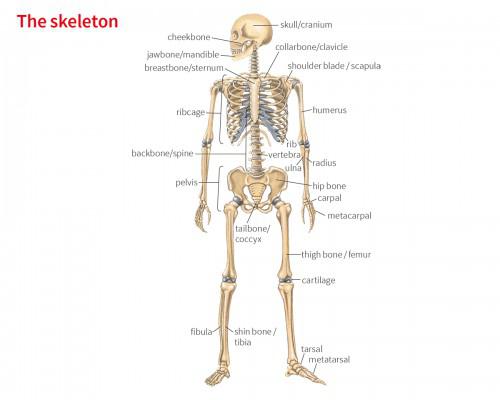
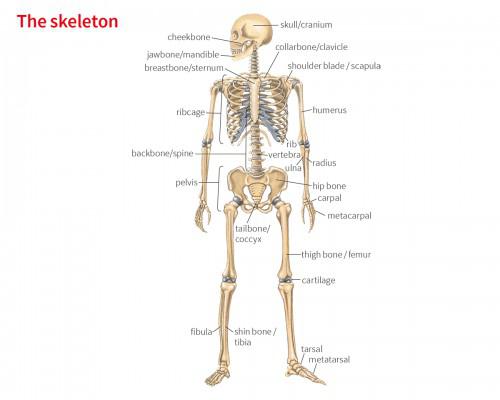
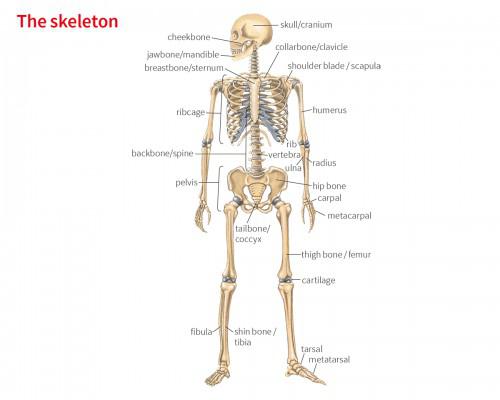
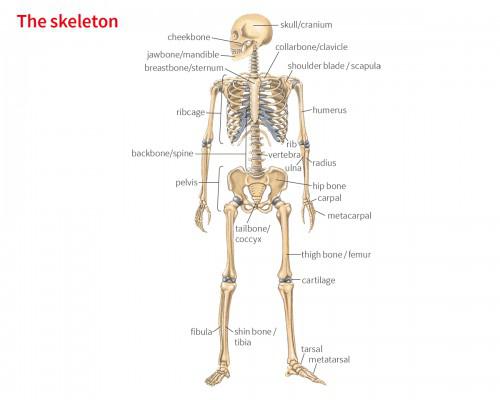
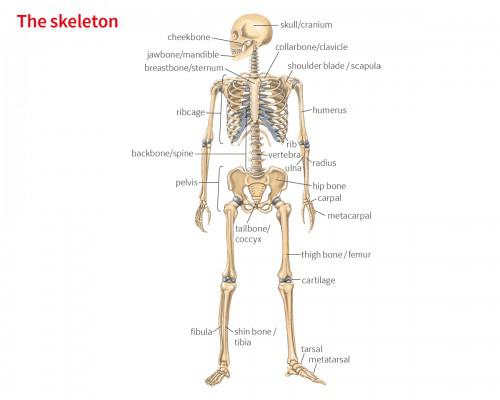
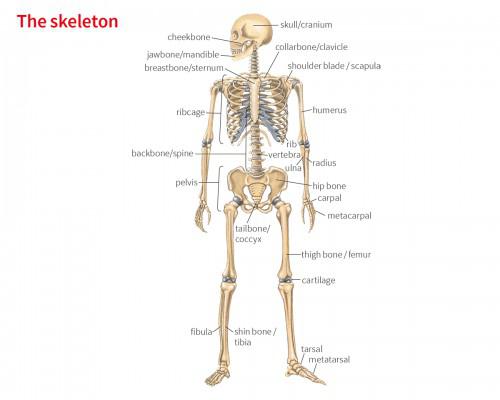
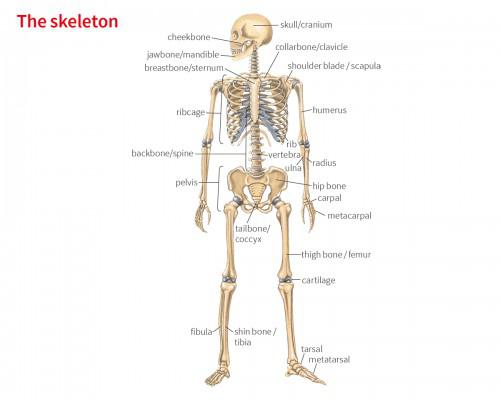
strong, flexible tissue that covers the ends of bones in joints and forms parts such as the nose and ears
In osteoarthritis, the cartilage in the joint gradually wears away.
Nell'artrosi, la cartilagine dell'articolazione si consuma gradualmente.
He tore the cartilage in his knee while playing football.
Sinonimigristleelastic tissueContrariboneclavicola
the collarbone, a long bone that joins the breastbone to the shoulder blade
A fall onto the shoulder commonly fractures the clavicle.
Una caduta sulla spalla provoca comunemente la frattura della clavicola.
The subclavian vein runs just beneath the clavicle.
SinonimicollarboneContrariNone (as there is no direct antonym for a specific bone)femore
the thigh bone, the longest and strongest bone in the body
Elderly patients with osteoporosis often fracture the neck of the femur.
I pazienti anziani con osteoporosi spesso si fratturano il collo del femore.
The femur connects the hip joint to the knee joint.
Sinonimithigh boneomero
the long bone of the upper arm, between the shoulder and the elbow
The child fell and broke the humerus just above the elbow.
Il bambino è caduto e si è rotto l'omero appena sopra il gomito.
The radial nerve runs in a groove along the back of the humerus.
Sinonimiupper arm boneContrariulnaradiuslegamento
a strong band of tissue that connects bones to each other at a joint
She tore the anterior cruciate ligament in her right knee.
Si è rotta il legamento crociato anteriore del ginocchio destro.
Ankle sprains happen when the ligaments are stretched too far.
Sinonimitendonconnective tissueContrarimusclebonebacino
the ring of bones at the base of the spine that supports the trunk and connects it to the legs
A fractured pelvis can cause major internal bleeding.
Una frattura del bacino può causare una grave emorragia interna.
The female pelvis is wider than the male pelvis.
Sinonimihip bonebony pelvisContrarinonescapola
the shoulder blade, a flat triangular bone at the upper back that connects the arm to the trunk
The scapula moves when you raise your arm above your head.
La scapola si muove quando si solleva il braccio sopra la testa.
Fractures of the scapula are rare and usually caused by major trauma.
Sinonimishoulder bladecranio, teschio
the bony structure of the head that encloses the brain and supports the face
The CT scan showed a fracture at the base of the skull.
La TC ha mostrato una frattura alla base del cranio.
A newborn's skull has soft spots that close during the first two years.
SinonimicraniumheadbraincaseContraribodyskeletonsterno
the long flat bone in the center of the chest to which the ribs are attached; the breastbone
During CPR, press down firmly on the lower half of the sternum.
Durante la RCP, premere con decisione sulla metà inferiore dello sterno.
Open heart surgery usually requires cutting through the sternum.
Sinonimibreastbonetibia
the larger of the two bones of the lower leg; the shinbone
The tibia carries most of the body's weight in the lower leg.
La tibia sostiene la maggior parte del peso corporeo nella parte inferiore della gamba.
An open fracture of the tibia needs urgent surgery.
SinonimishinboneContrarifibulavertebra
one of the small bones that are joined together to form the spine; the plural is vertebrae
The X-ray showed a compression fracture of the first lumbar vertebra.
La radiografia ha mostrato una frattura da compressione della prima vertebra lombare.
Each vertebra has a central opening through which the spinal cord passes.
Sinonimispinal bonebackbone elementContrarinonemidollo osseo
the soft tissue inside many bones where blood cells are made
A bone marrow sample was taken from the back of the hip bone.
È stato prelevato un campione di midollo osseo dalla parte posteriore dell'osso iliaco.
Leukemia is a cancer that starts in the bone marrow.
Sinonimimarrowcolonna vertebrale, rachide
the column of vertebrae that runs down the back, supports the body and protects the spinal cord; the spine
The vertebral column has cervical, thoracic, lumbar, sacral and coccygeal regions.
La colonna vertebrale comprende i tratti cervicale, toracico, lombare, sacrale e coccigeo.
Scoliosis is a sideways curve of the vertebral column.