Lezione 3/10 · 15 parole · 0 imparate
Cells and tissues
Cellule e tessuti
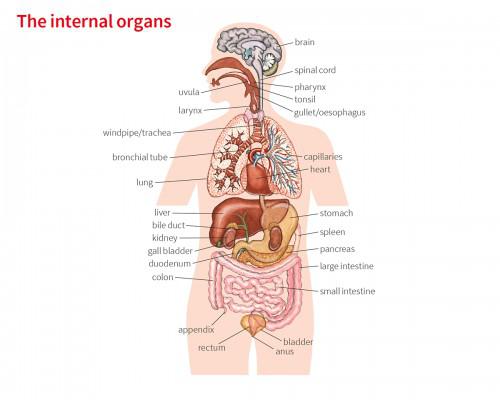
organo
a part of the body made of several tissues that performs a particular function, such as the heart or liver
The liver is the largest internal organ in the body.
Il fegato è il più grande organo interno del corpo.
Severe sepsis can lead to multiple organ failure.
Sinonimibody partmemberinstrumentpublicationvehicleagencyContrariwholeentiretyinanimate objectcollagene
the main structural protein in skin, bone, tendons and other connective tissues
Tightly packed collagen fibers give tendons their great strength.
Le fibre di collagene fittamente impaccate conferiscono ai tendini la loro grande resistenza.
Collagen production in the skin decreases with age.
Sinonimiproteinstructural proteinContrariNone (Collagen does not have a direct antonym. Focus is on things that degrade/inhibit it)tessuto connettivo
tissue that supports, connects and protects other tissues and organs, such as bone, cartilage, fat and tendons
Tendons and ligaments are made of dense connective tissue.
I tendini e i legamenti sono costituiti da tessuto connettivo denso.
Lupus is a disease that mainly attacks the connective tissue.
Sinonimisupporting tissuebinding tissueContrariepithelial tissuenervous tissuemuscle tissuecitoplasma
the jelly-like material inside a cell, around the nucleus, where many cell activities take place
Many chemical reactions of the cell take place in the cytoplasm.
Molte reazioni chimiche della cellula avvengono nel citoplasma.
The stain colored the cytoplasm pink and the nucleus blue.
Sinonimiprotoplasmcell substanceContrarinucleuscell membraneepitelio
the layer of cells that covers the body surface and lines organs, vessels and cavities
The epithelium of the airways is covered with tiny hairs called cilia.
L'epitelio delle vie aeree è ricoperto da minuscole ciglia.
Most cancers, such as skin and lung cancer, begin in the epithelium.
Sinonimitissue liningsurface layercoveringContrarinoneghiandola
an organ or group of cells that produces and releases substances such as hormones, sweat or saliva
The thyroid gland produces hormones that control metabolism.
La ghiandola tiroidea produce ormoni che controllano il metabolismo.
Sweat glands in the skin help to regulate body temperature.
SinonimiorgannodeacinusContrariNonecellula staminale
an unspecialized cell that can divide and develop into many different types of cell
Bone marrow contains stem cells that produce all types of blood cells.
Il midollo osseo contiene cellule staminali che producono tutti i tipi di cellule del sangue.
Researchers are testing stem cells to repair damaged heart muscle.
Sinonimiprogenitor cellmother cellContraridifferentiated cellspecialized cellmitocondrio
a tiny structure inside a cell that produces energy from food; the plural is mitochondria
Muscle cells contain many mitochondria because they need a lot of energy.
Le cellule muscolari contengono molti mitocondri perché hanno bisogno di molta energia.
Some rare inherited diseases are caused by faulty mitochondria.
SinonimipowerhouseorganelleContrarinoneomeostasi
the body's ability to keep its internal conditions, such as temperature and blood sugar, stable
The kidneys play a key role in maintaining fluid homeostasis.
I reni svolgono un ruolo fondamentale nel mantenimento dell'omeostasi dei liquidi.
Severe illness such as sepsis can disturb the body's homeostasis.
SinonimiequilibriumstabilitybalanceContrariimbalanceinstabilitymembrana cellulare, membrana plasmatica
the thin outer layer of a cell that controls what enters and leaves it
Small molecules such as oxygen pass easily across the cell membrane.
Le piccole molecole come l'ossigeno attraversano facilmente la membrana cellulare.
Some antibiotics work by damaging the cell membrane of bacteria.
nucleo, nucleo cellulare
the central part of a cell that contains its genetic material (DNA) and controls its activity
Red blood cells lose their nucleus as they mature.
I globuli rossi perdono il nucleo durante la maturazione.
Under the microscope, the cancer cells had large, dark nuclei.
organello, organulo
a small structure inside a cell that has a particular job, such as the nucleus or a mitochondrion
Each organelle performs a specific function within the cell.
Ogni organello svolge una funzione specifica all'interno della cellula.
Electron microscopes allow us to see organelles in great detail.
tessuto adiposo
body tissue that stores fat and helps to keep the body warm and protect organs
Adipose tissue is found under the skin and around internal organs.
Il tessuto adiposo si trova sotto la pelle e attorno agli organi interni.
Excess adipose tissue around the waist increases the risk of heart disease.
mucosa, membrana mucosa
a moist layer of tissue that lines passages such as the mouth, nose and gut and produces mucus
The mucous membranes of her mouth looked pale and dry.
Le mucose della sua bocca apparivano pallide e secche.
Viruses often enter the body through the mucous membrane of the nose.