レッスン18/38 · 82語 · 覚えた単語 0
Nature Environment
自然と環境
資源 (shigen)
a supply of something that a country, an organization or a person has and can use, especially to increase their wealth
The company's most valuable resource was its staff
その会社の一番貴重な資源は社員だった。
If you don't invest in petroleum resources now, you will find that the stock prices will get away from you
類義語assetsupplyreservesourcemeanscapabilitypotential対義語liabilitydeficiencylackshortagewaste砂漠 (sabaku)
a large area of land that has very little water and very few plants growing on it. Many deserts are covered by sand.
The Sahara is the hottest desert in the world.
サハラ砂漠は世界で最も暑い砂漠です。(Sahara sabaku wa sekai de mottomo atsui sabaku desu.)
The committee will debate whether to lower the age of club membership to 16.
類義語wastelandbarrenswildernessarid regionbarren land対義語oasisforestjunglewoodlandfertile land日陰 (hikage)
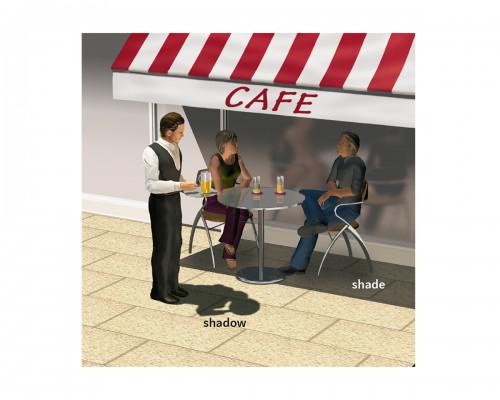
an area that is dark and cool under or behind something, for example a tree or building, because the sun’s light does not get to it
We sat down in the shade of the wall.
私たちは壁の陰に座った。
The trees provide shade for the animals in the summer.
類義語shadowshadowinessumbrapenumbradimnesscovershelter対義語lightsunlightbrightnessexposure木 (ki)
a tall plant that can live a long time. Trees have a thick central wooden trunk from which branches grow, usually with leaves on them
My father likes planting trees.
私の父は木を植えるのが好きです。(Watashi no chichi wa ki o ueru no ga suki desu.)
to chop/cut down a tree
類義語plantsaplingtimberwood対義語none (in the sense of a single word antonym)shrubbush花 (hana)
the coloured part of a plant from which the seed or fruit develops. Flowers usually grow at the end of a stem and last only a short time.
Do you like flowers?
花は好きですか? (Hana wa suki desu ka?)
The plant has a beautiful bright red flower.
類義語blossombloomfloral対義語weedthornvegetation田舎 (inaka)
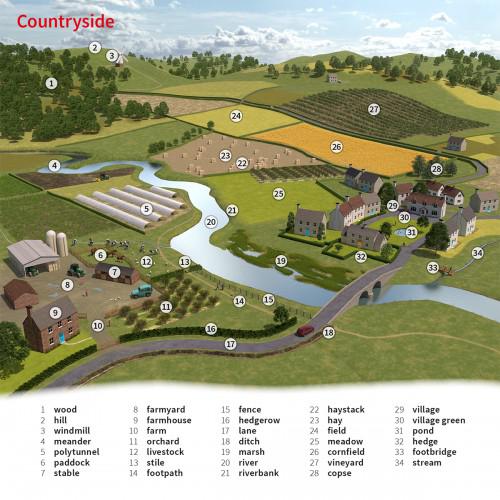
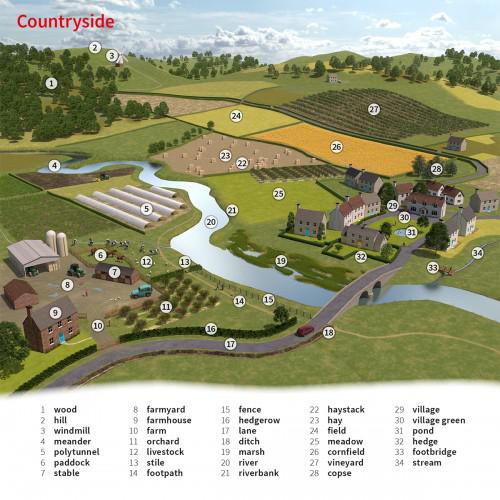
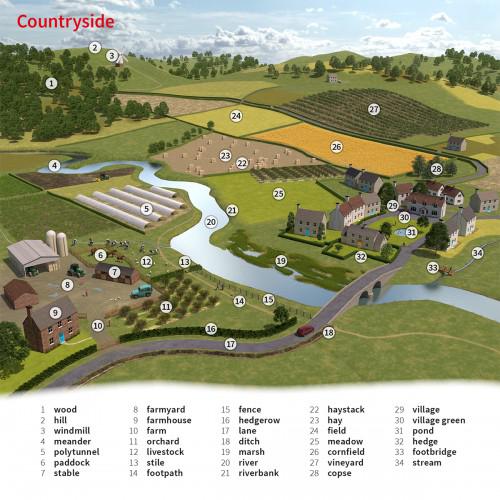
land outside towns and cities, with fields, woods, etc.
The surrounding countryside is windswept and rocky.
周りの田舎は風が強く、岩が多い。
Everyone should enjoy the right of access to the countryside.
類義語rural areacountryprovincebackcountryhinterland対義語cityurban areametropolistown環境 (kankyō)
the natural world in which people, animals and plants live
We have to protect our environment.
私たちは自分たちの環境を守らなければならない。(Watashitachi wa jibun-tachi no kankyō o mamoranakereba naranai.)
They have created an environment in which productivity should flourish.
類義語surroundingshabitatecosystemsettingworld対義語none (in the sense of a single word opposite)植物 (shokubutsu)
a living thing that grows in the earth and usually has a stem , leaves and roots, especially one that is smaller than a tree or bush
Do you know this plant?
あなたはこの植物を知っていますか?(Anata wa kono shokubutsu o shitte imasu ka?)
All plants need light and water.
類義語vegetationfloraherbshrubtree対義語animalfauna天気 (tenki)
the condition of the atmosphere at a particular place and time, such as the temperature, and if there is wind, rain, sun, etc.
What is the weather like today?
今日の天気は何ですか? (Kyō no tenki wa nan desu ka?)
類義語climateconditionsforecasttemperatureelements対義語constantunchangingstable森林 (shinrin)
a large area of land that is thickly covered with trees
How long will it take to walk through this forest?
この森林を歩いて通り抜けるのにどれくらい時間がかかりますか?(Kono shinrin o aruite tōrinukeru no ni dore kurai jikan ga kakarimasu ka?)
Thousands of hectares of forest are destroyed each year.
類義語woodswoodlandgrovethicketcoppice対義語desertclearingfieldgrasslandplains生息地, 生息環境
the place where a particular type of animal or plant is normally found
Can we use natural resources without destroying wildlife habitat?
野生生物の生息地を破壊せずに天然資源を利用することはできるだろうか。
類義語environmentnatural environmenthometerritorydomainrangelocaleregion対義語foreign environmentartificial environmentalien environment保存 (hozon)
to protect something and prevent it from being changed or destroyed
People in this city are trying to conserve the historic buildings.
この街の人々は、歴史的建造物を保存しようと努めています。
類義語preserveprotectmaintainsavesafeguardhusbandeconomize対義語wastesquanderuse updepletedestroyexhaustconsume結晶, 水晶
a small piece of a substance with many even sides, that is formed naturally when the substance becomes solid
When the seawater dries, small white salt crystals are left on the rocks.
海水が乾くと、岩の上に小さな白い塩の結晶が残る。
類義語clearglasstransparentcrystallinesparklinglucent対義語opaquedullcloudymurkyダム
a barrier that is built across a river in order to stop the water from flowing, used especially to make a reservoir (= a lake for storing water) or to produce electricity
Dams have to be built in order to use this kind of energy.
この種のエネルギーを利用するためには、ダムを建設しなければなりません。
類義語barrierweirreservoirfloodgatelockembankment対義語openingchannelgapbreachleak津波 (tsunami)
an extremely large wave in the sea caused, for example, by an earthquake
A tsunami is a great wave or series of waves which extends from the surface water to the sea floor.
津波は、表面の水から海底まで広がる巨大な波、または一連の波です。
類義語tidal waveseismic sea wave対義語ripplesmall wavestill water環境
connected with the natural conditions in which people, animals and plants live; connected with the environment
We must consider the environmental impact of our actions.
私たちは自分たちの行動が環境に与える影響を考慮しなければなりません。
類義語ecologicalgreenconservation対義語nonenvironmentalunnatural影 (kage)
the dark shape that somebody/something’s form makes on a surface, for example on the ground, when they are between the light and the surface
The tree cast a long shadow in the afternoon sun.
木は午後の太陽の下で長い影を落とした。
類義語shadesilhouetteoutlinephantom対義語lightbrightnessillumination