본문으로 건너뛰기

레슨 18/38 · 82단어 · 외운 단어 0

Nature Environment

자연과 환경

  1. 1

    resource(noun)

    /ˈriːsɔːrs/

    자원 (jawon)

    a supply of something that a country, an organization or a person has and can use, especially to increase their wealth

    The company's most valuable resource was its staff

    회사의 가장 귀중한 자원은 직원들이었습니다.

    If you don't invest in petroleum resources now, you will find that the stock prices will get away from you

    유의어assetsupplyreservesourcemeanscapabilitypotential
    반의어liabilitydeficiencylackshortagewaste
  2. 2

    cloud(noun)

    /klaʊd/

    구름 (gureum)

    a grey or white mass that floats in the sky, made of very small drops of water

    The sun went behind a cloud

    태양이 구름 뒤로 숨었다.

    The plane was flying in cloud most of the way.

    유의어mistfoghazevaporovercast
    반의어sunshineclear skybrightness
  3. 3

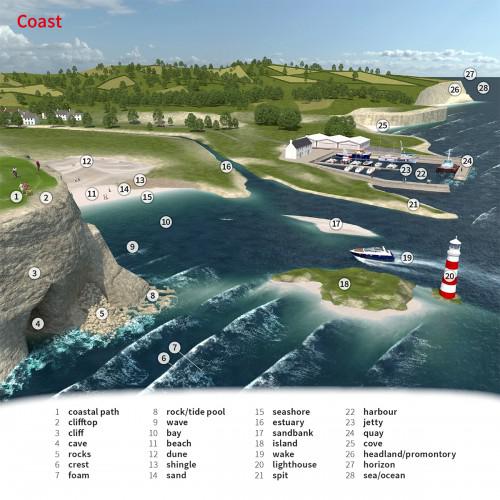
    bay(noun)

    /beɪ/

    만 (man)

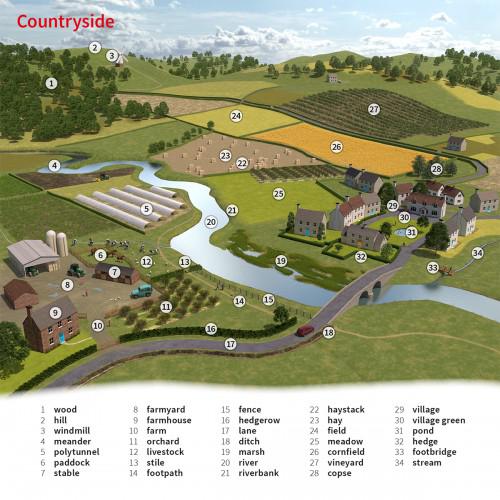
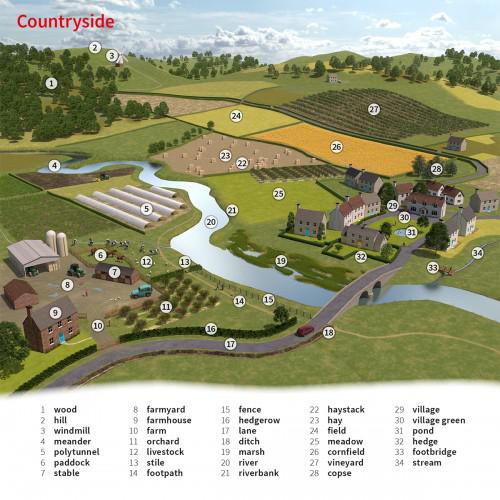
    a part of the sea, or of a large lake, partly surrounded by a wide curve of the land

    Ha Long Bay is in Quang Ninh province.

    하롱베이는 꽝닌성에 있습니다.

    a magnificent view across the bay

    유의어covegulfinletbasinharbor
    반의어peninsulaheadlandpromontory
  4. 4

    dirt(noun)

    /dɜːrt/

    먼지

    any substance that makes something dirty, for example dust, soil or mud

    His coat was covered with dirt.

    그의 코트는 먼지로 뒤덮여 있었다.

    His clothes were covered in dirt.

    유의어filthgrimesoilmuddustsmudge
    반의어cleanlinesspurityspotlessness
  5. 5

    sky(noun)

    /skaɪ/

    하늘 (haneul)

    the space above the earth that you can see when you look up, where clouds and the sun, moon and stars appear

    The sky suddenly went dark and it started to rain

    갑자기 하늘이 어두워지면서 비가 내리기 시작했다.

    cloudless skies

    유의어heavensfirmamentwelkinatmosphere
    반의어earthground
  6. 6

    island(noun)

    /ˈaɪlənd/

    섬

    a piece of land that is completely surrounded by water

    They spent their summer holiday on a small island in the Pacific.

    그들은 태평양의 작은 섬에서 여름휴가를 보냈다.

    유의어isleisletarchipelagoretreatoasis
    반의어mainlandcontinent
  7. 7

    spring(noun)

    /sprɪŋ/

    봄 (bom)

    the season between winter and summer when plants begin to grow

    It's warm in the spring.

    봄에는 따뜻합니다. (Bomeneun ttatteuthamnida.)

    flowers that bloom in spring/in the spring

    유의어springtimevernal seasonjumpleapbounceoriginsource
    반의어autumnfallwinterautumnal seasondeclinecompressrepress
  8. 8

    desert(noun)

    /ˈdezərt/

    사막 (samak)

    a large area of land that has very little water and very few plants growing on it. Many deserts are covered by sand.

    The Sahara is the hottest desert in the world.

    사하라는 세계에서 가장 더운 사막입니다. (Saharaneun segyeeseo gajang deoun samak imnida.)

    The committee will debate whether to lower the age of club membership to 16.

    유의어wastelandbarrenswildernessarid regionbarren land
    반의어oasisforestjunglewoodlandfertile land
  9. 9

    outdoors(adverb)

    /ˌaʊtˈdɔːrz/

    야외

    outside, rather than in a building

    It’s raining so we can’t eat outdoors.

    비가 와서 밖에서 먹을 수 없어요.

    The seeds may be sown outdoors in the spring.

    유의어outsideout of doorsin the open airalfresco
    반의어indoorsinside
  10. 10

    green(adjective)

    /ɡriːn/

    초록색 (choroksaek)

    having the colour of grass or the leaves of most plants and trees

    My hat is green.

    내 모자는 초록색이다. (nae mojaneun choroksaegida.)

    She was dressed all in green.

    유의어verdantviridescentemeraldlimechartreuse
    반의어redblueyellowcolorlesspale
  11. 11

    soil(noun)

    /sɔɪl/

    흙 (heuk)

    the top layer of the earth in which plants, trees, etc. grow

    It is very difficult to grow any plant on this type of soil.

    이런 종류의 흙에서는 어떤 식물이든 키우기가 매우 어렵습니다.

    poor/dry/acid/sandy/fertile, etc. soil

    유의어earthgrounddirtloamclayhumus
    반의어waterair
  12. 12

    ocean(noun)

    /ˈəʊʃn/

    바다 (bada)

    the mass of salt water that covers most of the earth’s surface

    Ocean levels are rising.

    해수면이 상승하고 있습니다.

    유의어seabrinedeep
    반의어landcontinentearth
  13. 13

    landscape(noun)

    /ˈlændskeɪp/

    풍경 (punggyeong)

    everything you can see when you look across a large area of land, especially in the country

    The mountains dominate the landscape.

    산이 풍경을 지배한다. (San-i punggyeong-eul jibaehanda.)

    유의어sceneryviewvistaterraincountryside
    반의어indoorsinterior
  14. 14

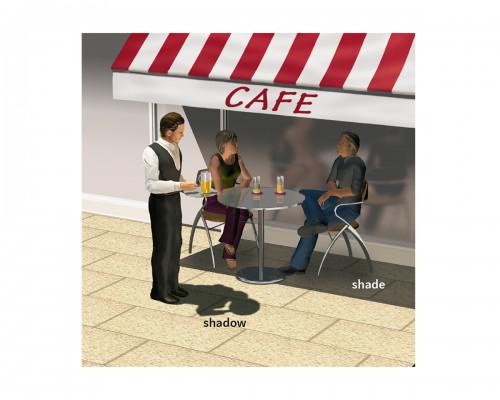
    shade(noun)

    /ʃeɪd/

    그늘 (geuneul)

    an area that is dark and cool under or behind something, for example a tree or building, because the sun’s light does not get to it

    We sat down in the shade of the wall.

    우리는 벽 그늘에 앉았다.

    The trees provide shade for the animals in the summer.

    유의어shadowshadowinessumbrapenumbradimnesscovershelter
    반의어lightsunlightbrightnessexposure
  15. 15

    leaf(noun)

    /liːf/

    잎 (ip)

    a flat green part of a plant, growing from a stem or branch or from the root

    The leaves on the trees were beginning to turn from green to orange.

    나무의 잎이 초록색에서 주황색으로 변하기 시작했습니다.

    유의어frondfoliageblade
    반의어trunkbranchroot
  16. 16

    tree(noun)

    /triː/

    나무 (namu)

    a tall plant that can live a long time. Trees have a thick central wooden trunk from which branches grow, usually with leaves on them

    My father likes planting trees.

    저희 아버지는 나무 심는 것을 좋아하세요. (Jeohui abeojineun namu simneun geoseul joahaseyo.)

    to chop/cut down a tree

    유의어plantsaplingtimberwood
    반의어none (in the sense of a single word antonym)shrubbush
  17. 17

    flower(noun)

    /ˈflaʊər/

    꽃 (kkot)

    the coloured part of a plant from which the seed or fruit develops. Flowers usually grow at the end of a stem and last only a short time.

    Do you like flowers?

    꽃 좋아하세요? (Kkot joahaseyo?)

    The plant has a beautiful bright red flower.

    유의어blossombloomfloral
    반의어weedthornvegetation
  18. 18

    atmosphere(noun)

    /ˈætməsfɪr/

    대기, 공기

    the mixture of gases that surrounds the earth

    The earth's atmosphere protects us from the sun's harmful rays.

    지구의 대기는 태양의 해로운 광선으로부터 우리를 보호한다.

    유의어ambiancemoodfeelingclimateenvironment
    반의어nothingnessemptiness
  19. 19

    lake(noun)

    /ˌleɪk ˈɪri/

    호수

    a large area of water that is surrounded by land

    Where is the largest lake in Vietnam?

    베트남에서 가장 큰 호수는 어디에 있습니까?

    a wine lake (= a large supply of wine that is not being used)

    유의어poolpondreservoirlochtarn
    반의어landseaoceandesert
  20. 20

    countryside(noun)

    /ˈkʌntrisaɪd/

    시골 (sigol)

    land outside towns and cities, with fields, woods, etc.

    The surrounding countryside is windswept and rocky.

    주변 시골은 바람이 많이 불고 바위투성이입니다.

    Everyone should enjoy the right of access to the countryside.

    유의어rural areacountryprovincebackcountryhinterland
    반의어cityurban areametropolistown
  21. 21

    rain(noun)

    /reɪn/

    비 (bi)

    water that falls from the sky in separate drops

    There is heavy rain in Hanoi now.

    지금 하노이에는 비가 많이 와요.

    Is it raining?

    유의어drizzleshowerdownpourprecipitationrainfall
    반의어droughtaridnesssunshineclear weather
  22. 22

    environment(noun)

    /ɪnˈvaɪrənmənt/

    환경 (hwangyeong)

    the natural world in which people, animals and plants live

    We have to protect our environment.

    우리는 우리 환경을 보호해야 합니다. (urineun uri hwangyeong-eul bohohaeya hamnida.)

    They have created an environment in which productivity should flourish.

    유의어surroundingshabitatecosystemsettingworld
    반의어none (in the sense of a single word opposite)
  23. 23

    global(adjective)

    /ˈɡləʊbl/

    전 세계적인

    covering or affecting the whole world

    At present, global warming became a serious issue.

    현재, 지구 온난화는 심각한 문제가 되었습니다.

    the company's domestic and global markets

    유의어worldwideinternationaluniversalcomprehensive
    반의어localregionalnationaldomestic
  24. 24

    summer(noun)

    /ˈsʌmər/

    여름 (yeoreum)

    the warmest season of the year, coming between spring and autumn

    It's very hot in the summer.

    여름에는 매우 덥습니다. (yeoreumeneun mae-u deopseupnida.)

    It is now high summer(= the hottest part of summer).

    유의어summertimemidsummer
    반의어winterautumnfallspring
  25. 25

    rural(adjective)

    /ˈrʊrəl/

    시골의, 농촌의

    connected with or like the countryside

    Many young people leave rural areas to look for work in big cities.

    많은 젊은이들이 일자리를 찾아 농촌 지역을 떠나 대도시로 간다.

    유의어countryrusticagriculturalpastoralcountryside
    반의어urbanmetropolitancitytown
  26. 26

    valley(noun)

    /ˈvæli/

    계곡 (gyegok)

    an area of low land between hills or mountains, often with a river flowing through it; the land that a river flows through

    That valley looks incredibly beautiful in the sun.

    저 계곡은 햇빛 아래에서 믿을 수 없을 정도로 아름다워 보입니다.

    a wooded valley

    유의어daleglenhollowbasin
    반의어peakridgemountainupland
  27. 27

    bush(noun)

    /bʊʃ/

    덤불 (deombul)

    a plant that grows thickly with several hard stems coming up from the root

    She was hiding in the bushes at the side of the lane.

    그녀는 차도 옆 덤불 속에 숨어 있었다.

    a rose bush

    유의어shrubhedgethicketscrub
    반의어treeopen spaceclearing
  28. 28

    stream(noun)

    /striːm/

    개울 (gaeul)

    a small, narrow river

    We waded across a shallow stream.

    우리는 얕은 개울을 건넜다.

    We waded across a shallow stream.

    유의어brookcreekriverrivuletcurrentflow
    반의어stillnessdrought
  29. 29

    farm(noun)

    /fɑːrm/

    농장 (nongjang)

    an area of land, and the buildings on it, used for growing crops and/or keeping animals

    My grandparents have a large farm.

    우리 조부모님은 큰 농장을 가지고 계십니다.

    farm buildings/machinery

    유의어ranchplantationacreagehomesteadgrange
    반의어cityurban areametropolis
  30. 30

    plant(noun)

    /plænt/

    식물 (singmul)

    a living thing that grows in the earth and usually has a stem , leaves and roots, especially one that is smaller than a tree or bush

    Do you know this plant?

    이 식물을 아세요? (I singmureul aseyo?)

    All plants need light and water.

    유의어vegetationfloraherbshrubtree
    반의어animalfauna
  31. 31

    branch(noun)

    /bræntʃ/

    가지 (gaji)

    a part of a tree that grows out from the main stem and on which leaves, flowers and fruit grow

    She climbed the tree and hid in the branches.

    그녀는 나무에 올라 가지에 숨었다.

    They all put a bet on the race.

    유의어limboffshootboughdivisionsectionarm
    반의어trunkmainstemwhole
  32. 32

    weather(noun)

    /ˈweðər/

    날씨 (nalssi)

    the condition of the atmosphere at a particular place and time, such as the temperature, and if there is wind, rain, sun, etc.

    What is the weather like today?

    오늘 날씨가 어때요? (Oneul nalssiga eottaeyo?)

    유의어climateconditionsforecasttemperatureelements
    반의어constantunchangingstable
  33. 33

    farming(noun)

    /ˈfɑːrmɪŋ/

    농업

    the business of managing or working on a farm

    a farming community

    농업 공동체

    sheep/fish, etc. farming

    유의어agriculturalagrariancultivatinggrowing
    반의어industrialurbanmanufacturing
  34. 34

    hill(noun)

    /hɪl/

    언덕

    an area of land that is higher than the land around it, but not as high as a mountain

    a hill farm/town/fort

    언덕 농장/마을/요새

    The house is built on the side of a hill overlooking the river.

    유의어moundknollhummockriseelevation
    반의어valleyplaindepressionlowland
  35. 35

    slope(noun)

    /sləʊp/

    경사 (gyeongsa)

    a surface or piece of land that slopes (= is higher at one end than the other)

    There are some nice gentle slopes that we can ski down.

    우리가 스키를 타고 내려갈 수 있는 멋지고 완만한 경사가 몇 군데 있습니다.

    a grassy slope

    유의어inclinegradientdeclivitybankpitch
    반의어flatlevelhorizontal
  36. 36

    forest(noun)

    /ˈfɔːrɪst/

    숲 (sup)

    a large area of land that is thickly covered with trees

    How long will it take to walk through this forest?

    이 숲을 걸어서 통과하는 데 얼마나 걸릴까요? (I supeul georeoseo tonggwahaneun de eolmana geollilkkayo?)

    Thousands of hectares of forest are destroyed each year.

    유의어woodswoodlandgrovethicketcoppice
    반의어desertclearingfieldgrasslandplains
  37. 37

    ground(noun)

    /ɡraʊnd/

    바닥 (badak)

    the solid surface of the earth

    He lost his balance and fell to the ground.

    그는 균형을 잃고 바닥에 넘어졌다.

    Houses and a luxury tourist hotel were burned to the ground(= completely destroyed, so that there is nothing left).

    유의어earthsoilfloorlandterra firma
    반의어skyairspace
  38. 38

    wind(noun)

    /wɪnd/

    바람 (baram)

    air that moves quickly as a result of natural forces

    There is a strong wind blowing.

    강한 바람이 불고 있다.

    A gust of wind blew my hat off.

    유의어breezegustdraftair current
    반의어calmstillnesslack of wind
  39. 39

    mud(noun)

    /mʌd/

    진흙 (jinheuk)

    wet earth that is soft and sticky

    The vehicles got bogged down in the heavy mud.

    차량들이 심한 진흙탕에 빠졌다.

    mud bricks/huts(= made of dried mud)

    유의어sludgemireoozedirtsoilclay
    반의어cleanlinesspuritydrynesssand
  40. 40

    winter(noun)

    /ˈwɪntər/

    겨울 (gyeoul)

    the coldest season of the year, between autumn and spring

    I hate the winter.

    나는 겨울이 싫어. (naneun gyeouri shireo.)

    Our house can be very cold in (the) winter.

    유의어cold seasonwintertimewintry weather
    반의어summerspringautumnfall
  41. 41

    tropical(adjective)

    /ˈtrɑːpɪkl/

    열대의

    coming from, found in or typical of the tropics

    Vietnam has a tropical climate with four seasons in a year.

    베트남은 일 년에 사계절이 있는 열대 기후를 가지고 있습니다.

    tropical Africa

    유의어equatorialtorridlushhumid
    반의어arcticfrigidpolartemperate
  42. 42

    storm(noun)

    /stɔːrm/

    폭풍 (pokpung)

    very bad weather with strong winds and rain, and often thunder and lightning

    A few minutes later the storm broke

    몇 분 후 폭풍이 몰아쳤다. (myeot bun hu pokpungi morachyeotda.)

    storm damage

    유의어tempesthurricanecyclonetyphoonthunderstormoutburstturmoil
    반의어calmpeacetranquilitystillnessclemency
  43. 43

    river(noun)

    /ˌrɪvər ˈfiːnɪks/

    강, 하천

    a natural flow of water that continues in a long line across land to the sea

    The Nile is the longest river in the world.

    나일강은 세계에서 가장 긴 강이다.

    They have a house on the river (= beside it).

    유의어streamwaterwaycreekbrook
    반의어landdesertseaocean
  44. 44

    Root(noun)

    /ruːt/

    뿌리 (ppuri)

    the part of a plant that grows under the ground and takes in water and minerals that it sends to the rest of the plant

    Tree roots can cause damage to buildings.

    나무 뿌리는 건물에 손상을 줄 수 있습니다.

    유의어originsourcebasecausefoundationunderlying cause
    반의어branchleafresultconsequenceoutgrowth
  45. 45

    coal(noun)

    /kəʊl/

    석탄 (seoktan)

    a hard black mineral that is found below the ground and burnt to produce heat

    Coal can be used for cooking.

    석탄은 요리에 사용할 수 있습니다. (Seoktaneun yorie sayonghal su itsseumnida.)

    유의어carbonfuelblack gold
    반의어renewable energysolar powerwind energy
  46. 46

    cliff(noun)

    /klɪf/

    절벽 (jeolbyeok)

    a high area of rock with a very steep side, often at the edge of the sea or ocean

    It is a land of mountains, with steep river valleys and cliffs.

    그곳은 험준한 강 계곡과 절벽이 있는 산악 지대입니다.

    유의어bluffprecipicecragescarpment
    반의어slopedeclineinclineplain
  47. 47

    flood(noun)

    /flʌd/

    홍수 (hongsu)

    a large amount of water covering an area that is usually dry

    Last winter, the town suffered the worst flood in fifty years.

    지난 겨울, 그 마을은 50년 만에 최악의 홍수를 겪었습니다.

    유의어delugeinundationoverflowtorrentdownpourspate
    반의어droughtariditydrynessscarcity
  48. 48

    agriculture(noun)

    /ˈæɡrɪkʌltʃər/

    농업 (nongeop)

    the science or practice of farming

    We need to develop our agriculture.

    우리는 농업을 발전시켜야 합니다.

    유의어farmingcultivationtillagehusbandryland management
    반의어industrymanufacturingservices
  49. 49

    stone(noun)

    /stəʊn/

    돌, 석재

    a hard solid mineral substance that is found in the ground, often used for building

    The old church was built of stone over five hundred years ago.

    그 오래된 교회는 500여 년 전에 돌로 지어졌다.

    유의어rockpebblegravelboulder
    반의어dustpowderliquid
  50. 50

    emission(noun)

    /ɪˈmɪʃn/

    배출

    the production or sending out of light, heat, gas, etc.

    The government has pledged to clean up industrial emissions.

    정부는 산업 배출물을 정화하기로 약속했습니다.

    유의어dischargereleaseexpulsionoutflowexhalation
    반의어absorptionintakeretentioncontainment
  51. 51

    habitat(noun)

    /ˈhæbɪtæt/

    서식지

    the place where a particular type of animal or plant is normally found

    Can we use natural resources without destroying wildlife habitat?

    우리는 야생동물 서식지를 파괴하지 않고 천연자원을 사용할 수 있을까?

    유의어environmentnatural environmenthometerritorydomainrangelocaleregion
    반의어foreign environmentartificial environmentalien environment
  52. 52

    horizon(noun)

    /həˈraɪzn/

    수평선, 지평선

    the furthest that you can see, where the sky seems to meet the land or the sea

    We watched the sun slowly sink below the horizon over the sea.

    우리는 해가 바다 위 수평선 너머로 천천히 지는 모습을 지켜보았다.

    유의어perspectiveoutlookscoperangeviewpointlimitextent
    반의어limitationrestrictionnarrow-mindedness
  53. 53

    outbreak(noun)

    /ˈaʊtbreɪk/

    발발

    the sudden start of something unpleasant, especially violence or a disease

    the outbreak of war

    전쟁의 발발

    유의어eruptioneruptionflare-upburstonsetcommencementemergenceexplosion
    반의어containmentsuppressioncessationenddecline
  54. 54

    drought(noun)

    /draʊt/

    가뭄 (gamum)

    a long period of time when there is little or no rain

    A drought caused most of the corn crop to fail.

    가뭄으로 인해 대부분의 옥수수 농사가 흉작이었다.

    유의어dry spellaridnesslack of raindesiccationshortage of water
    반의어flooddelugedownpourexcess rainabundance of water
  55. 55

    conserve(verb)

    /kənˈsɜːrv/

    보존하다 (bojonhada)

    to protect something and prevent it from being changed or destroyed

    People in this city are trying to conserve the historic buildings.

    이 도시 사람들은 역사적인 건물들을 보존하려고 노력하고 있습니다.

    유의어preserveprotectmaintainsavesafeguardhusbandeconomize
    반의어wastesquanderuse updepletedestroyexhaustconsume
  56. 56

    cultivate(verb)

    /ˈkʌltɪveɪt/

    경작하다

    to prepare and use land for growing plants or crops

    Most of the land there is too poor to cultivate.

    그곳 땅의 대부분은 경작하기에는 너무 척박하다.

    유의어farmgrowtillplantdevelopnurturefoster
    반의어neglectignoreabandondestroy
  57. 57

    recycle(verb)

    /ˌriːˈsaɪkl/

    재활용 (jaehwalyong)

    to treat things that have already been used so that they can be used again

    We can recycle waste paper.

    우리는 폐지를 재활용할 수 있습니다. (Uri-neun pyejireul jaehwalyonghal su itsseumnida.)

    유의어reusereclaimreprocessrecoversalvage
    반의어discarddisposewastedump
  58. 58

    folk(adjective)

    /fəʊk/

    민속의, 전통의

    traditional and typical of the ordinary people of a country or community

    My father only likes to hear folk songs.

    우리 아버지는 민요만 즐겨 들으신다.

    유의어traditionalethnicvernacularindigenouscommon
    반의어moderncontemporaryclassicalelitesophisticated
  59. 59

    cave(noun)

    /keɪv/

    동굴 (donggul)

    a large hole in the side of a hill or cliff or under the ground

    Ha Long Bay has many caves.

    하롱베이는 동굴이 많습니다. (Harongbeineun dongguri manseumnida.)

    유의어caverngrottohollowtunnel
    반의어peaksummitopen space
  60. 60

    crystal(noun)

    /ˈkrɪstl/

    결정, 수정

    a small piece of a substance with many even sides, that is formed naturally when the substance becomes solid

    When the seawater dries, small white salt crystals are left on the rocks.

    바닷물이 마르면 바위 위에 작고 하얀 소금 결정이 남는다.

    유의어clearglasstransparentcrystallinesparklinglucent
    반의어opaquedullcloudymurky
  61. 61

    marine(adjective)

    /məˈriːn/

    해양

    connected with the sea and the creatures and plants that live there

    The oil seriously threatens marine life around the islands.

    기름은 섬 주변의 해양 생물을 심각하게 위협합니다.

    유의어oceanicseamaritime
    반의어terrestriallandcontinental
  62. 62

    conservation(noun)

    /ˌkɑːnsərˈveɪʃn/

    보존 (bojon)

    the protection of the natural environment

    This kind of bird is protected by conservation plans.

    이 종류의 새는 보존 계획에 의해 보호됩니다.

    유의어preservationprotectionsafeguardingmaintenanceupkeep
    반의어destructiondepletionwasteneglectexploitation
  63. 63

    coast(noun)

    /kəʊst/

    해안

    the land next to or near to the sea or ocean

    Do you want to explore the coast by boat?

    배를 타고 해안을 탐험하고 싶으세요?

    유의어shoreseashorebeachlittoral
    반의어inlandinteriorhinterland
  64. 64

    earthquake(noun)

    /ˈɜːrθkweɪk/

    지진 (jijin)

    a sudden, violent shaking of the earth’s surface

    It is the most terrible earthquake I've ever seen.

    이것은 내가 본 지진 중 가장 끔찍한 지진입니다.

    유의어temblorseismtremor
    반의어calmstabilitystillness
  65. 65

    wildlife(noun)

    /ˈwaɪldlaɪf/

    야생 동물 (yasaeng dongmul)

    animals, birds, insects, etc. that are wild and live in a natural environment

    It's a famous documentary on Peruvian wildlife.

    그것은 페루 야생 동물에 관한 유명한 다큐멘터리입니다.

    유의어faunaanimalscreaturesbeastsgame
    반의어domestic animalslivestockpets
  66. 66

    coastal(adjective)

    /ˈkəʊstl/

    해안의 (haeanui)

    of or near a coast

    I used to live in a coastal town.

    나는 해안 마을에 살았었다.

    유의어shorelinelittoralseasidemaritime
    반의어inlandcontinentalinterior
  67. 67

    dam(noun)

    /dæm/

    댐

    a barrier that is built across a river in order to stop the water from flowing, used especially to make a reservoir (= a lake for storing water) or to produce electricity

    Dams have to be built in order to use this kind of energy.

    이러한 종류의 에너지를 사용하려면 댐을 건설해야 합니다.

    유의어barrierweirreservoirfloodgatelockembankment
    반의어openingchannelgapbreachleak
  68. 68

    tsunami(noun)

    /tsuːˈnɑːmi/

    쓰나미 (sseunami)

    an extremely large wave in the sea caused, for example, by an earthquake

    A tsunami is a great wave or series of waves which extends from the surface water to the sea floor.

    쓰나미는 표면의 물에서 해저까지 뻗어있는 거대한 파도 또는 일련의 파도입니다.

    유의어tidal waveseismic sea wave
    반의어ripplesmall wavestill water
  69. 69

    agricultural(adjective)

    /ˌæɡrɪˈkʌltʃərəl/

    농업의

    connected with the science or practice of farming

    The country's economy is largely agricultural.

    그 나라의 경제는 주로 농업입니다.

    유의어farmingruralagrariancultivating
    반의어industrialurbanmanufacturing
  70. 70

    dawn(noun)

    /dɔːn/

    새벽

    the time of day when light first appears

    We woke up at dawn to watch the sunrise.

    우리는 해돋이를 보기 위해 새벽에 일어났다.

    유의어sunrisedaybreakmorningcockcrow
    반의어dusksunsettwilightevening
  71. 71

    dive(verb)

    /daɪv/

    다이빙하다, 뛰어들다

    to jump into water with your head and arms going in first

    The swimmer will dive into the pool.

    그 수영 선수는 수영장에 다이빙할 것이다.

    유의어plungesubmergeimmerse
    반의어surfaceascendrise
  72. 72

    environmental(adjective)

    /ɪnˌvaɪrənˈmentl/

    환경의

    connected with the natural conditions in which people, animals and plants live; connected with the environment

    We must consider the environmental impact of our actions.

    우리는 우리 행동이 환경에 미치는 영향을 고려해야 합니다.

    유의어ecologicalgreenconservation
    반의어nonenvironmentalunnatural
  73. 73

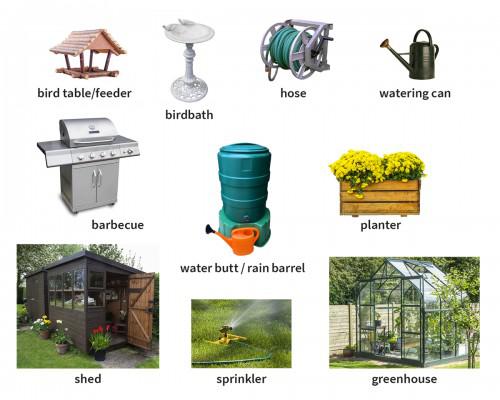
    greenhouse(noun)

    /ˈɡriːnhaʊs/

    온실

    a building with glass sides and a glass roof for growing plants in

    The greenhouse allows us to grow tomatoes even in winter.

    온실 덕분에 겨울에도 토마토를 키울 수 있습니다.

    유의어conservatoryglasshousehothouse
    반의어outdoorsopen field
  74. 74

    hurricane(noun)

    /ˌhɜːrəkeɪn ˈhɪɡɪnz/

    허리케인, 대형 태풍

    a violent storm with very strong winds, especially in the western Atlantic Ocean

    The hurricane caused widespread damage to the coast.

    허리케인은 해안 지역에 광범위한 피해를 입혔다.

    유의어cyclonetyphoontropical storm
    반의어calmstillnessfair weather
  75. 75

    peak(noun)

    /piːk/

    산꼭대기, 봉우리

    the pointed top of a mountain; a mountain with a pointed top

    We reached the peak of the mountain after a long hike.

    우리는 오랜 도보 여행 끝에 산 정상에 도착했다.

    유의어summitapexcrestacmezenith
    반의어nadirbasevalleytrough
  76. 76

    pond(noun)

    /pɑːnd/

    연못

    a small area of still water, especially one that is artificial

    Ducks swam in the pond.

    오리들이 연못에서 수영했다.

    유의어poolpoolwaterholewatering holebasin
    반의어oceansealake
  77. 77

    preservation(noun)

    /ˌprezərˈveɪʃn/

    보존

    the act of keeping something in its original state or in good condition

    The preservation of historical buildings is important.

    역사적인 건물의 보존은 중요합니다.

    유의어conservationprotectionmaintenancesafeguarding
    반의어destructionneglectdamage
  78. 78

    refuge(noun)

    /ˈrefjuːdʒ/

    피난처

    shelter or protection from danger, trouble, etc.

    The family sought refuge in the old church during the storm.

    가족은 폭풍우 동안 오래된 교회에서 피난처를 찾았습니다.

    유의어sheltersanctuaryhavenasylumretreat
    반의어dangerexposurethreat
  79. 79

    shadow(noun)

    /ˈʃædəʊ/

    그림자 (geulimja)

    the dark shape that somebody/something’s form makes on a surface, for example on the ground, when they are between the light and the surface

    The tree cast a long shadow in the afternoon sun.

    나무는 오후 햇살 아래 긴 그림자를 드리웠다.

    유의어shadesilhouetteoutlinephantom
    반의어lightbrightnessillumination
  80. 80

    terrain(noun)

    /təˈreɪn/

    지형

    used to refer to an area of land when you are mentioning its natural features, for example, if it is rough, flat, etc.

    The terrain was rough and uneven.

    지형이 거칠고 고르지 않았습니다.

    유의어landscapegroundtopographyarea
    반의어skyair
  81. 81

    current(noun)

    /ˈkɜːrənt/

    해류, 물살, 기류

    the movement of water in the sea or a river, or of air in a particular direction

    The swimmers were carried out to sea by a strong current.

    수영하던 사람들이 강한 해류에 휩쓸려 바다로 떠내려갔다.

  82. 82

    plain(noun)

    /pleɪn/

    평원, 평야

    a large area of flat land

    That is a very flat plain.

    저곳은 매우 평평한 평원이다.