레슨 7/33 · 105단어 · 외운 단어 0
Globalization
세계화
국제적인 (gukjejeogin)
connected with or involving two or more countries
Jane is joining an international camp with 30 students from different countries.
제인은 여러 나라에서 온 30명의 학생들과 함께 국제 캠프에 참가합니다.
international relations
유의어globalworldwidemultinationaltransnationaluniversal반의어nationaldomesticlocalregional이민
the process of coming to live permanently in a different country from the one you were born in; the number of people who do this
Immigration has significantly changed the country's demographics.
이민은 그 나라의 인구 통계를 크게 변화시켰습니다.
유의어migrationsettlingrelocationnaturalization반의어emigrationdeportationrepatriation인플레이션, 물가 상승
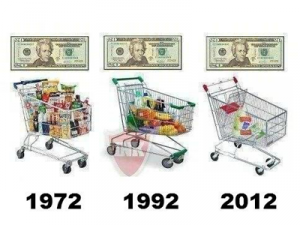
a general rise in the prices of goods and services, which reduces the value of money
The government aims to keep inflation below 4.5 per cent.
정부는 인플레이션을 4.5퍼센트 아래로 유지하는 것을 목표로 하고 있습니다.
High inflation reduces the real return on savings.
유의어price increasecost-pushdemand-pulldevaluation반의어deflationprice stability어디에나 있는
seeming to be everywhere or in several places at the same time; very common
Leather is very much in fashion this season, as is the ubiquitous denim.
이번 시즌에는 가죽이 매우 유행하고 있으며, 어디에나 있는 데님도 마찬가지입니다.
유의어omnipresentpervasiveuniversalwidespreadprevalentrife반의어rarescarceuncommonunusuallimited세계화
the fact that different cultures and economic systems around the world are becoming connected and similar to each other because of the influence of large multinational companies and of improved communication
Globalization has certainly provided a boost to trade and labour reform in many countries.
세계화는 분명히 많은 국가에서 무역 및 노동 개혁에 활력을 불어넣었습니다.
유의어internationalizationworldwide integrationglobal integrationinterconnectedness반의어localizationnationalizationregionalizationisolationism가속하다, 촉진하다
to happen faster or earlier; to make something happen faster or earlier
The government is taking measures to accelerate economic growth in the region.
정부는 이 지역의 경제 성장을 촉진하기 위한 조치를 취하고 있다.
유의어hastenexpeditequickenspeed upadvancefurtherpromote반의어decelerateslow downretarddelayhinderimpede기후 변화 (gihu byeonhwa)
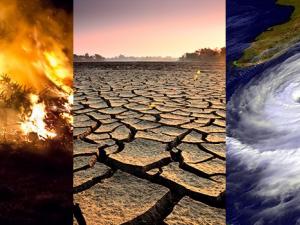
changes in the earth’s weather, including changes in temperature, wind patterns and rainfall , especially the increase in the temperature of the earth’s atmosphere that is caused by the increase of particular gases, especially carbon dioxide
In any case, climate change is already disrupting the lives of millions of human beings.
어쨌든 기후 변화는 이미 수백만 명의 사람들의 삶을 파괴하고 있습니다.
유의어global warmingclimatic changeenvironmental changeclimate crisis반의어climate stabilityenvironmental equilibrium불균형 (bulgyunhyeong)
a situation in which two or more things are not the same size or are not treated the same, in a way that is unfair or causes problems
It is in a temporary state of imbalance.
그것은 일시적인 불균형 상태에 있습니다.
유의어disproportioninequalityinstabilityunevennessasymmetry반의어balanceequilibriumstabilitysymmetryproportion문화 간의, 비교 문화의
involving or containing ideas from two or more different countries or cultures
The company emphasizes cross-cultural understanding among its employees.
그 회사는 직원들 사이의 문화 간 이해를 강조한다.
유의어interculturalmulticulturaltranscultural반의어monoculturalculturally isolated경제 성장
an increase in the amount of goods and services that a country produces over a period of time
Economic growth is crucial for improving living standards.
경제 성장은 생활 수준을 향상시키는 데 매우 중요합니다.
유의어expansiondevelopmentprosperityprogress반의어recessiondeclinecontractionstagnation상호 의존
the fact of depending on each other; the fact of consisting of parts that depend on each other
Global trade demonstrates the interdependence of nations.
세계 무역은 국가 간의 상호 의존성을 보여줍니다.
유의어interconnectednessmutual dependencereciprocityreliance반의어independenceautonomyself-sufficiency현지화
the process of adapting a product or service to make it suitable for a new area
The company invested in localization to better serve international customers.
그 회사는 국제 고객에게 더 나은 서비스를 제공하기 위해 현지화에 투자했습니다.
유의어adaptationcustomizationregionalization반의어globalizationstandardization표준화
the process of making objects or activities of the same type have the same features or qualities; the process of making something standard
The company is working on the standardization of its products.
회사는 제품 표준화를 위해 노력하고 있습니다.
유의어uniformitynormalizationconsistencyconformity반의어variationdiversitydifference지구촌
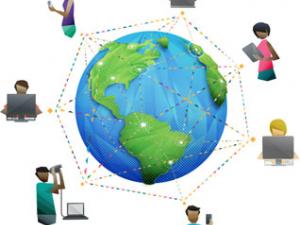
the whole world, looked at as a single community that is connected by electronic communication systems
The internet has transformed the world into a global village.
인터넷은 세계를 지구촌으로 변화시켰습니다.
유의어global communityinterconnected worldglobal society반의어isolated communitylocal community탄소 발자국
a measure of the amount of carbon dioxide that is produced by the activities of a person or company
Reducing your carbon footprint can help protect the environment.
탄소 발자국을 줄이는 것은 환경을 보호하는 데 도움이 될 수 있습니다.
유의어Environmental impactCarbon emissionsGreenhouse gas emissions반의어Carbon neutralitySustainability아웃소싱, 외주
paying an outside company to do work that could be done by your own employees
Outsourcing payroll has saved us many hours each month.
급여 업무를 아웃소싱한 덕분에 매달 많은 시간을 절약하게 되었다.
The company uses outsourcing for cleaning and security staff.
유의어contracting outsubcontractingoffshoring반의어insourcinginternalizing디지털 경제
economic activity that is based on digital technology and the Internet.
The digital economy is rapidly transforming traditional business models.
디지털 경제는 전통적인 비즈니스 모델을 빠르게 변화시키고 있습니다.
유의어Internet economyNew economyE-commerce반의어Traditional economyAnalog economy재생 에너지
Energy from sources that are naturally replaced, such as the sun, wind and water.
Renewable energy sources are essential for a sustainable future.
재생 에너지원은 지속 가능한 미래를 위해 필수적입니다.
유의어Sustainable energyClean energyGreen energy반의어Non-renewable energyFossil fuelsConventional energy세계화 가속화
To make the process of countries and economies becoming more connected happen faster.
New technologies are expected to accelerate globalization.
새로운 기술은 세계화 가속화할 것으로 예상됩니다.
유의어hasten globalizationexpedite globalizationadvance globalization반의어decelerate globalizationslow globalizationhinder globalization생물 다양성 손실
The decline or disappearance of the variety of plants and animals in a particular area or the world.
Biodiversity loss is a major environmental problem.
생물 다양성 손실은 주요 환경 문제입니다.
유의어Species extinctionHabitat destructionDecline in biodiversity반의어Biodiversity gainSpecies proliferationEcosystem recovery자본 이동성
The ability of money for investment to move freely between countries or sectors.
Capital mobility allows investments to flow freely between countries.
자본 이동성은 국가 간 투자 흐름을 자유롭게 합니다.
유의어Free capital flowCross-border investment반의어Capital controlsFinancial repression기업 세계화
The spread of large companies and their business activities across many countries around the world.
Corporate globalization has led to increased international trade.
기업 세계화는 국제 무역 증가로 이어졌습니다.
유의어International business expansionMultinational enterprise growthGlobal market integration반의어NationalizationLocalizationDeglobalization문화 확산
The spread of ideas, customs and beliefs from one culture or society to another.
The Silk Road facilitated cultural diffusion between East and West.
실크로드는 동서양 간의 문화 확산을 촉진했다.
유의어Cultural exchangeCultural transmissionCross-cultural interaction반의어Cultural isolationCultural stagnation문화 교류
A programme or activity in which people from different countries share and learn about each other's customs, ideas and way of life.
The cultural exchange program allowed students to live abroad.
문화 교류 프로그램은 학생들이 해외에서 살 수 있도록 허용했습니다.
유의어Cross-cultural exchangeIntercultural dialogueCultural interchange반의어Cultural isolationCultural segregation개발 도상국
Poorer countries that are trying to build up their industry and improve living conditions for their people.
Many developing countries are struggling with poverty.
많은 개발 도상국들이 가난으로 고통받고 있습니다.
유의어emerging nationsless developed countriesunderdeveloped countries반의어developed countriesindustrialized nations디지털 혁명
The great changes in society and the economy caused by the spread of computers and digital technology.
The digital revolution has transformed the way we communicate.
디지털 혁명은 우리가 소통하는 방식을 변화시켰습니다.
유의어Information AgeTechnological RevolutionDigital Age반의어Pre-digital eraAnalog age생태 균형
A stable state in which plants, animals and their environment exist together in healthy proportions.
Maintaining ecological balance is crucial for the health of the planet.
생태 균형을 유지하는 것은 지구의 건강에 매우 중요합니다.
유의어Environmental equilibriumNatural harmonyBalance of nature반의어Ecological imbalanceEnvironmental disruption경제 경쟁력
The ability of a country or company to compete successfully with others in trade and business.
Economic competitiveness is crucial for national prosperity.
경제 경쟁력은 국가 번영에 매우 중요합니다.
유의어Economic advantageMarket strengthFinancial viability반의어Economic weaknessMarket disadvantageFinancial instability경제적 불평등
The unequal sharing of income and wealth between different people or groups in a society.
Economic inequality is a growing concern in many countries.
경제적 불평등은 많은 국가에서 증가하는 우려 사항입니다.
유의어Wealth disparityIncome inequalityEconomic disparity반의어Economic equalityWealth equalityIncome equality경제 통합
The process of countries joining their economies more closely, for example by removing trade barriers.
Economic integration can lead to increased trade and investment.
경제 통합은 무역과 투자의 증가로 이어질 수 있습니다.
유의어Trade liberalizationMarket unificationGlobalization반의어Economic isolationProtectionismEconomic fragmentation경제적 상호 의존
A situation in which countries depend on each other for trade, goods and economic success.
Economic interdependence promotes cooperation between nations.
경제적 상호 의존은 국가 간 협력을 촉진합니다.
유의어economic integrationglobal economyinterconnected economy반의어economic isolationeconomic independenceautarky경제 자유화
The process of reducing government control and restrictions on trade, business and investment.
Economic liberalization led to increased foreign investment.
경제 자유화는 외국인 투자를 증가시켰습니다.
유의어DeregulationMarket liberalizationFree market reform반의어Economic protectionismState controlRegulation생태계 보존
The protection of natural ecosystems so that the plants and animals in them can survive.
Ecosystem preservation is crucial for maintaining biodiversity.
생태계 보존은 생물 다양성을 유지하는 데 매우 중요합니다.
유의어Ecosystem conservationEnvironmental protectionHabitat preservation반의어Ecosystem destructionEnvironmental degradation환경 보존
The protection of the natural world, such as forests, water and wildlife, from damage.
Environmental conservation is crucial for the planet's future.
환경 보존은 지구의 미래를 위해 매우 중요합니다.
유의어Nature protectionEcosystem preservationResource management반의어Environmental destructionPollutionExploitation환경 영향
The effect that an activity, product or project has on the natural environment.
The environmental impact of the factory's emissions is significant.
공장 배출물의 환경 영향은 큽니다.
유의어Ecological footprintEnvironmental consequenceEcological impact반의어Environmental benefitEnvironmental improvement환경 지속 가능성
The use of natural resources in a way that does not harm the environment and can continue in the future.
Environmental sustainability is crucial for the future of our planet.
환경 지속 가능성은 우리 행성의 미래에 매우 중요합니다.
유의어Ecological balanceGreen livingEco-friendliness반의어Environmental degradationUnsustainable practices해외 직접 투자
Investment by a company or person in one country in businesses or property in another country.
Foreign direct investment is crucial for economic growth.
해외 직접 투자는 경제 성장에 매우 중요합니다.
유의어International investmentOverseas investment반의어Domestic investment세계적인 인식
Knowledge and understanding of world events and issues and how they affect people everywhere.
Global awareness is crucial for addressing climate change.
지구 온난화에 대처하려면 세계적인 인식이 중요합니다.
유의어International perspectiveWorldwide understandingGlobal perspective반의어Local focusParochialismNationalism세계 자본주의
An economic system in which private businesses trade and invest freely across the whole world for profit.
Global capitalism has led to increased international trade.
세계 자본주의는 국제 무역 증가로 이어졌다.
유의어International capitalismWorldwide capitalism반의어Local economyAutarky지구적 과제
Serious problems, such as climate change or poverty, that affect the whole world.
Climate change is one of the biggest global challenges.
기후 변화는 가장 큰 지구적 과제 중 하나입니다.
유의어Worldwide issuesInternational crisesPlanetary problems반의어Local issuesRegional problemsNational concerns지구 시민 의식
The idea that people belong to a worldwide community and have responsibilities towards it.
Global citizenship promotes a sense of belonging to a broader community and common humanity.
지구 시민 의식은 더 넓은 공동체와 공통의 인간성에 대한 소속감을 증진합니다.
유의어CosmopolitanismGlobal awarenessWorld citizenship반의어NationalismParochialismIsolationism글로벌 협력
The act of countries, organizations or people around the world working together to achieve shared goals.
Global collaboration is essential for addressing climate change.
지구 온난화에 대처하기 위해서는 글로벌 협력이 필수적입니다.
유의어International cooperationWorldwide collaborationGlobal partnership반의어National isolationLocal competition글로벌 커뮤니케이션
The exchange of information and ideas between people and organizations in different countries around the world.
Global communication has revolutionized international relations.
글로벌 커뮤니케이션은 국제 관계에 혁명을 일으켰습니다.
유의어International communicationWorldwide communication반의어Local communicationRegional communication세계 경쟁력 지수
A measure that ranks countries by how well their economies can compete with others in world markets.
The global competitive index measures a country's ability to compete in the global market.
세계 경쟁력 지수는 세계 시장에서 경쟁하는 국가의 능력을 측정합니다.
유의어Global competitiveness rankingWorld competitiveness index반의어Global cooperation index세계적 위기
A serious situation of danger or difficulty that affects many countries around the world at the same time.
The global crisis impacted many countries.
세계적인 위기는 많은 국가에 영향을 미쳤습니다.
유의어Worldwide catastropheInternational emergencyGlobal emergency반의어Local issueRegional successIsolated incident글로벌 유통 시스템
A worldwide computer network that travel agents use to check prices and book flights, hotels and cars.
The travel agency relies on a global distribution system to book flights.
여행사는 항공편을 예약하기 위해 글로벌 유통 시스템에 의존합니다.
유의어GDSglobal reservation system반의어local distribution system글로벌 기업가 정신
The activity of starting and running businesses that operate across national borders.
Global entrepreneurship fosters innovation across borders.
글로벌 기업가 정신은 국경을 넘어 혁신을 촉진합니다.
유의어International entrepreneurshipTransnational entrepreneurshipWorldwide entrepreneurship반의어Local entrepreneurshipDomestic entrepreneurship글로벌 금융 시스템
The worldwide network of banks, markets and institutions through which money is exchanged and invested.
The global financial system is complex and interconnected.
글로벌 금융 시스템은 복잡하고 상호 연결되어 있습니다.
유의어International monetary systemWorld financial order반의어Local financial systemNational financial system지구 거버넌스
The ways in which countries and international organizations work together to manage problems that affect the whole world.
Global governance is essential for addressing climate change.
지구 거버넌스는 기후 변화에 대처하는 데 필수적입니다.
유의어International cooperationGlobal regulationWorldwide governance반의어National sovereigntyLocalismIsolationism글로벌 통합
The process by which the economies and societies of different countries become more closely connected.
Global integration has led to increased trade between nations.
글로벌 통합은 국가 간의 무역 증가로 이어졌습니다.
유의어GlobalizationInternational cooperationWorldwide consolidation반의어NationalismIsolationismFragmentation글로벌 정책
A plan or set of principles that an organization or government applies in all the countries where it operates.
The company's global policy promotes sustainability.
회사의 글로벌 정책은 지속 가능성을 장려합니다.
유의어International strategyWorldwide guidelinesGlobal approach반의어Local policyNational policy글로벌 도달 범위
The ability of a company or organization to sell to or influence people in many parts of the world.
The company aims to have a global reach within the next five years.
그 회사는 향후 5년 이내에 글로벌 도달 범위를 확보하는 것을 목표로 합니다.
유의어Worldwide coverageInternational presenceGlobal influence반의어Local focusRegional limitationDomestic market글로벌 공급망
The worldwide network of companies and transport that produces goods and moves them to customers.
The global supply chain was disrupted by the pandemic.
글로벌 공급망은 팬데믹으로 인해 혼란을 겪었습니다.
유의어International supply networkWorldwide distribution network반의어Local supply chainDomestic supply chain글로벌 무역
The buying and selling of goods and services between countries all over the world.
Global trade allows countries to specialize in producing goods and services.
글로벌 무역은 국가들이 상품과 서비스 생산을 전문화할 수 있게 합니다.
유의어International tradeWorld tradeGlobal commerce반의어Domestic tradeLocal trade글로벌 무역 협정
Official agreements between many countries that set the rules for international trade.
Global trade agreements aim to reduce tariffs and promote international commerce.
글로벌 무역 협정은 관세를 줄이고 국제 상업을 촉진하는 것을 목표로 합니다.
유의어International trade pactsWorldwide commerce dealsGlobal market agreements반의어Protectionist trade policiesTrade barriersIsolationist trade measures글로벌 노동력
All the people who work for an organization or industry in countries around the world.
The company utilizes a global workforce to maximize efficiency.
그 회사는 효율성을 극대화하기 위해 글로벌 노동력을 활용합니다.
유의어International workforceMultinational workforceWorldwide labor pool반의어Domestic workforceLocal workforce세계화 반발
A strong negative public reaction against globalization and its effects on jobs, culture and national economies.
The globalization backlash is evident in rising protectionism.
세계화 반발은 보호 무역주의 증가에서 분명히 드러납니다.
유의어Anti-globalization movementResistance to globalizationGlobalization skepticism반의어Globalization supportPro-globalizationGlobalization advocacy세계화
The gradual process by which businesses, cultures and economies around the world become more connected.
The globalization process has connected countries more closely.
세계화 과정은 국가들을 더욱 긴밀하게 연결했습니다.
유의어InternationalizationWorldwide integration반의어LocalizationNationalization녹색 기술
Technology that is designed to reduce harm to the environment, for example by saving energy or reducing pollution.
The company invests heavily in green technology to reduce its carbon footprint.
그 회사는 탄소 발자국을 줄이기 위해 녹색 기술에 막대한 투자를 합니다.
유의어sustainable technologyclean technologyenvironmental technology반의어polluting technologydirty technology균질화
The process of making things, such as cultures or societies, become similar or the same.
The homogenization of culture can lead to a loss of unique traditions.
문화의 균질화는 독특한 전통의 상실로 이어질 수 있습니다.
유의어StandardizationUniformityAssimilation반의어DifferentiationDiversificationHeterogeneity소득 불평등
The difference in the amount of money earned by different groups of people in a society.
The government is trying to reduce income disparity through progressive taxation.
정부는 누진 과세를 통해 소득 불평등을 줄이려고 노력하고 있습니다.
유의어Wealth gapIncome inequalityEconomic disparity반의어Income equalityFair distribution국제 협력
The act of countries working together to achieve shared goals.
International cooperation is essential for addressing global challenges.
국제 협력은 지구적 과제를 해결하는 데 필수적입니다.
유의어Global collaborationTransnational cooperation반의어National isolationismUnilateralism노동 이주
The movement of people from one country or region to another in order to find work.
Labor migration can benefit both sending and receiving countries.
노동 이주는 송출국과 수용국 모두에게 이익을 줄 수 있습니다.
유의어Workforce mobilityEmigration for workImmigration for work반의어Sedentary workLocal employment개발 도상국
Countries that are poorer and have less industry and lower living standards than others.
The organization focuses on aiding less developed countries.
그 기관은 개발 도상국을 돕는 데 중점을 둡니다.
유의어Developing countriesUnderdeveloped nationsEmerging economies반의어Developed countriesIndustrialized nations지역의, 국가의, 국내의
connected with a particular area, with a whole country, or with things inside a country rather than abroad
The company focuses on the domestic market.
그 회사는 국내 시장에 집중하고 있다.
유의어RegionalHomeInternal반의어ForeignInternationalGlobal시장 자유화
The process of reducing government control and restrictions on trade and business.
Market liberalization led to increased competition.
시장 자유화는 경쟁 심화를 초래했습니다.
유의어DeregulationFree market reformEconomic liberalization반의어Market regulationState controlProtectionism다국적 기업
A large company that has offices or factories in several different countries.
The multinational corporation has offices in many countries.
다국적 기업은 여러 국가에 사무실을 가지고 있습니다.
유의어International corporationGlobal corporationTransnational corporation반의어Domestic companyLocal business천연 자원 고갈
The using up of natural resources such as water, forests and minerals faster than they can be replaced.
Natural resource depletion can lead to environmental problems.
천연 자원 고갈은 환경 문제로 이어질 수 있습니다.
유의어Resource depletionResource exhaustionEnvironmental degradation반의어Resource conservationResource preservationSustainability오존층 파괴
The gradual thinning of the ozone layer in the earth's atmosphere, caused by harmful gases.
Ozone depletion allows more harmful UV radiation to reach the Earth's surface.
오존층 파괴로 인해 더 해로운 자외선이 지구 표면에 도달하게 됩니다.
유의어ozone thinningozone layer destruction반의어ozone recoveryozone regeneration더 부유한 국가
Countries that have more money and economic resources than others.
Richer nations should help poorer ones.
더 부유한 국가는 더 가난한 국가를 도와야 합니다.
유의어Wealthier nationsMore affluent countriesDeveloped nationsIndustrialized nations반의어Poorer nationsLess developed countriesImpoverished nations초강대국, 강대국
A country that has very great military, economic or political power.
After the Cold War, the United States remained the world's only superpower.
냉전 이후 미국은 세계 유일의 초강대국으로 남았다.
유의어Exceptional AbilityExtraordinary powerIncredible Strength반의어WeaknessLimitationVulnerability지속 가능한 농업
Farming that produces food in ways that protect the environment and can continue for a long time.
Sustainable agriculture focuses on long-term environmental health.
지속 가능한 농업은 장기적인 환경 건강에 중점을 둡니다.
유의어ecological farmingregenerative agricultureconservation agriculture반의어unsustainable agricultureconventional agriculture지속 가능한 개발
Economic growth that meets present needs without harming the environment or the needs of future generations.
Sustainable development aims to meet the needs of the present without compromising the ability of future generations to meet their own needs.
지속 가능한 개발은 미래 세대가 자신의 필요를 충족할 수 있는 능력을 손상시키지 않으면서 현재의 필요를 충족시키는 것을 목표로 합니다.
유의어eco-friendly developmentresponsible developmentgreen development반의어unsustainable developmentexploitative developmentirresponsible development기술 발전
The development of new and better technology over time.
Technological advancement has improved our quality of life.
기술 발전은 우리 삶의 질을 향상시켰습니다.
유의어Technological progressInnovationDevelopmentModernization반의어Technological stagnationDeclineRegression세계 경제
The economic system of the whole world, seen as a single connected system of trade, production and finance.
The global economy has been affected by the pandemic.
세계 경제는 팬데믹의 영향을 받았습니다.
유의어World economyInternational economy반의어Local economyNational economy지구촌
The whole world seen as a single community connected by modern communications such as the internet.
The internet has transformed the world into a global village.
인터넷은 세계를 지구촌으로 바꾸었습니다.
유의어global communityinterconnected world반의어isolationlocalizedparochial산업화된 세계
The countries of the world that have developed industries and advanced economies.
The industrialized world faces many environmental challenges.
산업화된 세계는 많은 환경 문제에 직면해 있습니다.
유의어Developed worldIndustrial nationsAdvanced economies반의어Developing worldThird World물 부족
A situation in which there is not enough clean water to meet people's needs in an area.
Water scarcity is a growing problem in many parts of the world.
물 부족은 세계 여러 지역에서 증가하는 문제입니다.
유의어water shortagewater deficitdroughtaridity반의어water abundancewater surplus야생 동물 보호
The protection of wild animals, plants and their habitats from harm or extinction.
Wildlife conservation is essential for maintaining biodiversity.
야생 동물 보호는 생물 다양성을 유지하는 데 필수적입니다.
유의어Nature conservationBiodiversity preservationWildlife protection반의어DeforestationHabitat destructionExploitation