
跳至主要內容

第 6/10 課 · 15 個單字 · 已學會 0 個

Heart and blood vessels

心臟與血管

  1. 1

    aorta(noun)

    /eɪˈɔːrtə/

    主動脈

    the largest artery in the body, carrying blood from the left ventricle to the rest of the body

    The aorta arches over the heart before running down through the chest.

    主動脈在心臟上方呈弓形彎曲,然後向下貫穿胸腔。

    An aneurysm of the abdominal aorta can rupture without warning.

    同義詞main arterybody's largest artery
    反義詞veincapillary
  2. 2

    artery(noun)

    /ˈɑːrtəri/

    動脈

    a blood vessel that carries blood away from the heart to the organs and tissues

    Cholesterol can build up in the walls of the arteries.

    膽固醇可能會堆積在動脈壁上。

    We took a blood gas sample from the radial artery at the wrist.

    同義詞blood vesselvesselchannel
    反義詞vein
  3. 3

    capillary(noun)

    /ˈkæpəleri/

    微血管, 毛細血管

    one of the tiny, thin-walled blood vessels where oxygen and nutrients pass between blood and tissues

    Gas exchange takes place across the thin walls of the capillaries.

    氣體交換是透過微血管的薄壁進行的。

    Pressing on the nail bed is a quick way to test capillary refill.

    同義詞microvesselsmallest blood vesselhairlike vessel
    反義詞arteryvein
  4. 4

    coronary artery(noun)

    /ˈkɔːrəneri ˈɑːrtəri/

    冠狀動脈

    one of the arteries that supply blood to the heart muscle

    Narrowing of the coronary arteries can cause chest pain on exertion.

    冠狀動脈狹窄可能導致運動時胸痛。

    A stent was placed in the blocked coronary artery.

    同義詞cardiac artery
    反義詞peripheral artery
  5. 5

    myocardium(noun)

    /,maioukɑ:diəm/

    心肌, 心肌層

    the thick muscular middle layer of the heart wall

    A heart attack causes death of part of the myocardium.

    心臟病發作會造成部分心肌壞死。

    Viral infections can cause inflammation of the myocardium.

    同義詞cardiac muscleheart muscle
    反義詞N/A
  6. 6

    pericardium(noun)

    /ˌperiˈkɑːrdiəm/

    心包膜, 心包

    the double-layered sac that surrounds and protects the heart

    Fluid had collected in the pericardium and was pressing on the heart.

    心包膜內積聚了液體,壓迫到心臟。

    Inflammation of the pericardium causes sharp chest pain.

    同義詞pericardial sac
  7. 7

    vein(noun)

    /veɪn/

    靜脈

    a blood vessel that carries blood from the organs and tissues back towards the heart

    The nurse inserted a cannula into a vein on the back of his hand.

    護理師將留置針插入他手背上的一條靜脈。

    Varicose veins are swollen, twisted veins, usually in the legs.

    同義詞blood vesselvenalodestreak
    反義詞artery
  8. 8

    ventricle(noun)

    /ˈventrɪkl/

    心室

    either of the two lower chambers of the heart that pump blood into the arteries

    The left ventricle pumps oxygen-rich blood into the aorta.

    左心室將富含氧氣的血液打入主動脈。

    The echocardiogram showed a thickened wall of the left ventricle.

    同義詞cavitychamber
    反義詞atrium
  9. 9

    vena cava(noun)

    ˈvinə/ /ˈkɑvə

    腔靜脈

    either of the two large veins that carry blood from the body into the right atrium

    The superior vena cava drains blood from the head and arms.

    上腔靜脈負責引流頭部和手臂的血液。

    A large tumor was compressing the inferior vena cava.

    同義詞great veinsuperior vena cavainferior vena cava
    反義詞artery
  10. 10

    atrium(noun)

    /ˈeɪtriəm/

    心房

    either of the two upper chambers of the heart that receive blood returning from the veins; plural atria

    The right atrium receives blood from the body through the venae cavae.

    右心房透過上下腔靜脈接收來自身體的血液。

    In atrial fibrillation, the atria beat fast and irregularly.

  11. 11

    heart valve(noun)

    /ˈhɑːt vælv/

    心臟瓣膜

    a flap of tissue in the heart that opens and closes to keep blood flowing in one direction

    A damaged heart valve can be replaced with a mechanical one.

    受損的心臟瓣膜可以用機械瓣膜置換。

    Rheumatic fever in childhood can scar the heart valves.

  12. 12

    systemic circulation(noun)

    /sɪˌstemɪk ˌsɜːkjəˈleɪʃn/

    體循環

    the part of the circulation that carries oxygen-rich blood from the heart to the body and back again

    The left ventricle pumps blood into the systemic circulation.

    左心室將血液泵入體循環。

    The drug enters the systemic circulation after it is absorbed from the gut.
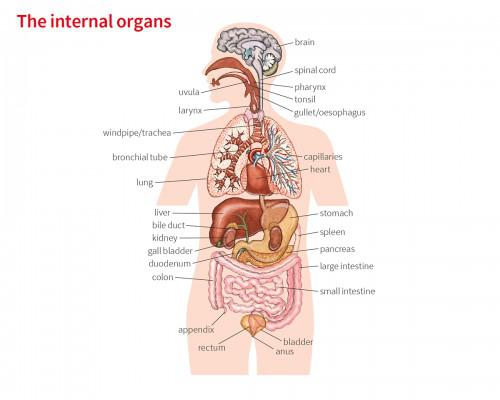
  13. 13

    red blood cell(noun)

    /ˌred ˈblʌd sel/

    紅血球, 紅細胞

    a blood cell that contains hemoglobin and carries oxygen from the lungs to the tissues; an erythrocyte

    Anemia means having too few red blood cells or too little hemoglobin.

    貧血是指紅血球數量過少或血紅素不足。

    Red blood cells live for about 120 days.

  14. 14

    white blood cell(noun)

    /ˌwaɪt ˈblʌd sel/

    白血球, 白細胞

    a blood cell that helps the body fight infection; a leukocyte

    A high white blood cell count may indicate an infection.

    白血球計數偏高可能表示有感染。

    Chemotherapy can lower the number of white blood cells.

  15. 15

    platelet(noun)

    /ˈpleɪtlət/

    血小板

    a tiny cell fragment in the blood that helps it to clot and stop bleeding

    Her platelet count was very low, so she bruised easily.

    她的血小板計數很低,所以很容易瘀青。

    Aspirin reduces the ability of platelets to stick together.