Zum Inhalt springen

Lektion 19/38 · 36 Wörter · 0 gelernt

Animals Plants

Tiere & Pflanzen

  1. 1

    tail(noun)

    /teɪl/

    der Schwanz

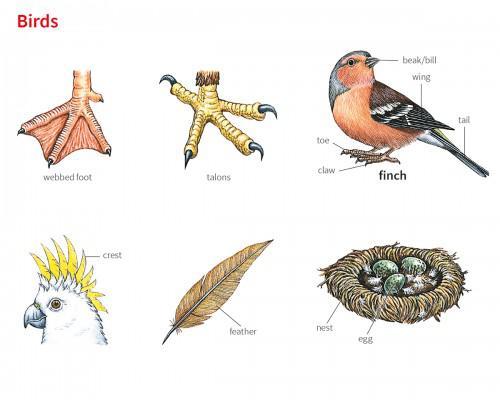
    the part that sticks out at the back of the body of a bird, an animal or a fish, which the animal can move from side to side or up and down

    My cat has a long tail.

    Meine Katze hat einen langen Schwanz.

    The dog ran up, wagging its tail.

    Synonymerearendextremitytraincaudal appendage
    Antonymefrontheadbeginning
  2. 2

    shell(noun)

    /ʃel/

    die Muschel, die Schale

    the hard outer part of eggs, nuts, some seeds, and some animals

    I like collecting sea shells.

    Ich sammle gern Meeresmuscheln.

    We collected shells on the beach.

    Synonymehuskcasecoveringtestexoskeletonhull
    Antonymekernelpulpmeatinsidescore
  3. 3

    nest(noun)

    /nest/

    das Nest

    a hollow place or structure that a bird makes or chooses for laying its eggs in and sheltering its young

    sparrows building a nest of twigs and dry grass

    Spatzen, die ein Nest aus Zweigen und trockenem Gras bauen

    The match has been postponed to a later date.

    Synonymelairdenroostbreeding placeretreathavensanctuary
    Antonymeexposurewildernessopenoutside
  4. 4

    sheep(noun)

    /ʃiːp/

    das Schaf

    an animal with a thick coat, kept on farms for its meat (called mutton or lamb ) or its wool

    a flock of sheep

    eine Herde Schafe

    Sheep were grazing in the fields.

    Synonymeramewelambmutton
    Antonymepredatorwolf
  5. 5

    crop(noun)

    /krɑːp/

    die Feldfrucht, die Nutzpflanze

    a plant that is grown in large quantities, especially as food

    Sugar is an important crop on the island.

    Zucker ist eine wichtige Nutzpflanze auf der Insel.

    The crops are regularly sprayed with pesticides.

    Synonymeharvestproduceyieldgrowthcultivation
    Antonymelossfailurebarrennesssterility
  6. 6

    pig(noun)

    /pɪɡ/

    das Schwein

    an animal with pink, black or brown skin, short legs, a broad nose and a short curly tail. Pigs are kept on farms for their meat (called pork ) or live in the wild.

    a pig farmer

    ein Schweinezüchter

    Pigs were grunting and squealing in the yard.

    Synonymehogswineshoatpiglet
  7. 7

    cow(noun)

    /kaʊ/

    die Kuh

    a large animal kept on farms to produce milk or beef

    They raise many cows.

    Sie halten viele Kühe.

    cow's milk

    Synonymecattlebovineheifer (young female cow)bull (male cow)calf (young cow)
    Antonymebullcalfother animals (e.g.horsesheeppig)
  8. 8

    dog(noun)

    /dɔːɡ/

    der Hund

    an animal with four legs and a tail, often kept as a pet or trained for work, for example hunting or guarding buildings. There are many types of dog , some of which are wild.

    I could hear a dog barking

    Ich konnte einen Hund bellen hören.

    a dog and her puppies

    Synonymecaninehoundpuppooch
    Antonymecatfeline
  9. 9

    cat(noun)

    /kæt/

    die Katze

    a small animal with soft fur that people often keep as a pet. Cats catch and kill birds and mice.

    I love cats.

    Ich liebe Katzen.

    a long-distance call

    Synonymefelinekittypussycat
    Antonymedogcanine
  10. 10

    horn(noun)

    /hɔːrn/

    das Horn

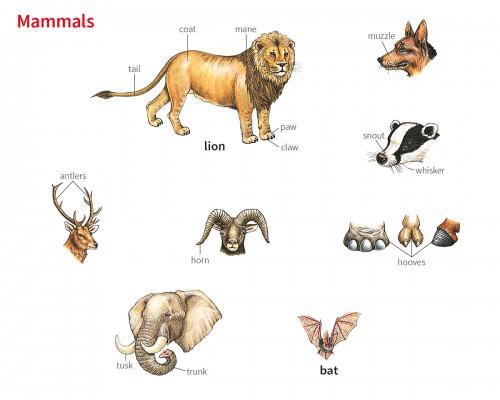
    a hard pointed part that grows, usually in pairs, on the heads of some animals, such as sheep and cows. Horns are often curved.

    The goat has two curved horns on its head.

    Die Ziege hat zwei gebogene Hörner auf dem Kopf.

    Synonymetuskprojectionantennasounderklaxon
    Antonymesilenceconcavity
  11. 11

    grass(noun)

    /ɡræs/

    das Gras

    a common wild plant with narrow green leaves and stems that are eaten by cows, horses, sheep, etc.

    a blade of grass

    ein Grashalm

    The dry grass caught fire.

    Synonymeturflawngreenswardherbagepasture
    Antonymebare earthsoilconcretepavement
  12. 12

    horse(noun)

    /hɔːrs/

    das Pferd

    a large animal with four legs, a mane (= long thick hair on its neck) and a tail. Horses are used for riding on, pulling carriages , etc.

    He mounted his horse and rode off.

    Er stieg auf sein Pferd und ritt davon.

    a horse and cart

    Synonymesteedequinenag
    AntonymeNone (Horses do not have direct antonyms in the same category)
  13. 13

    feather(noun)

    /ˈfeðər/

    die Feder

    one of the many soft light parts covering a bird’s body

    a peacock feather

    eine Pfauenfeder

    a feather pillow (= one containing feathers)

    Synonymeplumagequillplumedown
    Antonymeweightleadstone
  14. 14

    animal(noun)

    /ˈænɪml/

    das Tier

    a creature that is not a bird, a fish, a reptile , an insect or a human

    There are many kinds of animals in this zoo.

    In diesem Zoo gibt es viele Tierarten.

    This product has not been tested on animals.

    Synonymecreaturebeastfaunabeing
    Antonymeplantvegetationmineralinanimate object
  15. 15

    spider(noun)

    /ˈspaɪdər/

    die Spinne

    a small creature with eight thin legs. Many spiders spin webs to catch insects for food.

    There is a big spider here.

    Hier ist eine große Spinne.

    The house had been left to go to ruin.

    Synonymearachnidtarantula
    Antonymeinsectbug
  16. 16

    seed(noun)

    /siːd/

    der Samen, das Saatgut

    the small hard part produced by a plant, from which a new plant can grow

    These vegetables can be grown from seed.

    Dieses Gemüse kann aus Samen gezogen werden.

    seed potatoes(= used for planting)

    Synonymekernelgraingermsourceoriginbeginning
    Antonymefruitproductoutcomeend
  17. 17

    breed(verb)

    /briːd/

    züchten

    to keep animals in order to produce young ones, usually of a particular type

    His main income comes from breeding cattle.

    Sein Haupteinkommen stammt aus der Rinderzucht.

    Labradors and other large breeds of dog

    Synonymereproduceraiserearcultivategeneratepropagate
    Antonymekilldestroyextinct
  18. 18

    wild(adjective)

    /waɪld/

    wild

    living or growing in natural conditions; not kept in a house or on a farm

    Many wild animals live in this forest.

    In diesem Wald leben viele wilde Tiere.

    Synonymeuntamedferaluncultivatednaturalsavageundomesticateduncontrolled
    Antonymetamedomesticatedcultivatedcontrolledmild
  19. 19

    bird(noun)

    /bɜːrd/

    der Vogel

    a creature that is covered with feathers and has two wings and two legs. Most birds can fly.

    More than a third of Britain's bird species need urgent protection

    Mehr als ein Drittel der britischen Vogelarten braucht dringend Schutz.

    More than a third of Britain's bird species need urgent protection.

    Synonymefowlaviansongbirdraptorcreature
    Antonymemammalfishreptile
  20. 20

    snake(noun)

    /sneɪk/

    die Schlange

    a reptile with a very long thin body and no legs. There are many types of snake , some of which are poisonous.

    Venomous snakes spit and hiss when they are cornered.

    Giftschlangen spucken und zischen, wenn sie in die Enge getrieben werden.

    a snake coiled up in the grass

    Synonymeserpentreptileviperpythoncobra
    Antonymefriendally
  21. 21

    creature(noun)

    /ˈkriːtʃər/

    das Lebewesen, das Geschöpf, das Wesen

    a living thing, real or imaginary, that can move around, such as an animal

    Merlion which is a creature with the head of a lion and the body of a fish is the symbol of Singapore.

    Der Merlion, ein Wesen mit dem Kopf eines Löwen und dem Körper eines Fisches, ist das Wahrzeichen Singapurs.

    respect for all living creatures

    Synonymebeinganimalorganismentitylife form
    Antonymeinanimate objectnonbeingthing
  22. 22

    Elephant(noun)

    /ˈelɪfənt/

    der Elefant

    a very large animal with thick grey skin, large ears, two curved outer teeth called tusks and a long nose called a trunk . There are two types of elephant , the African and the Asian.

    Elephants are the largest existing land animals.

    Elefanten sind die größten lebenden Landtiere.

    Synonymemammothpachyderm
    Antonymedwarfminiature animalsmall animal
  23. 23

    Insect(noun)

    /ˈɪnsekt/

    das Insekt

    any small creature with six legs and a body divided into three parts. Insects usually also have wings. Ants , bees and flies are all insects .

    Insects are the most diverse group of animals

    Insekten sind die artenreichste Tiergruppe.

    Synonymebugcreepy-crawlyarthropod
    Antonymevertebratemammalanimal (in a general sensewhen focusing on non-insect types)
  24. 24

    Lion(noun)

    /ˈlaɪən/

    der Löwe

    a large, powerful animal of the cat family that hunts in groups and lives in parts of Africa and southern Asia. Lions have yellow-brown fur and the male has a mane (= long, thick hair round its neck).

    Lion populations are untenable outside designated protected areas

    Löwenpopulationen sind außerhalb ausgewiesener Schutzgebiete nicht überlebensfähig.

    SynonymeKing of beastsLeoAfrican lion
    AntonymePrey animal
  25. 25

    Monkey(noun)

    /ˈmʌŋki/

    der Affe

    an animal with a long tail, that climbs trees and lives in hot countries. There are several types of monkey and they are related to apes and humans.

    The many species of monkey have varied relationships with humans.

    Die vielen Affenarten haben ganz unterschiedliche Beziehungen zum Menschen.

    Synonymeapeprimatesimian
    Antonymehumannon-primate
  26. 26

    harvest(noun)

    /ˈhɑːrvɪst/

    die Ernte

    the time of year when the crops are gathered in on a farm, etc.; the act of cutting and gathering crops

    We had a good harvest this year.

    Wir hatten dieses Jahr eine gute Ernte.

    Synonymecropyieldgatheringreapingvintage
    Antonymelossfailurescarcitybarrennesslack
  27. 27

    prey(noun)

    /preɪ/

    die Beute, das Beutetier

    an animal, a bird, etc. that is hunted, killed and eaten by another

    The eagle watched its prey from high in the sky.

    Der Adler beobachtete seine Beute hoch oben vom Himmel aus.

    Synonymevictimtargetquarrydupesucker
    Antonymepredatorhunterattacker
  28. 28

    predator(noun)

    /ˈpredətər/

    das Raubtier

    an animal that kills and eats other animals

    the relationship between predator and prey

    die Beziehung zwischen Raubtier und Beute

    Synonymehuntercarnivoreassailantattackermarauderplunderer
    Antonymepreyvictimdefenderprotector
  29. 29

    beast(noun)

    /biːst/

    die Bestie, das Untier

    an animal, especially one that is large or dangerous, or one that is unusual

    The beast roamed the dark forest.

    Die Bestie streifte durch den dunklen Wald.

    Synonymeanimalmonsterbrutecreaturewild thing
    Antonymeangelsainthumangentlemancivilized
  30. 30

    bee(noun)

    /biː/

    die Biene

    a black and yellow flying insect that can sting (= touch your skin and make you feel a sharp pain) .Bees live in large groups and make honey (= a sweet sticky substance that is good to eat) .

    The bee flew from flower to flower collecting pollen.

    Die Biene flog von Blüte zu Blüte und sammelte Pollen.

    Synonymehoneybeebumblebeeapian
    Antonymewaspfly
  31. 31

    bond(noun)

    /bɑːnd/

    die Anleihe, die Schuldverschreibung

    a document showing that money has been lent to a government or company, which pays interest and repays it on a set date

    The company issued five-year bonds to finance its new factory.

    Das Unternehmen gab fünfjährige Anleihen aus, um sein neues Werk zu finanzieren.

    Bond prices usually fall when market interest rates rise.

    Synonymedebenturesecurityfixed-income security
    Antonymestockequity
  32. 32

    bug(noun)

    /bʌɡ/

    der Käfer, das Insekt

    any small insect

    A small bug was crawling across the leaf.

    Ein kleiner Käfer krabbelte über das Blatt.

    Synonymeerrordefectflawglitchproblem
    Antonymefeatureperfectionsolution
  33. 33

    frog(noun)

    /frɑːɡ/

    der Frosch

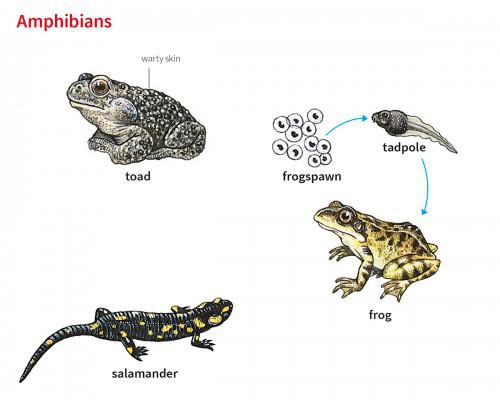
    a small animal with smooth skin, that lives both on land and in water (= is an amphibian ) . Frogs have very long back legs for jumping, and no tail.

    A frog hopped across the path.

    Ein Frosch hüpfte über den Weg.

    Synonymetoadamphibian
    AntonymeNone
  34. 34

    rat(noun)

    /ræt/

    die Ratte

    a small animal with a long tail, that looks like a large mouse, usually considered a pest (= an animal which is disliked because it destroys food or spreads disease)

    I saw a rat in the alley.

    Ich habe eine Ratte in der Gasse gesehen.

    Synonymerodentvermin
  35. 35

    weed(noun)

    /wiːd/

    das Unkraut

    a wild plant growing where it is not wanted, especially among crops or garden plants

    I need to pull the weeds from the garden.

    Ich muss das Unkraut im Garten herausziehen.

    Synonymeundesirable plantinvasive plant
    Antonymedesirable plantcultivated plant
  36. 36

    bear(noun)

    /ber/

    der Bär

    a large heavy wild animal with thick fur and sharp claws

    The bear caught a fish in the river.

    Der Bär fing einen Fisch im Fluss.