Aralin 19/38 · 36 salita · 0 natutunan
Animals Plants
Hayop at Halaman
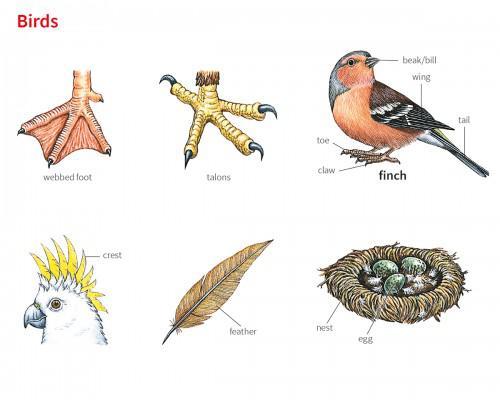
buntot
the part that sticks out at the back of the body of a bird, an animal or a fish, which the animal can move from side to side or up and down
My cat has a long tail.
Ang pusa ko ay may mahabang buntot.
The dog ran up, wagging its tail.
Kasingkahuluganrearendextremitytraincaudal appendageKasalungatfrontheadbeginningpugad
a hollow place or structure that a bird makes or chooses for laying its eggs in and sheltering its young
sparrows building a nest of twigs and dry grass
mga maya na gumagawa ng pugad mula sa mga sanga at tuyong damo
The match has been postponed to a later date.
Kasingkahuluganlairdenroostbreeding placeretreathavensanctuaryKasalungatexposurewildernessopenoutsidepananim
a plant that is grown in large quantities, especially as food
Sugar is an important crop on the island.
Ang asukal ay isang mahalagang pananim sa isla.
The crops are regularly sprayed with pesticides.
KasingkahuluganharvestproduceyieldgrowthcultivationKasalungatlossfailurebarrennesssterilityaso
an animal with four legs and a tail, often kept as a pet or trained for work, for example hunting or guarding buildings. There are many types of dog , some of which are wild.
I could hear a dog barking
Naririnig ko ang isang aso na tumatahol
a dog and her puppies
KasingkahulugancaninehoundpuppoochKasalungatcatfelinesungay
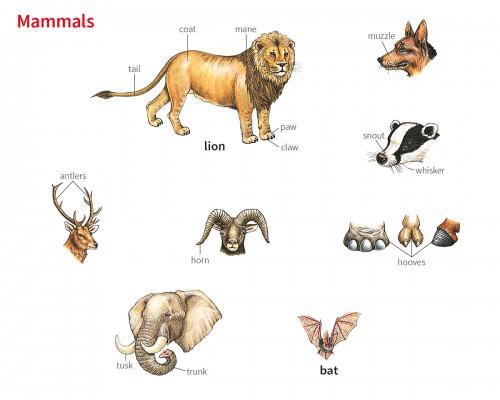
a hard pointed part that grows, usually in pairs, on the heads of some animals, such as sheep and cows. Horns are often curved.
The goat has two curved horns on its head.
Ang kambing ay may dalawang kurbadang sungay sa ulo.
KasingkahulugantuskprojectionantennasounderklaxonKasalungatsilenceconcavitykabayo
a large animal with four legs, a mane (= long thick hair on its neck) and a tail. Horses are used for riding on, pulling carriages , etc.
He mounted his horse and rode off.
Sumakay siya sa kanyang kabayo at umalis.
a horse and cart
KasingkahulugansteedequinenagKasalungatNone (Horses do not have direct antonyms in the same category)hayop
a creature that is not a bird, a fish, a reptile , an insect or a human
There are many kinds of animals in this zoo.
Maraming uri ng hayop sa zoo na ito.
This product has not been tested on animals.
KasingkahulugancreaturebeastfaunabeingKasalungatplantvegetationmineralinanimate objectbinhi
the small hard part produced by a plant, from which a new plant can grow
These vegetables can be grown from seed.
Ang mga gulay na ito ay maaaring itanim mula sa binhi.
seed potatoes(= used for planting)
KasingkahulugankernelgraingermsourceoriginbeginningKasalungatfruitproductoutcomeendmagpalahi, mag-alaga
to keep animals in order to produce young ones, usually of a particular type
His main income comes from breeding cattle.
Ang pangunahing kita niya ay galing sa pagpapalahi ng baka.
Labradors and other large breeds of dog
KasingkahuluganreproduceraiserearcultivategeneratepropagateKasalungatkilldestroyextinctmailap, ligaw
living or growing in natural conditions; not kept in a house or on a farm
Many wild animals live in this forest.
Maraming mailap na hayop ang nakatira sa kagubatang ito.
KasingkahuluganuntamedferaluncultivatednaturalsavageundomesticateduncontrolledKasalungattamedomesticatedcultivatedcontrolledmildibon
a creature that is covered with feathers and has two wings and two legs. Most birds can fly.
More than a third of Britain's bird species need urgent protection
Mahigit sa isang-katlo ng mga uri ng ibon sa Britanya ang nangangailangan ng agarang proteksyon.
More than a third of Britain's bird species need urgent protection.
KasingkahuluganfowlaviansongbirdraptorcreatureKasalungatmammalfishreptileahas
a reptile with a very long thin body and no legs. There are many types of snake , some of which are poisonous.
Venomous snakes spit and hiss when they are cornered.
Dumura at sumisitsit ang mga makamandag na ahas kapag kinorner.
a snake coiled up in the grass
KasingkahuluganserpentreptileviperpythoncobraKasalungatfriendallynilalang
a living thing, real or imaginary, that can move around, such as an animal
Merlion which is a creature with the head of a lion and the body of a fish is the symbol of Singapore.
Ang Merlion, na isang nilalang na may ulo ng leon at katawan ng isda, ay ang simbolo ng Singapore.
respect for all living creatures
Kasingkahuluganbeinganimalorganismentitylife formKasalungatinanimate objectnonbeingthingelepante
a very large animal with thick grey skin, large ears, two curved outer teeth called tusks and a long nose called a trunk . There are two types of elephant , the African and the Asian.
Elephants are the largest existing land animals.
Ang mga elepante ang pinakamalaking umiiral na hayop sa lupa.
KasingkahuluganmammothpachydermKasalungatdwarfminiature animalsmall animalinsekto
any small creature with six legs and a body divided into three parts. Insects usually also have wings. Ants , bees and flies are all insects .
Insects are the most diverse group of animals
Ang mga insekto ang pinaka-magkakaibang grupo ng mga hayop.
Kasingkahuluganbugcreepy-crawlyarthropodKasalungatvertebratemammalanimal (in a general sensewhen focusing on non-insect types)leon
a large, powerful animal of the cat family that hunts in groups and lives in parts of Africa and southern Asia. Lions have yellow-brown fur and the male has a mane (= long, thick hair round its neck).
Lion populations are untenable outside designated protected areas
Ang mga populasyon ng leon ay hindi na mapanatili sa labas ng mga itinalagang protektadong lugar.
KasingkahuluganKing of beastsLeoAfrican lionKasalungatPrey animalunggoy
an animal with a long tail, that climbs trees and lives in hot countries. There are several types of monkey and they are related to apes and humans.
The many species of monkey have varied relationships with humans.
Ang maraming uri ng unggoy ay may iba't ibang ugnayan sa mga tao.
KasingkahuluganapeprimatesimianKasalungathumannon-primatebubuyog
a black and yellow flying insect that can sting (= touch your skin and make you feel a sharp pain) .Bees live in large groups and make honey (= a sweet sticky substance that is good to eat) .
The bee flew from flower to flower collecting pollen.
Lumipad ang bubuyog mula sa bulaklak patungo sa bulaklak na nangongolekta ng pollen.
KasingkahuluganhoneybeebumblebeeapianKasalungatwaspflybono
a document showing that money has been lent to a government or company, which pays interest and repays it on a set date
The company issued five-year bonds to finance its new factory.
Naglabas ang kompanya ng limang-taong bono upang pondohan ang bago nitong pabrika.
Bond prices usually fall when market interest rates rise.
Kasingkahulugandebenturesecurityfixed-income securityKasalungatstockequity