본문으로 건너뛰기

레슨 11/33 · 123단어 · 외운 단어 0

City

도시

  1. 1

    yield(noun)

    /jiːld/

    수익률, 이자율, 배당수익률

    the income from an investment, such as interest or dividends, shown as a percentage of its price

    Ten-year government bond yields rose to 3 per cent.

    10년물 국채 수익률이 3퍼센트로 상승했다.

    The share has a dividend yield of 5 per cent.

    유의어producegenerateprovidedeliverbearafford
    반의어resistwithholdretainobstruct
  2. 2

    entertainment(noun)

    /ˌentərˈteɪnmənt/

    오락, 연예

    films, music, etc. used to entertain people; an example of this

    There was no entertainment for the children of guests at the hotel.

    호텔 투숙객의 자녀들을 위한 오락거리가 전혀 없었다.

    유의어amusementrecreationenjoymentpleasurediversiondistraction
    반의어boredomennuitediumworkdrudgery
  3. 3

    highway(noun)

    /ˈhaɪweɪ/

    고속도로 (gosok doro)

    a main road for travelling long distances, especially one connecting and going through cities and towns

    There have been many accidents on this highway.

    이 고속도로에서 많은 사고가 있었습니다.

    Highway patrol officers closed the road.

    유의어freewayexpresswaythruwayturnpikemotorway
    반의어side streetback roadcountry lanealley
  4. 4

    traffic(noun)

    /ˈtræfɪk/

    교통

    the vehicles that are on a road at a particular time

    They were stuck in traffic and missed their flight.

    그들은 교통 체증에 갇혀 비행기를 놓쳤다.

    There's a lot of traffic today on the road!

    유의어congestiongridlockjamblockage
    반의어clear roadopen roadfree-flowing
  5. 5

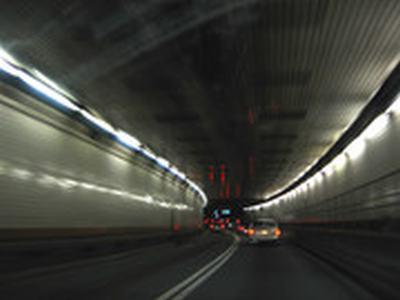
    tunnel(noun)

    /ˈtʌnl/

    터널

    a passage built underground, for example to allow a road or railway to go through a hill, under a river, etc.

    a railway/railroad tunnel

    철도 터널

    the Channel Tunnel

    유의어passagewayunderpasssubwayboreexcavationshaft
    반의어open spacesurface
  6. 6

    pollution(noun)

    /pəˈluːʃn/

    오염 (oyeom)

    the process of making air, water, soil, etc. dirty; the state of being dirty

    Water pollution is becoming more serious now.

    수질 오염이 점점 더 심각해지고 있습니다.

    air/water pollution

    유의어contaminationdefilementimpurityfoulnesstaintadulteration
    반의어purificationcleansingsterilizationclarificationpristineness
  7. 7

    cycling(noun)

    /ˈsaɪklɪŋ/

    사이클링

    the sport or activity of riding a bicycle

    Cycling is Europe's second most popular sport.

    사이클링은 유럽에서 두 번째로 인기 있는 스포츠입니다.

    유의어bikingridingpedalingwheel sport
    반의어walkingrunningsedentary activity
  8. 8

    bridge(noun)

    /brɪdʒ/

    다리 (dari)

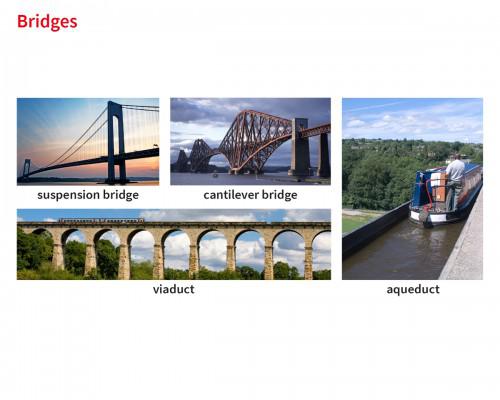
    a structure that is built over a road, railway, river, etc. so that people, vehicles, etc. can cross from one side to the other

    We crossed the bridge over the River Windrush.

    우리는 윈드러시 강 위의 다리를 건넜습니다. (Urineun windeureosi gang wieui darireul geonneosseumnida.)

    I've read the whole book from beginning to end and still can't understand it.

    유의어viaductoverpassspancausewayflyover
    반의어chasmgapgulfdivide
  9. 9

    road(noun)

    /rəʊd/

    도로 (doro)

    a hard surface built for vehicles to travel on

    This road is very narrow.

    이 도로는 매우 좁습니다. (I doroneun maeoo jopseumnida.)

    유의어streetpathavenuehighwaythoroughfareroute
    반의어dead endcul-de-sac
  10. 10

    lane(noun)

    /leɪn/

    좁은 길, 골목길

    a narrow road in the country or a narrow street in a town

    We drove along a muddy lane to reach the farmhouse.

    우리는 진흙투성이 좁은 길을 따라 차를 몰아 농가에 도착했다.

    유의어pathroadtrackalleyavenueway
    반의어highwaymain roadboulevard
  11. 11

    shopping(noun)

    /ˈʃɑːpɪŋ/

    쇼핑

    the activity of going to shops and buying things or ordering them online

    I do all my clothes shopping online.

    저는 옷 쇼핑을 모두 온라인으로 합니다.

    유의어purchasingbuyingbrowsingmarketingerrands
    반의어sellingdisposingdivesting
  12. 12

    train(noun)

    /treɪn/

    기차

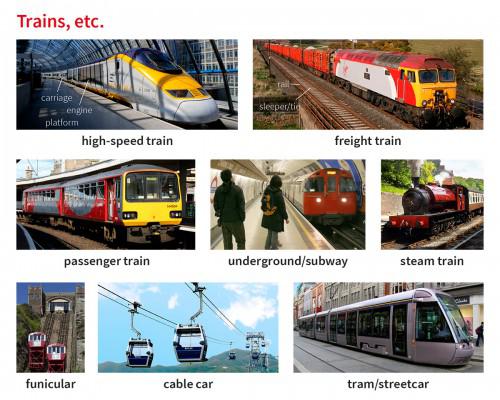
    a number of connected coaches or trucks, pulled by an engine or powered by a motor in each one, taking people and goods from one place to another

    I like riding on trains. It's a very relaxing way to travel.

    저는 기차 타는 것을 좋아합니다. 그것은 매우 편안한 여행 방법입니다.

    유의어railroad carrailcarlocomotivecar
    반의어automobileplanebusship
  13. 13

    taxi(noun)

    /ˈtæksi/

    택시 (taeksi)

    a car with a driver that you pay to take you somewhere. Taxis usually have meters that show how much money you have to pay.

    I got in a taxi and went to the train station.

    택시를 타고 기차역에 갔어요.

    유의어cabhackyellow cab
    반의어personal carprivate vehiclebustrain
  14. 14

    bus(noun)

    /bʌs/

    버스

    a large road vehicle that carries passengers, especially one that travels along a fixed route and stops regularly to let people get on and off

    You can catch a bus for Seattle at the bus station.

    버스 정류장에서 시애틀행 버스를 탈 수 있습니다.

    Shall we walk or go by bus?

    유의어motorbuscoachdouble-deckerminibuspublic transport
    반의어cartaxiprivate vehicle
  15. 15

    subway(noun)

    /ˈsʌbweɪ/

    지하철 (jihacheol)

    an underground railway system in a city

    You can take the subway in New York.

    뉴욕에서 지하철을 탈 수 있습니다. (Nyu Yorkeseo jihacheoreul tal su isseumnida.)

    유의어undergroundmetrotube
    반의어abovegroundsurface
  16. 16

    Commute(verb)

    /kəˈmjuːt/

    통근

    to travel regularly by bus, train, car, etc. between your place of work and your home

    He commutes to work every day by train.

    그는 매일 기차로 통근합니다.

    유의어traveljourneygo back and forthtravel regularly
    반의어stayremainlive at worktelecommute
  17. 17

    Traffic jam(noun)

    /ˈtræfɪk dʒæm/

    교통 체증, 교통 정체

    a long line of vehicles on a road that cannot move or that can only move very slowly

    There is a traffic jam on Fifth Street, so I will be late.

    5번가에 교통 체증이 있어서 저는 늦을 것 같습니다.

    유의어congestiongridlockblockagetie-upbottleneck
    반의어clear roadfree flowsmooth traffic
  18. 18

    Traffic congestion(noun)

    /ˈtræfɪk kənˈdʒestʃən/

    교통 체증 (gyotong chejeung)

    a situation in which there are too many vehicles on the roads, so that traffic moves very slowly

    The traffic congestion in the city gets worse.

    도시의 교통 체증이 점점 심해지고 있다. (dosiui gyotong chejeungi jeomjeom simhaejigo itda.)

    유의어Traffic jamGridlockTraffic bottleneckHeavy traffic
    반의어Free-flowing trafficLight trafficNo traffic
  19. 19

    Skyline(noun)

    /ˈskaɪlaɪn/

    스카이라인 (seukairain)

    the outline of buildings, trees, hills, etc. seen against the sky

    The Chicago skyline can be seen from the bedroom.

    시카고의 스카이라인은 침실에서 볼 수 있습니다. (sikago-ui seukairain-eun chimshil-eseo bol su isseumnida.)

    유의어cityscapehorizonoutlineprofilepanorama
    반의어groundbaseinterior
  20. 20

    Congestion(noun)

    /kənˈdʒestʃən/

    혼잡 (honjap)

    the state of being crowded and full of traffic

    Rising traffic congestion is an inescapable condition in large and growing metropolitan areas

    심해지는 교통 혼잡은 크고 성장하는 대도시 지역에서 피할 수 없는 현상입니다.

    유의어overcrowdingblockageobstructionstagnationbottleneckjamgridlock
    반의어clearancefloweaseopennessrelief
  21. 21

    sidewalk(noun)

    /ˈsaɪdwɔːk/

    보도 (bodo)

    a flat part at the side of a road for people to walk on

    I walked down the sidewalk.

    나는 보도를 걸었다. (Naneun bodo-reul georeotta.)

    유의어pavementfootpathwalkway
    반의어roadstreetcarriageway
  22. 22

    roundabout(noun)

    /ˈraʊndəbaʊt/

    회전교차로, 로터리

    a place where two or more roads meet, forming a circle that all traffic must go around in the same direction

    Go straight on at the roundabout and take the second exit.

    회전교차로에서 직진한 다음 두 번째 출구로 나가세요.

    유의어circuitousindirectdeviatingambiguouseuphemistic
    반의어directstraightforwardexplicit
  23. 23

    speed limit(noun)

    /ˈspiːd lɪmɪt/

    속도 제한 (sokdo jehan)

    the highest speed at which you can legally drive on a particular road

    The speed limit on this road is 50 mph.

    이 도로의 속도 제한은 시속 50마일입니다.

    유의어maximum speedposted speed
    반의어no speed limit
  24. 24

    infrastructure(noun)

    /ˈɪnfrəstrʌktʃər/

    기반 시설

    the basic systems and services that are necessary for a country or an organization to run smoothly, for example buildings, transport and water and power supplies

    It is necessary to improve the infrastructure for better traffic systems.

    더 나은 교통 시스템을 위해 기반 시설을 개선하는 것이 필요합니다.

    유의어frameworkfoundationbasesystemnetworkfacilitiesservices
    반의어deteriorationdecayneglectdestructiondisrepair
  25. 25

    landmark(noun)

    /ˈlændmɑːrk/

    랜드마크, 명소, 상징적 건축물

    a famous building or place that is easy to recognise and helps people know where they are

    The Opera House is a well-known landmark in central Hanoi.

    오페라 하우스는 하노이 중심부의 유명한 랜드마크입니다.

    Use the cathedral as a landmark if you get lost.

    유의어markmonumentfeaturebeaconturning pointwatershed
    반의어insignificanceobscurityunnoticeable
  26. 26

    merge(verb)

    /mɜːrdʒ/

    병합하다, 머지하다, 통합하다

    to combine two or more things into one, such as joining changes from one branch of code into another

    After the review, you can merge your branch into main.

    리뷰가 끝나면 작업 브랜치를 main에 병합할 수 있습니다.

    The two customer databases were merged into a single system.

    유의어combineuniteintegrateconsolidateamalgamatefuseblend
    반의어separatedividesplitdissolvediverge
  27. 27

    slum(noun)

    /slʌm/

    빈민가

    an area of a city that is very poor and where the houses are dirty and in bad condition

    The area was fast becoming a slum for the destitute.

    그 지역은 빠르게 극빈층을 위한 빈민가가 되어가고 있었다.

    유의어ghettoshantytowntenementhovellower-class neighborhood
    반의어affluent neighborhoodupscale communitywealthy arealuxury district
  28. 28

    cosmopolitan(adjective)

    /ˌkɑːzməˈpɑːlɪtən/

    국제적인

    containing people of different types or from different countries, and influenced by their culture

    New York is a highly cosmopolitan city.

    뉴욕은 매우 국제적인 도시입니다.

    유의어worldlyinternationalmulticulturalglobalurbanesophisticated
    반의어parochialprovinciallocalinsularnarrow-minded
  29. 29

    skyscraper(noun)

    /ˈskaɪskreɪpər/

    고층 건물 (go-cheung geon-mul)

    a very tall building in a city

    Are skyscrapers ugly?

    고층 건물은 못생겼나요? (Go-cheung geon-mureun mot-saeng-gyeonna-yo?)

    유의어high-risetowertall building
    반의어low-riseone-story buildingground-level structure
  30. 30

    neighborhood(noun)

    /ˈneɪbəhʊd/

    동네 (dongne)

    a district or an area of a town; the people who live there

    There is a big yard in our neighborhood.

    우리 동네에는 큰 마당이 있습니다. (Uri dongne-e-neun keun madang-i isseumnida.)

    유의어communitylocalityvicinitydistrictarearegion
    반의어distant placeremote areawilderness
  31. 31

    intersection(noun)

    /ˈɪntərsekʃn/

    교차로 (gyocharo)

    a place where two or more roads, lines, etc. meet or cross each other

    There is an intersection ahead.

    앞에 교차로가 있습니다. (ape gyocharoga itseumnida.)

    유의어junctioncrossingcrossroadsconfluencemeeting point
    반의어paralleldivergenceseparation
  32. 32

    cyclist(noun)

    /ˈsaɪklɪst/

    자전거 선수 (jajeongeo seonsu)

    a person who rides a bicycle

    He is the best cyclist.

    그는 최고의 자전거 선수입니다. (Geuneun choegoui jajeongeo seonsuimnida.)

    유의어bikerbicycle riderwheelman
    반의어pedestriandriver
  33. 33

    sightseeing(noun)

    /ˈsaɪtsiːɪŋ/

    관광, 명소 관광

    the activity of visiting famous or interesting places as a tourist

    The afternoon is free for sightseeing or shopping.

    오후에는 자유롭게 관광이나 쇼핑을 하실 수 있습니다.

    We offer a half-day sightseeing tour of the Old Quarter.

    유의어touringvisitingexplorationvacationingtraveling
    반의어routineworklaborinactivitystaying put
  34. 34

    metropolitan(adjective)

    /ˌmetrəˈpɑːlɪtən/

    대도시의

    connected with a large or capital city

    With a population of more than 7 million in the city and 19 million in the whole metropolitan area, New York is the largest city in the US.

    뉴욕은 시에 7백만 명 이상, 전체 대도시 지역에 1,900만 명의 인구를 가지고 있어 미국에서 가장 큰 도시입니다.

    유의어urbanmunicipalcitygreatercosmopolitan
    반의어ruralprovincialsuburbancountry
  35. 35

    residential area(noun)

    /,rezi'denʃəl 'eəriə/

    주거 지역 (jugeo jiyeok)

    an area of a town where people live, with houses rather than offices or factories

    I'm renting a small flat in the Nguyen Cong Tru Residential area in Hanoi.

    하노이의 응우옌꽁쯔 주거 지역에 있는 작은 아파트를 임대하고 있습니다.

    유의어housing estatesuburbneighborhoodcommunitydevelopment
    반의어industrial areacommercial arearural area
  36. 36

    urbanization(noun)

    /ˌɜːrbənəˈzeɪʃn/

    도시화

    the process in which towns, streets, factories, etc. are built where there was once countryside

    Fast urbanization can cause some environmental problems.

    급속한 도시화는 몇 가지 환경 문제를 일으킬 수 있습니다.

    유의어city growthurban developmenttown planningmetropolitanization
    반의어ruralizationdeurbanizationrural decay
  37. 37

    city center(noun)

    도심 (dosim)

    the main or central part of a city, where most shops and offices are

    The new shopping mall is located in the city center.

    새 쇼핑몰은 도심에 위치해 있습니다.

    유의어downtowntown centercentral districtbusiness district
    반의어suburbsoutskirtsperipheryrural area
  38. 38

    city council(noun)

    /ˌsɪti ˈkaʊnsl/

    시의회 (siuihoe)

    a group of elected officials who make the laws of a city and help to govern it

    The city council voted to approve the new budget.

    시의회는 새 예산안을 승인하는 투표를 했습니다. (Siuihoe-neun sa yesanan-eul seungin-haneun topyo-reul haetsseumnida.)

    유의어municipal councillocal counciltown council
    반의어federal governmentstate governmentnational government
  39. 39

    city limits(noun)

    도시 경계

    the official boundaries of a city

    The sign indicated we were leaving the city limits.

    표지판은 우리가 도시 경계를 벗어나고 있음을 나타냈다.

    유의어city boundarymunicipal limitsurban boundary
    반의어countrysiderural area
  40. 40

    cityscape(noun)

    /ˈsɪtiskeɪp/

    도시 풍경 (doshi punggyeong)

    the appearance of a city or urban area, especially in a picture; a picture of a city

    The cityscape at night was breathtaking.

    밤의 도시 풍경은 숨 막힐 듯 아름다웠다. (bam-ui dosi punggyeong-eun sum makhil deut areumdawotda.)

    유의어city viewurban landscapecity sceneskyline
    반의어landscapecountrysiderural scene
  41. 41

    civic(adjective)

    /ˈsɪvɪk/

    시민의, 도시의

    connected with the people who live in a town or city and their duties as citizens

    It is our civic duty to vote.

    투표하는 것은 우리의 시민적 의무이다.

    유의어civilpubliccommunity
    반의어privatepersonal
  42. 42

    crosswalk(noun)

    /ˈkrɔːswɔːk/

    횡단보도 (hoengdanbodo)

    a part of a road where vehicles must stop to allow people to cross

    Use the crosswalk to safely cross the street.

    횡단보도를 이용하여 안전하게 길을 건너세요. (Hoengdanbodoreul iyonghayeo anjeonhage gireul geonneoseyo.)

    유의어pedestrian crossingzebra crossingmarked crossing
    반의어middle of the streetjaywalking
  43. 43

    detour(noun)

    /ˈdiːtʊr/

    우회

    a longer route that you take in order to avoid a problem or to visit a place

    We had to take a detour because of the road construction.

    도로 공사 때문에 우회해야 했습니다.

    유의어deviationreroutingbypassdiversion
    반의어direct routestraight path
  44. 44

    downtown(adverb)

    /ˌdaʊnˈtaʊn/

    시내에, 시내로

    in or towards the centre of a city, especially its main business area

    Let's go downtown for dinner.

    저녁 먹으러 시내에 가자.

    유의어city centercentral business districtCBD
    반의어suburbsoutskirtsrural
  45. 45

    metropolis(noun)

    /məˈtrɑːpəlɪs/

    대도시

    a large, important city (often the capital city of a country or region)

    New York City is a huge metropolis.

    뉴욕시는 거대한 대도시입니다.

    유의어cityurban centermegalopolis
    반의어rural areavillagecountryside
  46. 46

    modernization(noun)

    /ˌmɑːdərnəˈzeɪʃn/

    현대화

    the process of making a system, methods, etc. more modern and more suitable for use at the present time

    The modernization of the city improved the quality of life for its residents.

    도시의 현대화는 주민들의 삶의 질을 향상시켰다.

    유의어advancementdevelopmentinnovationprogresswesternization
    반의어traditionstagnationpreservation
  47. 47

    motorist(noun)

    /ˈməʊtərɪst/

    운전자

    a person driving a car

    The motorist was fined for speeding.

    운전자는 과속으로 벌금을 물었습니다.

    유의어drivercar drivervehicle operator
    반의어pedestrianpassenger
  48. 48

    overpass(noun)

    /ˈəʊvərpæs/

    고가도로

    a bridge that carries one road over another one

    The overpass allows traffic to flow smoothly above the busy intersection.

    고가도로는 혼잡한 교차로 위로 교통 흐름을 원활하게 해줍니다.

    유의어flyoverbridgeviaduct
    반의어underpasstunnel
  49. 49

    parking(noun)

    /ˈpɑːrkɪŋ/

    주차

    the act of stopping a vehicle at a place and leaving it there for a period of time

    There is no parking available near the museum.

    박물관 근처에 주차장이 없습니다.

    유의어carparkparking lotparking areagarage
    반의어movingdriving
  50. 50

    pedestrian(noun)

    /pəˈdestriən/

    보행자

    a person walking in the street and not travelling in a vehicle

    The pedestrian waited for the light to change before crossing the street.

    보행자는 길을 건너기 전에 신호가 바뀌기를 기다렸습니다.

    유의어walkerfoot traveler
    반의어drivermotorist
  51. 51

    skid row(noun)

    /skɪd rəʊ/

    빈민가

    used to describe the poorest part of a town, the sort of place where people who have no home or job and who drink too much alcohol live

    He ended up living on skid row after losing his job.

    그는 실직 후 빈민가에서 살게 되었다.

    유의어slumsslum districtdown-and-out area
    반의어affluent neighborhoodupscale area
  52. 52

    suburb(noun)

    /ˈsʌbɜːrb/

    교외

    an area where people live that is outside the centre of a city

    They live in a quiet suburb outside of the city.

    그들은 도시 외곽의 조용한 교외에 살고 있습니다.

    유의어outskirtsresidential areacommuter town
    반의어city centerdowntowninner city
  53. 53

    tram(noun)

    /træm/

    전차

    a vehicle driven by electricity, that runs on rails along the streets of a town and carries passengers

    The tram travels through the city center.

    전차는 시내 중심가를 다닙니다.

    유의어streetcartrolleytrolley car
    반의어busautomobiletaxi
  54. 54

    u-turn(noun)

    /ˈjuː tɜːrn/

    유턴

    a turn of 180° that a vehicle makes so that it can move forwards in the opposite direction

    The driver made a u-turn to go back.

    운전자는 돌아가기 위해 유턴을 했습니다.

    유의어about-facereversalturnaround
    반의어continuationstraight path
  55. 55

    underpass(noun)

    /ˈʌndərpæs/

    지하도

    a road or path that goes under another road or railway track

    The underpass allows pedestrians to safely cross the busy street.

    지하도는 보행자가 번잡한 거리를 안전하게 건널 수 있도록 해줍니다.

    유의어subwaytunnelviaductpassageway
    반의어overpassbridge
  56. 56

    zoning(noun)

    /ˈzəʊnɪŋ/

    구역 설정

    the practice of allowing areas of land to be used only for a particular purpose

    The city council approved the new zoning regulations.

    시 의회는 새로운 구역 설정 규정을 승인했습니다.

    유의어districtingplanningclassificationregulation
    반의어deregulationunrestricted
  57. 57

    karaoke(noun)

    /ˌkæriˈəʊki/

    노래방

    a type of entertainment in which a machine plays only the music of popular songs so that people can sing the words themselves

    We went to a karaoke bar last night.

    우리는 어젯밤 노래방에 갔어요.

    유의어sing-alongmusical entertainmentvocal performance
    반의어silent performanceinstrumental musicspeech
  58. 58

    gridlock(noun)

    /ˈɡrɪdlɑːk/

    교통 마비, 꽉 막힘

    a situation in which there are so many cars in the streets of a town that the traffic cannot move at all

    The city was in gridlock due to the heavy snow.

    폭설 때문에 도시의 교통이 완전히 마비되었다.

    유의어stalemateimpassedeadlockstandstill
    반의어breakthroughprogressadvancement
  59. 59

    jogging(noun)

    /ˈdʒɑːɡɪŋ/

    조깅

    the activity of running slowly and steadily as a form of exercise

    I go jogging every morning.

    나는 매일 아침 조깅을 간다.

    유의어runninglight runningtrotting
    반의어sprintingwalkingsitting
  60. 60

    redevelopment(noun)

    /ˌriːdɪˈveləpmənt/

    재개발

    the act or process of changing an area by building new roads, houses, factories, etc.

    The city planned a major redevelopment of the waterfront area.

    도시는 해안 지역의 대규모 재개발을 계획했습니다.

    유의어urban renewalrevitalizationregenerationreconstruction
    반의어deteriorationdeclinedecay
  61. 61

    mass transit(noun)

    /mæs ˈtrænzɪt/

    대중 교통

    the system of public transport in cities, including the subway , buses, etc.

    Many cities are expanding their mass transit systems.

    많은 도시들이 대중 교통 시스템을 확장하고 있습니다.

    유의어public transportationpublic transitcommuter transport
    반의어private transportationpersonal vehicle
  62. 62

    bicycle lane(noun)

    /ˈbaɪsɪkl leɪn/

    자전거 도로

    a part of a road that only bicycles are allowed to use

    The new bicycle lane makes commuting safer.

    새로운 자전거 도로는 통근을 더 안전하게 만듭니다.

    유의어bike lanecycle lanebike pathcycle track
    반의어roadhighwaystreet
  63. 63

    expressway(noun)

    /ɪkˈspresweɪ/

    고속도로

    a wide road that allows traffic to travel fast through a city or other area where many people live

    The expressway allows for quicker travel between cities.

    고속도로는 도시 간 더 빠른 이동을 가능하게 합니다.

    유의어highwayfreewaymotorway
    반의어side streetlocal road
  64. 64

    flyover(noun)

    /ˈflaɪəʊvər/

    고가도로

    a bridge that carries one road over another one

    The new flyover has greatly reduced traffic congestion.

    새 고가도로는 교통 체증을 크게 줄였습니다.

    유의어overpassovercrossingviaduct
    반의어underpasssubwaytunnel
  65. 65

    rush hour(noun)

    /rʌʃ ˈaʊər/

    러시 아워

    the time, usually twice a day, when the roads are full of traffic and trains are crowded because people are travelling to or from work

    The traffic is terrible during rush hour.

    러시 아워 동안 교통 체증이 심합니다.

    유의어peak hourbusy timecommuting time
    반의어off-peak hoursquiet timelull
  66. 66

    zebra crossing(noun)

    /ˈziːbrə ˈkrɔːsɪŋ/

    횡단보도

    an area of road marked with broad black and white lines where vehicles must stop for people to walk across

    Always use the zebra crossing to cross the road safely.

    안전하게 길을 건너려면 항상 횡단보도를 이용하세요.

    유의어pedestrian crossingcrosswalk
    반의어none
  67. 67

    Noise pollution(noun)

    /nɔɪz pəˈluːʃən/

    소음 공해

    Harmful or annoying levels of noise, for example from traffic, aircraft or machines.

    The city struggles with significant noise pollution.

    도시는 심각한 소음 공해로 어려움을 겪고 있습니다.

    유의어sound pollutionacoustic pollutionenvironmental noise
    반의어quietsilencepeace
  68. 68

    Cultural diversity(noun)

    /ˈkʌltʃərəl daɪˈvɜːrsəti/

    문화 다양성

    The existence of many different cultures, ethnic groups and traditions within a society or group.

    Our company values cultural diversity.

    우리 회사는 문화 다양성을 중요하게 생각합니다.

    유의어multiculturalismcross-culturalismpluralism
    반의어cultural uniformitycultural homogeneity
  69. 69

    Amusement parks(noun)

    /əˈmjuːzmənt pɑːrks/

    놀이공원

    Large outdoor places with rides, games and other entertainments for people to enjoy.

    Many families visit amusement parks during the summer.

    많은 가족들이 여름 동안 놀이공원을 방문합니다.

    유의어theme parksfairgrounds
    반의어serious placesworkplaces
  70. 70

    Aquariums(noun)

    /əˈkwɛriəmz/

    수족관

    Buildings where people can go to see fish and other water animals kept in large tanks.

    The children love visiting aquariums.

    아이들은 수족관에 가는 것을 좋아합니다.

    유의어fish tanksmarine exhibitsoceanariums
    반의어landscapesterrariums
  71. 71

    Architectural heritage(noun)

    /ˌɑːrkɪˈtɛktʃərəl ˈhɛrɪtɪdʒ/

    건축 유산

    The buildings and structures of historical or cultural value that a place has inherited from the past.

    The city is known for its rich architectural heritage.

    그 도시는 풍부한 건축 유산으로 유명합니다.

    유의어Architectural legacyBuilt heritageArchitectural landmarks
    반의어Modern constructionNew architecture
  72. 72

    Art exhibitions(noun)

    /ɑːrt ˌɛksɪˈbɪʃənz/

    미술 전시회

    Public shows of paintings, sculptures or other works of art.

    We went to several art exhibitions during our trip.

    여행 중에 여러 미술 전시회에 갔습니다.

    유의어art showsgallery showingsart displays
    반의어private collectionshidden art
  73. 73

    Boat rides(noun)

    /boʊt raɪdz/

    보트 타기

    Short trips on a boat, usually for pleasure.

    We enjoyed the boat rides on the lake.

    우리는 호수에서 보트 타기를 즐겼습니다.

    유의어boatingferry tripswater tours
    반의어land travelwalking
  74. 74

    Car accident(noun)

    /kɑːr ˈæksɪdənt/

    교통 사고

    An event in which a car hits another vehicle, a person or an object, often causing injury or damage.

    She was injured in a car accident.

    그녀는 교통사고로 부상을 입었습니다.

    유의어Traffic collisionAuto crashMotor vehicle accident
    반의어Safe drivingAccident-free
  75. 75

    Carpooling(noun)

    /ˈkɑːrˌpuːlɪŋ/

    카풀

    An arrangement in which a group of people share one car to travel to work or other places.

    We decided to start carpooling to save money on gas.

    우리는 기름값을 절약하기 위해 카풀을 시작하기로 결정했습니다.

    유의어RidesharingCar sharing
    반의어Driving alone
  76. 76

    Central business district (CBD)(noun)

    /ˈsɛntrəl ˈbɪznɪs ˈdɪstrɪkt/

    중심업무지구

    The main part of a city, where most of the offices, shops and businesses are.

    The central business district is bustling with activity during the day.

    중심업무지구는 낮 동안 활동으로 붐빈다.

    유의어downtowncity centerfinancial district
    반의어suburbsoutskirts
  77. 77

    Cinemas(noun)

    /ˈsɪnəməz/

    영화관, 극장

    Buildings in which films are shown to the public.

    The city has several modern cinemas showing the latest films.

    그 도시에는 최신 영화를 상영하는 현대적인 영화관이 여러 곳 있다.

    유의어movie theatersmovie housestheaters
  78. 78

    City dweller(noun)

    /ˈsɪti ˈdwɛlər/

    도시 거주자

    A person who lives in a city.

    She is a city dweller who enjoys the vibrant nightlife.

    그녀는 활기찬 밤문화를 즐기는 도시 거주자입니다.

    유의어UrbaniteTownsmanMetropolitan
    반의어RuralCountry dweller
  79. 79

    City life(noun)

    /ˈsɪti laɪf/

    도시 생활

    The way of living typical of people in a large town or city.

    I enjoy the fast pace of city life.

    나는 도시 생활의 빠른 속도를 즐긴다.

    유의어Urban livingMetropolitan lifestyleTown life
    반의어Rural lifeCountry life
  80. 80

    City planner(noun)

    /ˈsɪti ˈplænər/

    도시 계획가

    A person whose job is to plan how land in a city is used and how it develops.

    The city planner presented the new zoning regulations to the council.

    도시 계획가는 새로운 구역 규정을 의회에 발표했습니다.

    유의어Urban plannerRegional plannerDevelopment planner
    반의어None
  81. 81

    Concerts(noun)

    /ˈkɒnsərts/

    콘서트

    Public performances of music by musicians or singers.

    I love going to concerts.

    저는 콘서트에 가는 것을 좋아합니다.

    유의어GigsShowsPerformancesRecitals
    반의어SilenceQuietSolitude
  82. 82

    Cultural activities(noun)

    /ˈkʌltʃərəl ækˈtɪvɪtiz/

    문화 활동

    Activities connected with art, music, literature and traditions that people take part in or watch.

    The city offers a variety of cultural activities.

    그 도시는 다양한 문화 활동을 제공합니다.

    유의어Arts eventsCultural eventsHeritage activities
    반의어Commercial activitiesBusiness activities
  83. 83

    Dining(noun)

    /ˈdaɪnɪŋ/

    식사, 외식

    The activity of eating a meal, especially in a restaurant.

    The city centre offers excellent dining at a wide range of restaurants.

    도심에는 다양한 레스토랑이 있어 훌륭한 식사를 즐길 수 있다.

    유의어EatingFeastingSuppering
    반의어FastingStarving
  84. 84

    Events(noun)

    /ɪˈvɛnts/

    행사

    Planned public or social occasions, such as festivals, shows or sports competitions.

    The town hosted many cultural events last year.

    그 마을은 작년에 많은 문화 행사를 개최했습니다.

    유의어occurrenceshappeningsincidentsoccasionsactivities
    반의어inactivitystillnesscessation
  85. 85

    Flea markets(noun)

    /fliː mɑːrkɪts/

    벼룩시장

    Outdoor markets that sell old and used goods at low prices.

    We found a great vintage lamp at the flea market.

    벼룩시장에서 멋진 빈티지 램프를 발견했습니다.

    유의어swap meetbazaarrummage sale
    반의어department storeboutique
  86. 86

    Food markets(noun)

    /fuːd ˈmɑːrkɪts/

    식품 시장

    Markets where fresh food such as fruit, vegetables, meat and fish is sold, often from stalls.

    I like to shop for fresh vegetables at food markets.

    식품 시장에서 신선한 채소를 사는 것을 좋아합니다.

    유의어farmers marketsgrocery marketsproduce markets
    반의어supermarketschain stores
  87. 87

    Galleries(noun)

    /ˈɡæləriz/

    화랑

    Rooms or buildings where paintings, sculptures and other works of art are shown to the public.

    The city is famous for its many art galleries.

    그 도시는 많은 미술관으로 유명합니다.

    유의어ExhibitionsMuseumsArt halls
    반의어StoragePrivate collections
  88. 88

    Gentrification(noun)

    /ˌdʒɛntrɪfɪˈkeɪʃn/

    젠트리피케이션

    The process of improving an old area so that richer people move in and poorer residents are pushed out.

    The neighborhood experienced gentrification, leading to higher rents.

    그 동네는 젠트리피케이션을 겪으면서 임대료가 더 높아졌습니다.

    유의어Urban renewalUrban redevelopmentUpgradingModernization
    반의어DeclineDecaySlum clearance
  89. 89

    Green spaces(noun)

    /ɡriːn ˈspeɪsɪz/

    녹지 공간

    Areas of grass, trees or other plants in a town or city, such as parks, for public use.

    The city needs more green spaces for residents to enjoy.

    도시는 주민들이 즐길 수 있는 녹지 공간이 더 필요합니다.

    유의어ParksGardensOpen spacesRecreational areasPublic gardens
    반의어Concrete jungleUrban sprawlIndustrial areasBuilt environment
  90. 90

    Guided tours(noun)

    /ˈɡaɪdɪd tʊrz/

    가이드 투어

    Visits to a place in which a guide shows people around and tells them about it.

    We took guided tours of the castles.

    우리는 성 가이드 투어를 했습니다.

    유의어conducted toursescorted tours
    반의어self-guided toursindependent exploration
  91. 91

    Highrise(noun)

    /ˈhaɪˌraɪz/

    고층 건물

    A very tall modern building with many floors, used for offices or flats.

    The highrise offers stunning views of the city.

    그 고층 건물은 도시의 멋진 전망을 제공합니다.

    유의어skyscrapertower blocktower
    반의어bungalowcottageone-story building
  92. 92

    Inner city(noun)

    /ˈɪnər ˈsɪti/

    도심

    The area near the centre of a city, often crowded and poor and with social problems.

    The inner city is known for its high population density and diverse culture.

    도심은 높은 인구 밀도와 다양한 문화로 유명합니다.

    유의어downtowncity centerurban core
    반의어suburbsoutskirtsrural areas
  93. 93

    Land use(noun)

    /lænd juːz/

    토지 이용

    The way in which land is used, for example for farming, housing, industry or parks.

    The city is trying to improve its land use planning.

    도시는 토지 이용 계획을 개선하려고 노력하고 있습니다.

    유의어zoningland managementspatial planning
    반의어land conservationpreservation
  94. 94

    Landmarks(noun)

    /ˈlændmɑːrks/

    랜드마크

    Famous buildings or places that are easily recognized and help people know where they are.

    The Eiffel Tower is one of the most famous landmarks in Paris.

    에펠탑은 파리에서 가장 유명한 랜드마크 중 하나입니다.

    유의어monumentfeaturesightpoint of interest
    반의어unremarkable placeinconspicuous spot
  95. 95

    Megacity(noun)

    /ˈmɛɡəsɪti/

    거대 도시

    A very large city, usually one with more than ten million people.

    Tokyo is a well-known megacity.

    도쿄는 잘 알려진 거대 도시입니다.

    유의어MetropolisUrban center
    반의어Rural areaVillage
  96. 96

    Megalopolis(noun)

    /ˌmɛɡəˈlɒplɪs/

    거대 도시권

    A very large urban area made up of several big cities and towns that have grown together.

    The Eastern Seaboard of the United States is a well-known megalopolis.

    미국 동부 해안은 잘 알려진 거대 도시권입니다.

    유의어conurbationmetropolitan areaurban sprawl
    반의어rural areacountryside
  97. 97

    Museums(noun)

    /mjuːˈziːəmz/

    박물관

    Buildings in which objects of artistic, historical or scientific interest are kept and shown to the public.

    We visited several museums during our trip.

    여행 동안 여러 박물관을 방문했습니다.

    유의어GalleriesExhibitsInstitutions
    반의어Private collectionsWarehouses
  98. 98

    Nightlife(noun)

    /ˈnaɪtlaɪf/

    밤문화

    Entertainment and social activities available in the evening, such as bars, clubs and theatres.

    The city has a vibrant nightlife.

    이 도시는 활기찬 밤문화를 가지고 있습니다.

    유의어Nighttime entertainmentEvening activitiesAfter-dark scene
    반의어Daytime activitiesQuiet lifeDomesticity
  99. 99

    Overtaking(noun)

    /oʊvərˈteɪkɪŋ/

    추월

    The act of passing another moving vehicle on the road by going past it.

    Overtaking on a blind curve is dangerous.

    보이지 않는 커브길에서 추월하는 것은 위험합니다.

    유의어PassingSurpassingCatching upExceeding
    반의어Falling behindTrailingFollowing
  100. 100

    Pedestrian bridge(noun)

    /pɪˈdɛstriən brɪdʒ/

    보도교

    A bridge built only for people walking, usually over a busy road or railway.

    The pedestrian bridge allows people to safely cross the busy street.

    보도교는 사람들이 붐비는 거리를 안전하게 건널 수 있게 해줍니다.

    유의어footbridgeoverpassskywalk
    반의어streetground level crossing
  101. 101

    Pedestrian zone(noun)

    /pɪˈdɛstriən zoʊn/

    보행자 구역

    An area of a town, usually shopping streets, where vehicles are not allowed.

    The city center is now a pedestrian zone.

    시내 중심가는 이제 보행자 구역입니다.

    유의어pedestrian mallwalking streetcar-free zone
    반의어traffic areahighway
  102. 102

    Pub crawls(noun)

    /pʌb krɔːlz/

    술집 순례

    Visits to several pubs or bars one after the other, having a drink at each.

    We went on pub crawls every Friday night.

    우리는 매주 금요일 밤 술집 순례를 갔다.

    유의어bar hoppingbar tourpub tour
    반의어staying inabstaining
  103. 103

    Public amenities(noun)

    /ˈpʌblɪk əˈmiːnətiz/

    공공 편의 시설

    Facilities provided for everyone to use, such as parks, toilets, libraries and swimming pools.

    The park provides several public amenities for visitors.

    공원에는 방문객을 위한 몇 가지 공공 편의 시설이 있습니다.

    유의어Public facilitiesCommunity resourcesCivic amenities
    반의어Private propertyRestricted areas
  104. 104

    Public transportation(noun)

    /ˈpʌblɪk ˌtrænspɔːˈteɪʃn/

    대중교통

    The system of buses, trains and other vehicles that the public can use for a fare.

    I use public transportation to get to work.

    저는 출근하기 위해 대중교통을 이용합니다.

    유의어Mass transitPublic transit
    반의어Private transportation
  105. 105

    Shopping malls(noun)

    /ˈʃɑːpɪŋ mɔːlz/

    쇼핑몰

    Large buildings or covered areas containing many shops, restaurants and other businesses.

    I like to go to shopping malls on the weekend.

    주말에 쇼핑몰에 가는 것을 좋아합니다.

    유의어Shopping centersRetail complexesPlazas
    반의어Local shopsBoutiquesOnline stores
  106. 106

    Signage(noun)

    /ˈsaɪnɪdʒ/

    표지판

    Signs, especially ones that give directions or information in a public place, considered as a group.

    The signage directed us to the correct terminal.

    표지판은 우리를 올바른 터미널로 안내했습니다.

    유의어signsdirectionsplacards
    반의어none
  107. 107

    Sports stadiums(noun)

    /spɔːrts ˈsteɪdiəmz/

    스포츠 경기장

    Large sports grounds with rows of seats around them where sports events are held.

    Many sports stadiums are used for concerts.

    많은 스포츠 경기장이 콘서트에 사용됩니다.

    유의어ArenasFieldsBallparks
    반의어N/A
  108. 108

    Street markets(noun)

    /striːt ˈmɑːrkɪts/

    길거리 시장

    Markets held outdoors in a street, where people sell goods from stalls.

    We bought fresh produce at the street markets.

    길거리 시장에서 신선한 농산물을 샀습니다.

    유의어flea marketsfarmers marketsopen-air marketsbazaars
    반의어supermarketsmallsdepartment stores
  109. 109

    Street performances(noun)

    /striːt pərˈfɔːrmənsɪz/

    거리 공연

    Shows of music, dance, magic or other entertainment given in public streets, often for money from passers-by.

    Street performances are a common sight in many cities.

    거리 공연은 많은 도시에서 흔히 볼 수 있는 광경입니다.

    유의어buskingstreet theaterpublic performances
    반의어private showsconcert hall performancesindoor entertainment
  110. 110

    Theaters(noun)

    /ˈθiːətərz/

    극장

    Buildings or outdoor areas where plays and similar types of entertainment are performed.

    We go to the theaters every weekend.

    우리는 매주 주말 극장에 갑니다.

    유의어cinemasplayhousesmovie houses
    반의어none
  111. 111

    Traffic circle(noun)

    /ˈtræfɪk ˈsɜːrkəl/

    로터리

    A place where several roads meet and traffic moves in one direction around a central island.

    The traffic circle helps to reduce accidents.

    로터리는 사고를 줄이는 데 도움이 됩니다.

    유의어roundaboutrotary
    반의어intersectioncrossroads
  112. 112

    Traffic control(noun)

    /ˈtræfɪk kənˈtroʊl/

    교통 통제

    The management of the movement of vehicles and people on roads, using signals, signs or police officers.

    Traffic control is essential for road safety.

    교통 통제는 도로 안전에 필수적입니다.

    유의어Traffic managementTraffic regulationTraffic direction
    반의어Traffic chaosCongestion
  113. 113

    Traffic flow(noun)

    /ˈtræfɪk floʊ/

    교통 흐름

    The movement of vehicles along a road, or the rate at which they move.

    The traffic flow was heavy this morning due to the accident.

    오늘 아침 사고 때문에 교통 흐름이 심했습니다.

    유의어traffic volumetraffic densityroad congestion
    반의어free-flowing trafficlight trafficno traffic
  114. 114

    Traffic lights(noun)

    /ˈtræfɪk laɪts/

    교통 신호등

    A set of coloured lights, usually red, yellow and green, that control traffic at a junction or crossing.

    The traffic lights turned red as I approached the intersection.

    교차로에 다가서자 교통 신호등이 빨간색으로 바뀌었습니다.

    유의어stoplightstraffic signals
  115. 115

    Traffic police(noun)

    /ˈtræfɪk pəˈlis/

    교통 경찰

    Police officers whose job is to control traffic and make sure drivers obey traffic laws.

    The traffic police directed cars away from the accident.

    교통 경찰이 사고 현장에서 차들을 멀리 이동시켰습니다.

    유의어traffic officerhighway patroltraffic enforcer
    반의어criminalcivilian
  116. 116

    Traffic rules(noun)

    /ˈtræfɪk rulz/

    교통 규칙

    The official rules that drivers, cyclists and people walking must obey on the roads.

    All drivers must obey the traffic rules.

    모든 운전자는 교통 규칙을 준수해야 합니다.

    유의어Traffic regulationsDriving lawsRoad rules
    반의어AnarchyChaos
  117. 117

    Traffic signal(noun)

    /ˈtræfɪk ˈsɪɡnəl/

    교통 신호

    A set of coloured lights that tells vehicles when to stop and when to go.

    The traffic signal turned red, and we had to stop.

    교통 신호등이 빨간색으로 바뀌어서 우리는 멈춰야 했습니다.

    유의어traffic lightstoplightsignal light
    반의어None
  118. 118

    Traffic violation(noun)

    /ˈtræfɪk ˌvaɪəˈleɪʃən/

    교통 위반

    An act of breaking a law about driving or using the roads, such as speeding.

    He received a ticket for a traffic violation.

    그는 교통 위반으로 딱지를 받았습니다.

    유의어Traffic offenseMoving violationInfraction
    반의어ComplianceAdherenceLawfulness
  119. 119

    Urban planning(noun)

    /ˈɜːrbən ˈplænɪŋ/

    도시 계획

    The process of designing and controlling how land in towns and cities is used and developed.

    The city council approved the new urban planning project.

    시 의회는 새로운 도시 계획 프로젝트를 승인했습니다.

    유의어city planningtown planningregional planningdevelopment planning
    반의어unplanned developmentsprawl
  120. 120

    Urban renewal(noun)

    /ˈɜːrbən rɪˈnjuːəl/

    도시 재개발

    The process of improving poor areas of a city by repairing or replacing old buildings.

    The city implemented an urban renewal project to revitalize the downtown area.

    도시는 도심 지역을 활성화하기 위해 도시 재개발 프로젝트를 시행했습니다.

    유의어City redevelopmentUrban regenerationGentrification
    반의어Urban decayNeglect
  121. 121

    Urban sprawl(noun)

    /ˈɜːrbən sprɔːl/

    도시 스프롤

    The uncontrolled spread of a city and its buildings into the countryside around it.

    Urban sprawl is a significant environmental concern.

    도시 스프롤은 중요한 환경 문제이다.

    유의어Suburban sprawlUrban encroachmentSprawling development
    반의어Urban containmentSmart growthUrban consolidation
  122. 122

    Walking tours(noun)

    /ˈwɔːkɪŋ tʊrz/

    도보 여행

    Organized trips on foot around a place, usually with a guide who explains things of interest.

    We took walking tours of the city.

    우리는 도시의 도보 여행에 참여했습니다.

    유의어foot tourswalking excursionsguided walks
    반의어bus toursdriving toursboat tours
  123. 123

    Zoos(noun)

    /zuːz/

    동물원

    Parks where many kinds of wild animals are kept so that people can look at them or study them.

    The children love visiting zoos to see the animals.

    아이들은 동물들을 보기 위해 동물원에 가는 것을 좋아합니다.

    유의어Animal parkWildlife parkMenagerie
    반의어Wildlife reserveWildernessNatural habitat