Lumaktaw sa nilalaman

Aralin 1/16 · 55 salita · 0 natutunan

Lesson 1: GREETINGS

Aralin 1: Mga Pagbati

  1. 1

    practice(noun)

    /ˈpræktɪs/

    pagsasanay, praktis

    doing an activity or training regularly so that you can improve your skill; the time you spend doing this

    Speaking English every day is good practice for the exam.

    Ang pagsasalita ng Ingles araw-araw ay magandang pagsasanay para sa pagsusulit.

    Kasingkahuluganexercisedrillrehearseapplicationcustom
    Kasalungattheoryignoranceneglectdisuse
  2. 2

    remember(verb)

    /rɪˈmembər/

    tandaan

    to have or keep an image in your memory of an event, a person, a place, etc. from the past

    I will remember the combination to the safe without writing it down

    Tatandaan ko ang kombinasyon sa safe nang hindi ito isinusulat.

    I remembered the delivery clerk's name as soon as I got off the phone

    Kasingkahuluganrecallrecollectretainmemorizebring to mind
    Kasalungatforgetdisrememberoverlookignore
  3. 3

    draw(verb)

    /drɔː/

    gumuhit, magdrowing

    to make pictures, or a picture of something, with a pencil, pen or chalk (but not paint)

    The children like to draw pictures of animals with colored pencils.

    Gustong gumuhit ng mga bata ng mga larawan ng hayop gamit ang mga kulay na lapis.

    Kasingkahuluganattractpullenticelureattractmagnetize
    Kasalungatrepeldeterdiscouragepush
  4. 4

    choose(verb)

    /tʃuːz/

    pumili

    to decide which thing or person you want out of the ones that are available

    Alan chooses to read The New York Times over the Wall Street Journal

    Pinipili ni Alan na basahin ang The New York Times kaysa sa Wall Street Journal.

    I did not choose that candidate to be the editor of our student newspaper

    Kasingkahuluganselectpickoptelectprefer
    Kasalungatrejectrefusedeclinedisregard
  5. 5

    miss(verb)

    /mɪs/

    mahuli, maiwan

    to be or arrive too late for something

    We missed the bus and had to walk to school.

    Naiwan kami ng bus kaya kinailangan naming maglakad papunta sa paaralan.

    Kasingkahuluganyoung ladymademoisellema'am
    KasalungatMrs.Madammarried woman
  6. 6

    we(pronoun)

    /wi/

    kami

    I and another person or other people; I and you

    We are students.

    Kami ay mga estudyante.

    We'd (= the company would) like to offer you the job.

    Kasingkahuluganusourselves
    KasalungatIme
  7. 7

    his(determiner)

    /hɪz/

    kanya

    of or belonging to a man or boy who has already been mentioned or is easily identified

    His pen is very nice.

    Ang kanyang panulat ay napakaganda.

    The choice was his.

    Kasingkahuluganbelonging to himof himhis own
    Kasalungathertheirmyyour
  8. 8

    they(pronoun)

    /ðeɪ/

    sila

    people, animals or things that have already been mentioned or are easily identified

    They are my friends.

    Sila ang mga kaibigan ko.

    ‘Where are John and Liz?’ ‘They went for a walk.’

    Kasingkahuluganthose peoplethese peoplethemthe ones
    KasalungatImeheshehimher
  9. 9

    you(pronoun)

    /jə/

    ikaw

    used as the subject or object of a verb or after a preposition to refer to the person or people being spoken or written to

    You are very kind.

    Napakabait mo.

    Can I sit next to you?

    Kasingkahuluganthoutheeyourself
    Kasalungatbayoucy youngcyrus the youngerdanton true youngdo-it-yourselfedward younggo-as-you-pleasegood for you
  10. 10

    count(verb)

    /kaʊnt/

    bilang

    to say numbers in the correct order

    She can count up to 10 in Italian

    Kaya niyang magbilang hanggang 10 sa Italyano

    She can count up to 10 in Italian.

    Kasingkahuluganenumeratetallycalculatereckoncomputeadd up
    Kasalungatestimateguessapproximate
  11. 11

    your(determiner)

    /jʊr/

    iyong

    of or belonging to the person or people being spoken or written to

    Your pen is very nice.

    Ang iyong panulat ay napakaganda.

    Excuse me, is this your seat?

    Kasingkahuluganbelonging to youof you
    Kasalungatmyhishertheirour
  12. 12

    our(determiner)

    /ɑːr/

    aming

    belonging to us; connected with us

    Our school is very nice.

    Ang aming paaralan ay napakaganda.

    Our main export is rice.

    Kasingkahuluganbelonging to usof ours
    Kasalungattheirtheirsyour
  13. 13

    her(pronoun)

    /hər/

    siya, kanya

    used as the object of a verb, after the verb be or after a preposition to refer to a woman or girl who has already been mentioned or is easily identified

    I saw her at the park yesterday and said hello.

    Nakita ko siya sa parke kahapon at bumati ako.

    Kasingkahuluganbelonging to herhersof her
    Kasalungathistheirmyyour
  14. 14

    sir(noun)

    /sər ˌɡɑːweɪn ən ðə ˌɡriːn ˈnaɪt/

    ginoo, sir

    used as a polite way of addressing a man whose name you do not know, for example a customer or teacher

    Good afternoon, Sir.

    Magandang hapon po, Sir.

    Are you ready to order, sir?

    Kasingkahuluganmistergentlemanmaster
    Kasalungatmadamma'am
  15. 15

    group(noun)

    /ɡruːp/

    grupo

    a number of people or things that are together in the same place or that are connected in some way

    In English class, we often work in groups.

    Sa klase ng Ingles, madalas kaming nagtatrabaho sa mga grupo.

    to work in groups

    Kasingkahuluganteamclusterbandcollectionsetassociation
    Kasalungatindividuallonesingleone
  16. 16

    write(verb)

    /raɪt/

    sumulat

    to make letters or numbers on a surface, especially using a pen or a pencil

    She writes in a diary.

    Sumusulat siya sa isang diary.

    Write your name at the top of the paper.

    Kasingkahulugancomposeauthorpenrecorddraft
    Kasalungatreaderasedeleteobliteraterecant
  17. 17

    I(pronoun)

    /aɪ/

    Ako

    used as the subject of a verb when the speaker or writer is referring to himself/herself

    I am a student.

    Ako ay isang estudyante.

    When they asked me if I wanted the job, I said yes.

    KasingkahuluganMyselfMe
    KasalungatYouHeSheItTheyWe
  18. 18

    this(determiner, pronoun)

    /ðɪs/

    ito

    used to refer to a particular person, thing or event that is close to you, especially compared with another

    This is my teacher.

    Ito ang guro ko.

    Is this your bag?

    Kasingkahuluganthatthea
    Kasalungatthatthose
  19. 19

    she(pronoun)

    /ʃi/

    siya

    a female person or animal that has already been mentioned or is easily identified

    Daisy is my friend. She is very kind.

    Si Daisy ay kaibigan ko. Napakabait niya.

    Doesn't she (= the woman we are looking at) look like Sue?

    Kasingkahuluganherthe womanthat woman
    Kasalungathehim
  20. 20

    goodbye(exclamation)

    /ˌɡʊdˈbaɪ/

    paalam, babay

    used when you are leaving somebody or when somebody else is leaving

    Goodbye, Tom! See you at school tomorrow.

    Paalam, Tom! Kita tayo sa paaralan bukas.

    Kasingkahuluganfarewelladieuso longbyeadieu
    Kasalungathellogreetingwelcome
  21. 21

    square(adjective)

    /skwer/

    parisukat, kuwadrado

    having four straight equal sides and four angles of 90°

    He has a square face and short dark hair.

    Parisukat ang mukha niya at maikli ang maitim niyang buhok.

    Kasingkahuluganquadranglequadblockplaza
    Kasalungatcircleroundcurve
  22. 22

    their(determiner)

    /ðer/

    kanila

    of or belonging to people, animals or things that have already been mentioned or are easily identified

    Their school is very nice.

    Ang kanilang paaralan ay napakaganda.

    Which is their house?

    Kasingkahuluganbelonging to themof them
    Kasalungatmyyourourhisherits
  23. 23

    repeat(verb)

    /rɪˈpiːt/

    ulitin

    to say or write something again or more than once

    Could you repeat the question, please?

    Maaari mo bang ulitin ang tanong, pakiusap?

    I'm sorry—could you repeat that?

    Kasingkahuluganreiteraterestatreproducerecapgo overrehash
    Kasalungaterasecancelretracttake backnullify
  24. 24

    my(determiner)

    /maɪ/

    akin

    of or belonging to the speaker or writer

    My name is Andy.

    Ang pangalan ko ay Andy.

    My feet are cold.

    Kasingkahuluganbelonging to meof minepersonally owned
    Kasalungatyourhishertheirits
  25. 25

    play(verb)

    /pleɪ/

    maglaro

    to do things for pleasure, as children do; to enjoy yourself, rather than work

    All kids like playing.

    Gustong maglaro ng lahat ng bata.

    the importance of learning through play

    Kasingkahulugangamerecreationfunfrolicsportamusemententertainmentperform
    Kasalungatworklaborstudyserious
  26. 26

    listen(verb)

    /ˈlɪsn/

    makinig

    to pay attention to somebody/something that you can hear

    Most young people like listening to pop music.

    Karamihan sa mga kabataan ay gustong makinig sa pop music.

    Listen! What's that noise? Can you hear it?

    Kasingkahuluganhearattendheedobeyconsider
    Kasalungatignoredisregarddisobey
  27. 27

    partner(noun)

    /ˈpɑːrtnər/

    kasosyo

    a person that you are doing an activity with, such as dancing or playing a game

    Practice the dialogue with a partner.

    Magsanay ng dayalogo kasama ang isang kasosyo.

    a marriage partner

    Kasingkahuluganassociatecolleagueallyteammatecollaborator
    Kasalungatopponentrivalenemyadversary
  28. 28

    hi(exclamation)

    /haɪ/

    hi, kumusta

    used to say hello

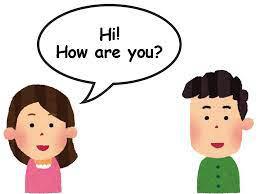
    Hi, there! How're you doing?

    Hi! Kumusta ka na?

    Hi, Peter.

    Kasingkahuluganhellogreetingsheyhowdygood day
    Kasalungatgoodbyefarewellsee youso longadieu
  29. 29

    fine(adjective)

    /faɪn/

    ayos

    in good health

    I am fine.

    Ayos lang ako.

    Kasingkahuluganwellgoodokaysatisfactoryacceptableexcellentsuperbthin
    Kasalungatbadpoorillunwellthickcoarse
  30. 30

    thank(verb)

    /θæŋk/

    magpasalamat, pasalamatan

    to tell somebody that you are grateful for something

    Thank you very much.

    Maraming salamat po.

    There's no need to thank me—I enjoyed doing it.

    Kasingkahuluganappreciateacknowledgebe gratefulgive thanks
    Kasalungatcursecriticizereproachcondemn
  31. 31

    say(verb)

    /seɪ/

    sabihin

    to speak or tell somebody something, using words

    He always says that he is busy.

    Palagi niyang sinasabi na abala siya.

    ‘That was marvellous,’ said Daniel.

    Kasingkahuluganstateutterdeclareexpressarticulatementionremarkclaim
    Kasalungatdenyretractwithholdconcealbe silentrefrain
  32. 32

    number(noun)

    /ˈnʌmbər/

    numero

    a word or symbol that represents an amount or a quantity

    I love numbers.

    Mahal ko ang mga numero.

    Think of a number and multiply it by two.

    Kasingkahulugannumeraldigitfigureintegeramountquantitytotal
    Kasalungatletterwordnamenon-numericqualitative
  33. 33

    hello(exclamation, noun)

    /həˈləʊ/

    kumusta

    used as a greeting when you meet somebody, in an email, when you answer the phone or when you want to attract somebody’s attention

    Say hello to Liz for me.

    Pakikumusta ako kay Liz.

    Hello, is there anybody there?

    Kasingkahulugangreetingshiheyhowdygood daywelcome
    Kasalungatgoodbyefarewelladieu
  34. 34

    he(pronoun)

    /hi/

    siya

    a male person or animal that has already been mentioned or is easily identified

    He is 10 years old and he is a student.

    Siya ay 10 taong gulang at siya ay isang estudyante.

    He (= the man we are watching) went through that door.

    Kasingkahuluganhimthat personthe manthe boy
    Kasalungatshethey
  35. 35

    am(verb)

    /əm/

    nasa

    the form of 'be' used with 'I' in the present tense

    I am at home.

    Nasa bahay ako.

    Kasingkahuluganexistbeconstituteequate to
    Kasalungatnonexistentabsent
  36. 36

    are(verb)

    /ər/

    ay

    the form of 'be' used with 'you', 'we' and 'they' in the present tense

    You are very kind.

    Napakabait mo.

    Kasingkahuluganexistequalrepresent
    Kasalungatnotlackdifference
  37. 37

    good afternoon(exclamation)

    /ˌɡʊd æftərˈnuːn/

    Magandang hapon

    used to say hello politely when people first see each other in the afternoon (in informal use people often just say Afternoon in this case); sometimes also used formally when people leave each other in the afternoon

    Good afternoon, Mr. Smith.

    Magandang hapon, Ginoong Smith.

    Kasingkahuluganafternoon greetinghave a good afternoon
    Kasalungatgood morninggood eveninggood night
  38. 38

    good evening(exclamation)

    /ˌɡʊd ˈiːvnɪŋ/

    Magandang gabi

    used to say hello politely when people first see each other in the evening (in informal use people often just say Evening in this case); sometimes also used formally when people leave each other in the evening

    Good evening, Miss Hoa.

    Magandang gabi, Miss Hoa.

    Kasingkahuluganevening greetingsgood nightevening salutation
    Kasalungatgood morninggood daygood afternoon
  39. 39

    good morning(exclamation)

    /ˌɡʊd ˈmɔːrnɪŋ/

    magandang umaga

    used to say hello politely when people first see each other in the morning; sometimes also used formally when people leave each other in the morning

    Good morning, Miss Hoa. How are you?

    Magandang umaga, Miss Hoa. Kumusta ka?

    Kasingkahulugangreetingsmorninggood day
    Kasalungatgood eveninggood night
  40. 40

    good night(exclamation)

    /ɡʊd 'naɪt/

    Magandang gabi, Mahimbing na tulog

    used when you are saying goodbye to somebody late in the evening or when they are going to bed

    Good night, Mom.

    Good night, Mama.

    Kasingkahulugannighty nightsleep wellsweet dreamsgood evening
    Kasalungatgood morninggood day
  41. 41

    is(verb)

    /ɪz/

    ay

    the form of the verb 'be' used with he, she or it in the present tense

    She is a teacher.

    Siya ay isang guro.

    Kasingkahuluganexistsrepresentsequalsamounts toconstitutes
    Kasalungatisn'twasn'tlacksis not
  42. 42

    it(pronoun)

    /ɪt/

    ito

    used to refer to an animal or a thing that has already been mentioned or that is being talked about now

    This is my dog. It is very friendly.

    Aso ko ito. Ito ay napakakaibigan.

    Kasingkahuluganthatthisthe thingthe one
    Kasalungatheshethey
  43. 43

    its(determiner)

    /ɪts/

    nito

    belonging to or connected with a thing, an animal or a baby

    I have a dog. Its tail is very long.

    Mayroon akong aso. Ang buntot nito ay napakahaba.

    Kasingkahuluganbelonging to itof itbelonging to the thingthereof
    Kasalungatnone (as it's a possessive pronoun)
  44. 44

    Madam(noun)

    /ˈmædəm/

    Ginang

    used when speaking or writing to a woman in a formal or business situation

    Good afternoon, Madam.

    Magandang hapon, Ginang.

    KasingkahuluganLadyMa'amMrs.Dame
    KasalungatSirMister
  45. 45

    Mr.(abbreviation)

    /ˈmɪstər/

    Ginoo

    a title that comes before a man’s family name, or before his first and family names together

    This is Mr. Brown.

    Ito si Ginoong Brown.

    KasingkahuluganSirGentlemanEsquire
    KasalungatMs.MissMrs.
  46. 46

    Mrs.(abbreviation)

    /ˈmɪsɪz/

    Ginang

    a title that comes before a married woman’s family name or before her first and family names together

    Mrs. Smith is very old.

    Si Ginang Smith ay napakatanda na.

    KasingkahuluganMadamMa'amLadyMs.
    KasalungatMr.SirMissMaster
  47. 47

    Ms.(abbreviation)

    /ˌem ˈes/

    Bb., Binibini, Gng

    a title that comes before a woman’s family name, whether or not she is married

    Ms. Green is my English teacher and she is very kind.

    Si Ms. Green ang guro ko sa Ingles at napakabait niya.

    KasingkahuluganMadamMissMrs.
    KasalungatMr.
  48. 48

    a piece of paper(phrase)

    /ə piːs əv ˈpeɪpə(r)/

    isang piraso ng papel

    a single sheet or a small part of a sheet of paper

    He wrote something on a piece of paper.

    Sumulat siya ng isang bagay sa isang piraso ng papel.

    Kasingkahulugansheet of paperscrap of paperpiece of stationerypaper
    Kasalungatwhole ream of paperpaperless environment
  49. 49

    child(noun)

    /tʃaɪld/

    anak

    a young human who is not yet an adult

    This couple has only one child.

    Ang mag-asawang ito ay may isa lamang anak.

    Kasingkahulugankidoffspringyouthinfantminor
    Kasalungatadultparent
  50. 50

    children(noun)

    /ˈtʃɪldrən/

    mga bata, mga anak

    the plural of 'child'; young people who are not yet adults, or sons and daughters

    That couple has three children.

    May tatlong anak ang mag-asawang iyon.

    Kasingkahulugankidsoffspringyoungstersyouthprogeny
    Kasalungatadultsparentsancestorselders
  51. 51

    classmate(noun)

    /ˈklæsmeɪt/

    kaklase

    a person who is or was in the same class as you at school or college

    Kim, Nick, Sam and Ken are in class 11B. They are classmates.

    Sina Kim, Nick, Sam, at Ken ay nasa klase 11B. Sila ay mga kaklase.

    Kasingkahuluganschoolmateclassmatefellow studentpeer
    Kasalungatoutsiderstrangerrival

  52. 52

    exercise book(noun)

    /ˈeksərsaɪz bʊk/

    kuwaderno, notbuk

    a small book for students to write their work in

    Please write your homework in your exercise book tonight.

    Pakisulat ang takdang-aralin mo sa kuwaderno mo ngayong gabi.

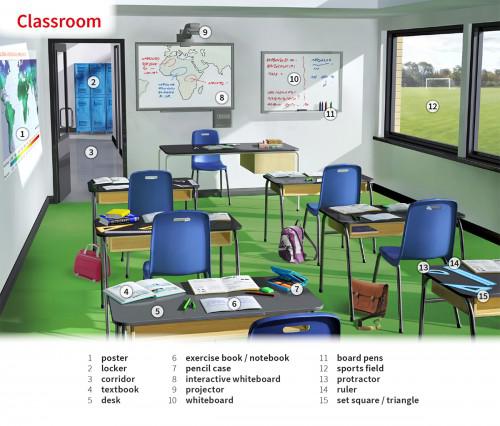
    Kasingkahuluganworkbooknotebookcopybookexercise pad
    Kasalungattextbooknovel
  53. 53

    greeting(noun)

    /ˈɡriːtɪŋ/

    bati

    something that you say or do to greet somebody

    They exchanged greetings and sat down.

    Nagpalitan sila ng bati at umupo.

    Kasingkahulugansalutationwelcomeacknowledgmentrecognition
    Kasalungatfarewellgoodbyepartingignorance
  54. 54

    miss(noun)

    /mɪs/

    Binibini, Miss, Ma'am

    a title used before the name of a girl or a woman who is not married, or of a female teacher

    Good morning, Miss Sarah.

    Magandang umaga po, Miss Sarah.

  55. 55

    her(determiner)

    /hər/

    kanyang, niya

    of or belonging to a woman or girl who has already been mentioned or is easily identified

    Meg loves her job.

    Mahal ni Meg ang kanyang trabaho.