Zum Inhalt springen

Lektion 16/16 · 54 Wörter · 0 gelernt

Lesson 16: MAN AND ENVIRONMENT

Lektion 16: Mensch und Umwelt

  1. 1

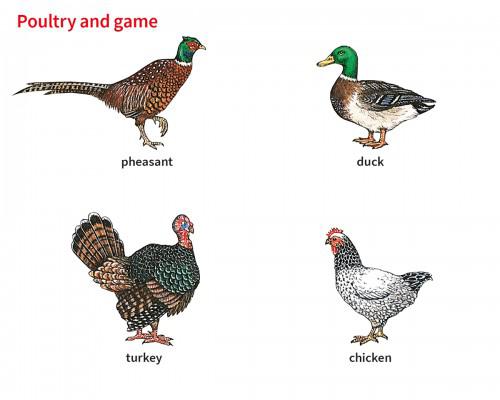
    chicken(noun)

    /ˈtʃɪkɪn/

    das Huhn

    a large bird that is often kept for its eggs or meat

    They keep chickens in the back yard.

    Sie halten Hühner im Hinterhof.

    free-range chickens

    Synonymepoultryfowlbiddy (informalfor a young hen)
    Antonymenone (in the literal sense of the animal)hawk (predator)
  2. 2

    empty(adjective)

    /ˈempti/

    leer

    with no people or things inside

    The room is empty of furniture.

    Der Raum ist leer, es stehen keine Möbel darin.

    She emptied her mind of all thoughts of home.

    Synonymevacantvoidbareunoccupieddesolatehollow
    Antonymefulloccupiedfilledcomplete
  3. 3

    light(noun)

    /laɪt/

    das Licht

    the energy from the sun, a lamp, etc. that makes it possible to see things

    Plants need light from the sun to grow well.

    Pflanzen brauchen das Sonnenlicht, um gut zu wachsen.

    Synonymeilluminationbrightnessradianceglowsparkle
    Antonymedarknessshadowgloom
  4. 4

    rule(noun)

    /ruːl/

    die Regel, die Vorschrift

    a statement of what may, must or must not be done in a particular situation or when playing a game

    You need to follow the rules.

    Du musst die Regeln befolgen.

    Eighty million years ago, dinosaurs ruled the earth.

    Synonymeregulationprincipleguidelinelawstandardpreceptcanonorder
    Antonymelawlessnessdisorderchaosanarchyfreedomexemptionwaiver
  5. 5

    land(noun)

    /lænd/

    das Land, das Festland

    the surface of the earth that is not sea

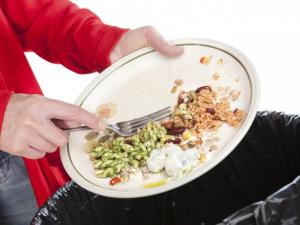
    After weeks at sea, the sailors were happy to see land again.

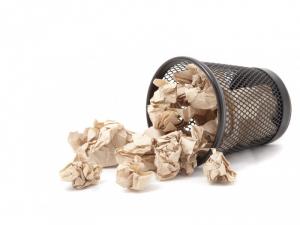
    Nach Wochen auf See freuten sich die Matrosen, wieder Land zu sehen.

    Synonymegroundsoilestatepropertyterritoryacreage
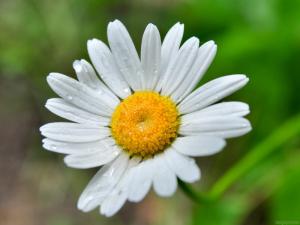
    Antonymeseaskyair
  6. 6

    cut(verb)

    /kʌt/

    schneiden, abschneiden

    to divide, shorten or remove something using a knife, scissors or another sharp tool

    He cuts my hair.

    Er schneidet mir die Haare.

    He cut himself (= his face) shaving.

    Synonymeslicechopsevertrimcarvegashintersectreduce
    Antonymejoinconnectmendrepairattachfuse
  7. 7

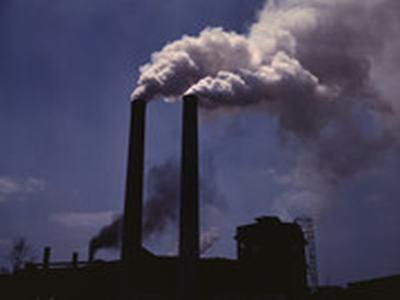
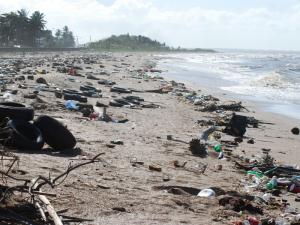
    pollution(noun)

    /pəˈluːʃn/

    die Verschmutzung, die Umweltverschmutzung

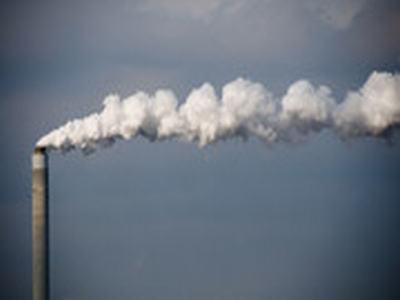
    the process of making air, water, soil, etc. dirty; the state of being dirty

    Water pollution is becoming more serious now.

    Die Wasserverschmutzung wird heute immer schwerwiegender.

    air/water pollution

    Synonymecontaminationdefilementimpurityfoulnesstaintadulteration
    Antonymepurificationcleansingsterilizationclarificationpristineness
  8. 8

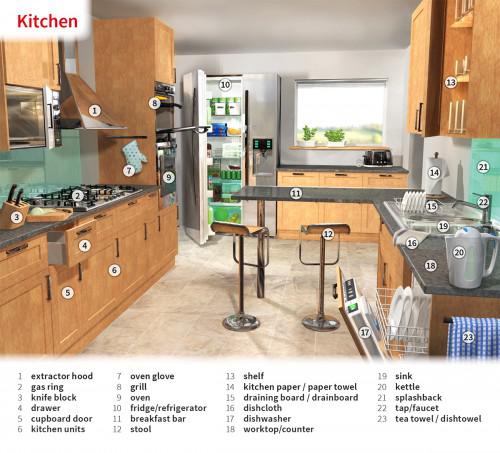
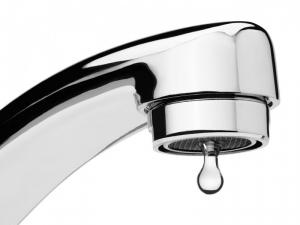
    faucet(noun)

    /ˈfɔːsɪt/

    der Wasserhahn

    a device that controls the flow of water from a pipe

    She always turns off the faucet after washing clothes.

    Sie dreht nach dem Wäschewaschen immer den Wasserhahn zu.

    to turn a faucet on/off

    Synonymetapspigotvalve
  9. 9

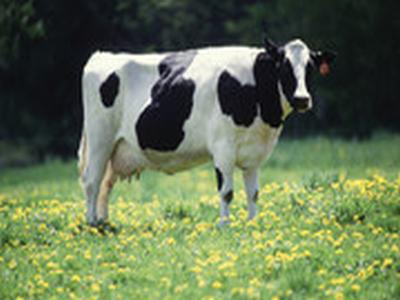
    cow(noun)

    /kaʊ/

    die Kuh

    a large animal kept on farms to produce milk or beef

    They raise many cows.

    Sie halten viele Kühe.

    cow's milk

    Synonymecattlebovineheifer (young female cow)bull (male cow)calf (young cow)
    Antonymebullcalfother animals (e.g.horsesheeppig)
  10. 10

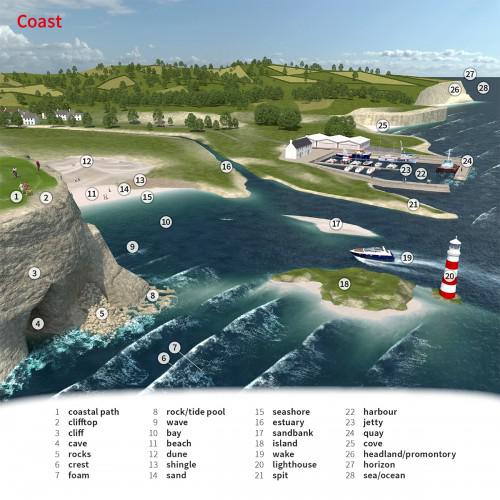
    ocean(noun)

    /ˈəʊʃn/

    der Ozean, das Meer

    the mass of salt water that covers most of the earth’s surface

    Ocean levels are rising.

    Die Meeresspiegel steigen.

    Synonymeseabrinedeep
    Antonymelandcontinentearth
  11. 11

    damage(noun)

    /ˈdæmɪdʒ/

    der Schaden

    physical harm caused to something which makes it less attractive, useful or valuable

    The damage to his car was considerable.

    Der Schaden an seinem Auto war beträchtlich.

    Smoking seriously damages your health.

    Synonymeharminjuryimpairmentdestructionloss
    Antonymerepairimprovementbenefitadvantagerestoration
  12. 12

    save(verb)

    /seɪv/

    sparen

    to avoid wasting something or using more of it than necessary

    We need to save power.

    Wir müssen Strom sparen.

    Doctors were unable to save her.

    Synonymeconservepreserveprotectstorerescueretainsalvage
    Antonymewastespendlosesquanderexpendendanger
  13. 13

    produce(verb)

    /prəˈduːs/

    produzieren, herstellen

    to make things to be sold, especially in large quantities

    People produce a lot of goods every year.

    Die Menschen produzieren jedes Jahr viele Waren.

    The train now standing at platform 1 is for Leeds.

    Synonymegeneratecreatemanufactureyieldbear
    Antonymeconsumedestroyhaltstop
  14. 14

    oil(noun)

    /ɔɪl/

    das Öl, das Erdöl

    a thick liquid that is found in rock underground

    We are burning too much coal and oil.

    Wir verbrennen zu viel Kohle und Öl.

    What's your name?

    Synonymepetroleumcrude oilmineral oillubricantfuel
    Antonymewaterrenewable energyalternative fuel
  15. 15

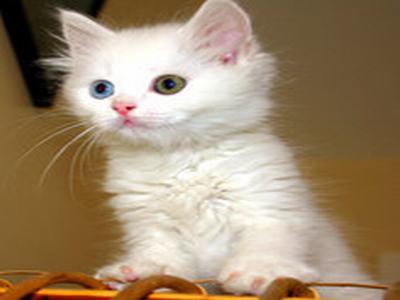
    cat(noun)

    /kæt/

    die Katze

    a small animal with soft fur that people often keep as a pet. Cats catch and kill birds and mice.

    I love cats.

    Ich liebe Katzen.

    a long-distance call

    Synonymefelinekittypussycat
    Antonymedogcanine
  16. 16

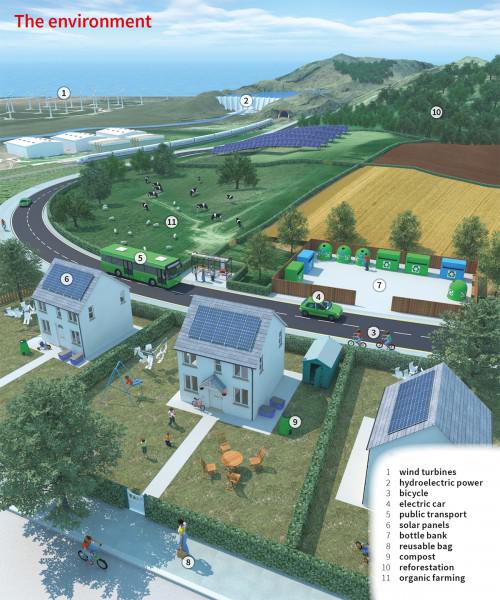
    environment(noun)

    /ɪnˈvaɪrənmənt/

    die Umwelt

    the natural world in which people, animals and plants live

    We have to protect our environment.

    Wir müssen unsere Umwelt schützen.

    They have created an environment in which productivity should flourish.

    Synonymesurroundingshabitatecosystemsettingworld
    Antonymenone (in the sense of a single word opposite)
  17. 17

    plastic(noun)

    /ˈplæstɪk/

    das Plastik, der Kunststoff

    a light strong material that is produced by chemical processes and can be formed into shapes when heated. There are many different types of plastic , used to make different objects and fabrics .

    These bottles are made from plastic.

    Diese Flaschen sind aus Plastik.

    Synonymesyntheticpolymeracrylicresin
    Antonymenaturalorganicbiodegradable
  18. 18

    destroy(verb)

    /dɪˈstrɔɪ/

    zerstören

    to damage something so badly that it no longer exists, works, etc.

    We can't destroy the forests anymore.

    Wir dürfen die Wälder nicht länger zerstören.

    They've destroyed all the evidence.

    Synonymedemolishruinannihilateobliteratewreckdevastateeradicate
    Antonymecreatebuildconstructpreserveprotectrepair
  19. 19

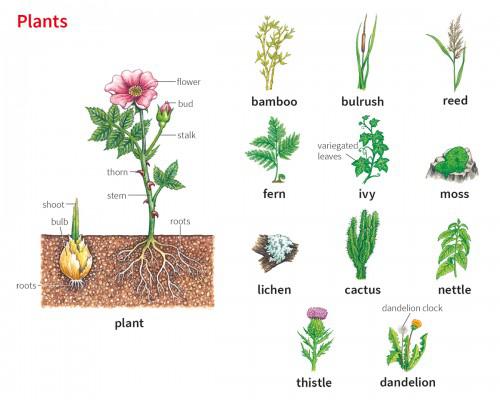
    plant(noun)

    /plænt/

    die Pflanze

    a living thing that grows in the earth and usually has a stem , leaves and roots, especially one that is smaller than a tree or bush

    Do you know this plant?

    Kennst du diese Pflanze?

    All plants need light and water.

    Synonymevegetationfloraherbshrubtree
    Antonymeanimalfauna
  20. 20

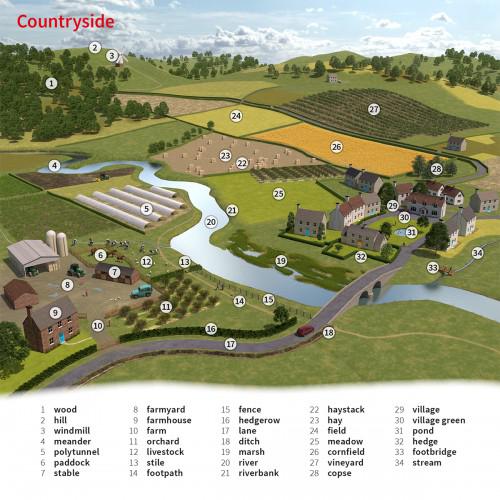
    field(noun)

    /fiːld/

    das Feld, der Acker

    an area of land in the country used for growing crops or keeping animals in, usually surrounded by a fence, etc.

    My parents are working in the field.

    Meine Eltern arbeiten auf dem Feld.

    We camped in a field near the village.

    Synonymeareapatchgroundmeadowpasturearenaspheredomain
    Antonymeindoorsofficecity
  21. 21

    metal(noun)

    /ˈmetl/

    das Metall

    a type of solid mineral substance that is usually hard and shiny and that heat and electricity can travel through, for example tin, iron and gold

    The frame is made of metal.

    Der Rahmen ist aus Metall.

    a piece of metal

    Synonymemineraloreelement
    Antonymenonmetalorganicplastic
  22. 22

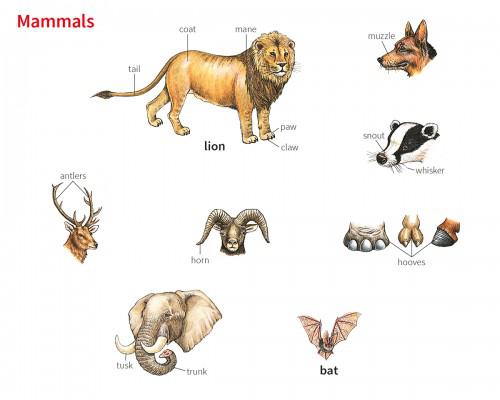
    animal(noun)

    /ˈænɪml/

    das Tier

    a creature that is not a bird, a fish, a reptile , an insect or a human

    There are many kinds of animals in this zoo.

    In diesem Zoo gibt es viele Tierarten.

    This product has not been tested on animals.

    Synonymecreaturebeastfaunabeing
    Antonymeplantvegetationmineralinanimate object
  23. 23

    pull(verb)

    /pʊl/

    ziehen

    to take hold of something and use force in order to move it or try to move it towards yourself

    The cow has to pull the cart.

    Die Kuh muss den Karren ziehen.

    Stop pulling her hair!

    Synonymetugdraghaulyankdraw
    Antonymepushthrustpropel
  24. 24

    throw(verb)

    /θrəʊ/

    werfen

    to send something from your hand through the air by moving your hand or arm quickly

    You shouldn't throw trash out the window.

    Du solltest keinen Müll aus dem Fenster werfen.

    They had a competition to see who could throw the furthest.

    Synonymetosshurlflingpitchcastpropel
    Antonymecatchgrabholdkeepretain
  25. 25

    burn(verb)

    /bɜːrn/

    brennen, verbrennen

    to produce flames and heat

    People should not burn plastic because it pollutes the air.

    Man sollte Plastik nicht verbrennen, weil es die Luft verschmutzt.

    Synonymescorchsearblazeinflammationinjury
    Antonymeextinguishcoolsoothefreeze
  26. 26

    collect(verb)

    /kəˈlekt/

    sammeln

    to bring things together from different people or places, or to gather objects as a hobby

    I often collect stamps.

    Ich sammle oft Briefmarken.

    to collect data/evidence/information

    Synonymegatheraccumulateassembleacquiregarneramasscompilehoard
    Antonymedispersescatterdistributeseparateabandondiscard
  27. 27

    wild(adjective)

    /waɪld/

    wild

    living or growing in natural conditions; not kept in a house or on a farm

    Many wild animals live in this forest.

    In diesem Wald leben viele wilde Tiere.

    Synonymeuntamedferaluncultivatednaturalsavageundomesticateduncontrolled
    Antonymetamedomesticatedcultivatedcontrolledmild
  28. 28

    air(noun)

    /er/

    die Luft

    the mixture of gases that surrounds the earth and that we breathe

    I like the fresh air in the countryside.

    Ich mag die frische Luft auf dem Land.

    The act lays down a minimum standard for air quality.

    Synonymeatmospherebreezewinddraft
    Antonymestillnessvacuumstagnation
  29. 29

    gas(noun)

    /ɡæs/

    das Gas

    any substance like air that is neither a solid nor a liquid, for example hydrogen or oxygen

    Oxygen is a gas that all animals need in order to breathe.

    Sauerstoff ist ein Gas, das alle Tiere zum Atmen brauchen.

    Synonymefuelvaporair
    Antonymesolidliquid
  30. 30

    Turn off(phrasal verb)

    /tɜːrn ɔːf/

    ausschalten, abstellen

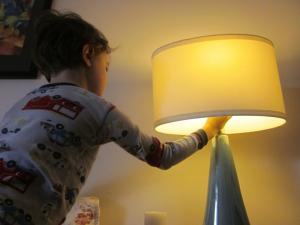
    to stop the flow of electricity, gas, water, etc. by moving a switch or button

    The hall lights have all been turned off.

    Die Flurlichter sind alle ausgeschaltet worden.

    SynonymeSwitch offShut offDeactivatePower downExtinguishCut offStop
    AntonymeTurn onActivateSwitch onStartIgnitePower on
  31. 31

    Grow(verb)

    /ɡrəʊ/

    wachsen

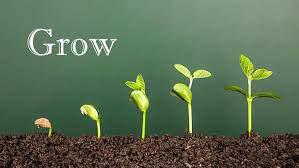
    to increase in size, number, strength or quality

    The region is too dry for plants to grow.

    Die Region ist zu trocken, als dass dort Pflanzen wachsen könnten.

    Synonymedevelopincreaseexpandcultivateflourish
    Antonymeshrinkdeclinewitherdecreasediminish
  32. 32

    coal(noun)

    /kəʊl/

    die Kohle

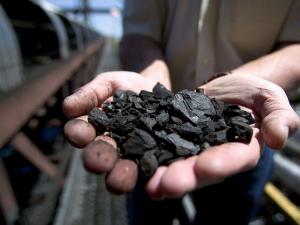
    a hard black mineral that is found below the ground and burnt to produce heat

    Coal can be used for cooking.

    Kohle kann zum Kochen verwendet werden.

    Synonymecarbonfuelblack gold
    Antonymerenewable energysolar powerwind energy
  33. 33

    pollute(verb)

    /pəˈluːt/

    verschmutzen

    to add dirty or harmful substances to land, air, water, etc. so that it is no longer pleasant or safe to use

    People should not pollute their environment.

    Die Menschen sollten ihre Umwelt nicht verschmutzen.

    Synonymecontaminatetaintdefilefouldirtycorruptdebase
    Antonymepurifycleansanitizedecontaminatepreserve
  34. 34

    leave(verb)

    /liːv/

    verlassen, weggehen

    to go away from a person or a place

    When do they leave their house?

    Wann verlassen sie ihr Haus?

    Synonymedepartexitabandonquitvacatego
    Antonymearrivestayremainenterkeep
  35. 35

    danger(noun)

    /ˈdeɪndʒər/

    die Gefahr

    the possibility of something happening that will injure, harm or kill somebody, or damage or destroy something

    Is there any danger here?

    Gibt es hier irgendeine Gefahr?

    Synonymehazardperilriskthreatjeopardy
    Antonymesafetysecurityprotectioncertainty
  36. 36

    be in danger(phrase)

    /biː ɪn 'deɪndʒər/

    in Gefahr sein, gefährdet sein

    to be in a situation where harm, damage or death is possible

    Many animals are in danger.

    Viele Tiere sind in Gefahr.

    Synonymeat riskthreatenedimperiledvulnerable
    Antonymesafesecureprotectedout of danger
  37. 37

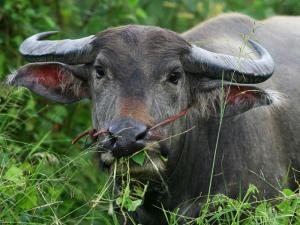
    buffalo(noun)

    /ˈbʌfələʊ/

    der Büffel

    a large animal of the cow family that has wide, curved horns . There are two types of buffalo , the African and the Asian.

    He has a buffalo.

    Er hat einen Büffel.

    Synonymebisonwater buffalo
    Antonymecattlecow
  38. 38

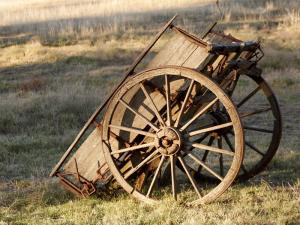
    cart(noun)

    /kɑːrt/

    der Karren, der Wagen

    a vehicle with two or four wheels that is pulled by a horse and used for carrying loads

    There is a cart over there.

    Dort drüben steht ein Karren.

    Synonymewagontrolleyhandcartvehicle
    Antonymenone (depending on contextcan be replaced with other transport)
  39. 39

    dripping faucet(noun)

    /ˈdrɪpɪŋ ˈfɔːsɪt/

    der tropfende Wasserhahn

    a tap that lets water fall out in drops because it is not closed properly

    When you see a dripping faucet, turn it off.

    Wenn du einen tropfenden Wasserhahn siehst, dreh ihn zu.

    Synonymeleaky faucetleaking tapdripping tap
    Antonymedry faucetnon-dripping faucetsealed faucet
  40. 40

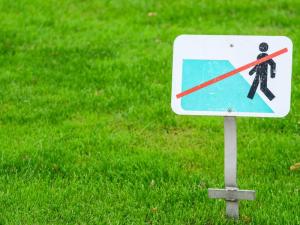
    keep off(phrasal verb)

    /ki

    fernbleiben von, nicht betreten

    to not go onto a particular area of land

    Please keep off the grass.

    Bitte betreten Sie den Rasen nicht.

    Synonymeavoidstay away fromrefrain fromdesist from
    Antonymeapproachstep onenter
  41. 41

    plants and animals(noun)

    /plɑ

    Pflanzen und Tiere

    all the living things, such as trees, flowers and creatures, that are found in a particular place

    There are various kinds of plants and animals here.

    Hier gibt es verschiedene Arten von Pflanzen und Tieren.

    Synonymebiotawildlifenatural lifeliving thingsorganisms
    Antonymeinanimate objectsnon-living thingsartificial things
  42. 42

    plow(noun)

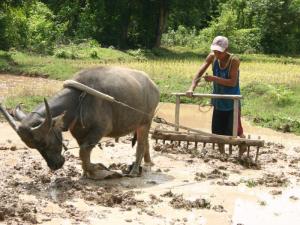
    /plaʊ/

    der Pflug

    a large piece of farming equipment with one or several curved blades , (= metal cutting parts) pulled by a tractor or by animals. It is used for digging and turning over soil, especially before seeds are planted.

    I have never seen a plow.

    Ich habe noch nie einen Pflug gesehen.

    Synonymetillerfarm implementcultivator
    AntonymeNone (as a specific tool)weedharvest
  43. 43

    recycle(verb)

    /ˌriːˈsaɪkl/

    recyceln, wiederverwerten

    to treat things that have already been used so that they can be used again

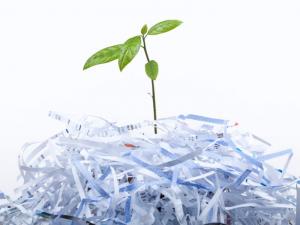
    We can recycle waste paper.

    Wir können Altpapier recyceln.

    Synonymereusereclaimreprocessrecoversalvage
    Antonymediscarddisposewastedump
  44. 44

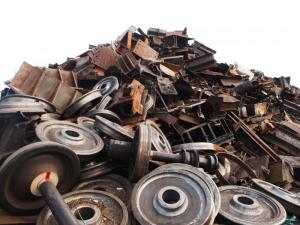
    scrap metal(noun)

    /skræp 'metl/

    das Altmetall, der Schrott

    old pieces of metal from broken machines, cars, etc. that can be melted down and used again

    They earn money by collecting scrap metal.

    Sie verdienen Geld, indem sie Altmetall sammeln.

    Synonymediscarded metalwaste metaljunk metalrecycled metal
    Antonymevirgin metalprime metalnew metal
  45. 45

    switch off(phrasal verb)

    /swɪtʃ ɔ

    ausschalten, abschalten

    to turn a light, machine, etc. off by pressing a switch or button

    Can you switch off the TV, please?

    Kannst du bitte den Fernseher ausschalten?

    Synonymeturn offdeactivatepower downshut down
    Antonymeturn onactivatepower upstart
  46. 46

    trash(noun)

    /træʃ/

    der Müll, der Abfall

    things that you throw away because you no longer want or need them

    Don't throw trash on the street.

    Wirf keinen Müll auf die Straße.

    Synonymerubbishwastegarbagelitterdebris
    Antonymetreasurevaluableassetresource
  47. 47

    trash can(noun)

    /ˈtræʃ kæn/

    der Mülleimer, die Mülltonne

    a container for people to put rubbish in, in the street or in a public building

    Please put rubbish in the trash can.

    Bitte wirf den Müll in den Mülleimer.

    Synonymegarbage canwastebasketrubbish bindustbinbin
    Antonymetreasure cheststorage container
  48. 48

    waste food(noun)

    /weɪst fu

    die Essensreste, die Speisereste

    food that is left over or not eaten and is thrown away

    We can use the waste food for feeding pigs.

    Wir können die Essensreste zum Füttern der Schweine verwenden.

    Synonymefood scrapsleftoversfood wastetable scrapsgarbage
    Antonymefresh foodedible foodwholesome food
  49. 49

    waste paper(noun)

    /ˌweɪst ˈpeɪpər/

    das Altpapier

    paper that is not wanted and is thrown away
    We should collect waste paper.

    Wir sollten Altpapier sammeln.

    Synonymescrap paperrecycled paperused paperdiscarded paperpaper waste
    Antonymefresh paperunused paperclean papervirgin paper
  50. 50

    wild animal(noun)

    /waɪld 'æniməl/

    das Wildtier

    an animal that lives in natural conditions and is not kept by people

    I saw a wild animal yesterday.

    Ich habe gestern ein Wildtier gesehen.

    Synonymeferal creatureuntamed beastcreature of the wild
    Antonymedomesticated animaltame animalpet
  51. 51

    wild flower(noun)

    /waɪld ˈflaʊər/

    die Wildblume

    a flower that grows naturally and has not been planted by people

    This wild flower is very beautiful.

    Diese Wildblume ist sehr schön.

    Synonymemeadow flowernative floweruncultivated flowerfield flower
    Antonymecultivated flowerdomesticated flowergarden flower
  52. 52

    waste(noun)

    /weɪst/

    der Abfall, der Müll

    materials that are no longer needed and are thrown away

    Factories should not dump their waste into the river.

    Fabriken sollten ihren Abfall nicht in den Fluss kippen.

  53. 53

    power(noun)

    /ˈpaʊər/

    der Strom, die Energie

    energy that can be collected and used to operate machines, especially electricity

    They sometimes cut the power in the summer.

    Im Sommer stellen sie manchmal den Strom ab.

  54. 54

    pick(verb)

    /pɪk/

    pflücken, ernten

    to take flowers, fruit, etc. from the plant or tree where they are growing

    They are picking ripe tomatoes.

    Sie pflücken reife Tomaten.