Lección 1/9 · 16 palabras · 0 aprendidas
Teeth and oral anatomy
Anatomía de los dientes y la cavidad bucal
dentina
the hard, yellowish tissue under the enamel that forms most of the tooth and contains tiny tubules; also spelled dentine
Once decay reaches the dentin, it spreads more quickly.
Una vez que la caries llega a la dentina, se propaga con mayor rapidez.
Exposed dentin near the gum line often causes sensitivity to cold.
Sinónimosivorytooth substanceAntónimosenamelincisivo
one of the flat, sharp-edged front teeth used for cutting food; adults have eight
The child fell and fractured her upper central incisor.
La niña se cayó y se fracturó el incisivo central superior.
Upper lateral incisors are sometimes missing from birth.
Sinónimosfront toothcutting toothAntónimosmolarpremolarmandíbula
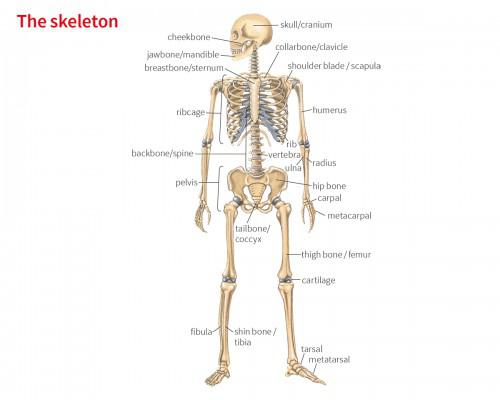
the lower jawbone, the only movable bone of the skull, which holds the lower teeth
The inferior alveolar nerve runs through a canal in the mandible.
El nervio alveolar inferior discurre por un conducto en la mandíbula.
A fractured mandible was fixed with titanium plates.
Sinónimoslower jawbonejawbonemaxilar superior, maxilar
the upper jawbone, which holds the upper teeth and forms part of the palate and nose
Implants in the back of the maxilla may need a sinus lift first.
Los implantes en la parte posterior del maxilar superior pueden requerir antes una elevación de seno.
The fracture extended through the maxilla above the front teeth.
Sinónimosupper jawboneAntónimosmandiblelower jawbonemolar, muela
one of the large, broad teeth at the back of the mouth used for grinding food
The lower first molar is the tooth most often affected by decay.
El primer molar inferior es el diente que con más frecuencia se ve afectado por caries.
Deep grooves on the molars can be protected with fissure sealants.
Sinónimosback toothgrinderAntónimosincisorcaninepremolar, diente premolar
one of the teeth between the canines and molars, usually with two cusps, used for crushing food; adults have eight
Two premolars were extracted to create space for orthodontic alignment.
Se extrajeron dos premolares para crear espacio para la alineación ortodóntica.
The upper first premolar often has two roots.
Sinónimosbicuspiddientes de leche, dentición temporal, dientes primarios
the first set of 20 teeth in children, which are later replaced by permanent teeth; also called primary or baby teeth
Deciduous teeth usually start to erupt at about six months of age.
Los dientes de leche suelen empezar a salir alrededor de los seis meses de edad.
Early loss of deciduous teeth can cause crowding of the permanent teeth.
Sinónimosbaby teethmilk teethprimary teethAntónimospermanent teethadult teethconducto radicular, endodoncia
the narrow channel inside a tooth root that contains the pulp; also used informally to mean root canal treatment
This lower molar has three root canals that must all be cleaned.
Este molar inferior tiene tres conductos radiculares que hay que limpiar todos.
The patient was told he needed a root canal on his back tooth.
Sinónimosendodontic therapyendodontic treatmentAntónimostooth extractiontooth removalcanino, colmillo
the long, pointed tooth between the incisors and premolars, used for tearing food; also called the eye tooth or cuspid
An impacted upper canine was exposed and pulled into place with braces.
Se expuso un canino superior retenido y se lo llevó a su posición con ortodoncia.
The canine has the longest root of all the teeth.
muela del juicio, tercer molar
a third molar, the last tooth at the back of each side of the jaw, usually appearing between the ages of 17 and 25
Her lower wisdom tooth was partly erupted and kept getting infected.
Su muela del juicio inferior estaba parcialmente erupcionada y se infectaba con frecuencia.
Not every wisdom tooth needs to be removed.
dientes permanentes, dentición permanente
the second set of 32 adult teeth, which replace the deciduous teeth and are meant to last for life
The first permanent teeth to erupt are usually the lower first molars, at about six.
Los primeros dientes permanentes en erupcionar suelen ser los primeros molares inferiores, alrededor de los seis años.
Fluoride helps protect newly erupted permanent teeth from decay.
esmalte dental, esmalte
the hard, white outer layer covering the crown of a tooth; the hardest substance in the human body
Frequent acidic drinks can slowly dissolve tooth enamel.
Las bebidas ácidas consumidas con frecuencia pueden disolver lentamente el esmalte dental.
Early decay limited to the enamel can sometimes be reversed with fluoride.
pulpa dental
the soft tissue in the centre of a tooth that contains nerves and blood vessels
Deep decay allowed bacteria to reach the dental pulp.
La caries profunda permitió que las bacterias llegaran a la pulpa dental.
The infected dental pulp was removed and the canals were cleaned.
cemento dental, cemento radicular
a thin, bone-like layer that covers the tooth root and anchors the fibres of the periodontal ligament
Cementum covers the root surface below the gum line.
El cemento cubre la superficie de la raíz por debajo de la línea de la encía.
Fibres of the periodontal ligament are embedded in the cementum.
encía, gingiva
the medical term for the gum, the pink soft tissue that covers the jawbone and surrounds the necks of the teeth; plural gingivae
Healthy gingiva is pink, firm and does not bleed on brushing.
La encía sana es rosada, firme y no sangra al cepillarse.
The gingiva around the lower incisors was red and swollen.
ligamento periodontal
the layer of fibres that attaches the tooth root to the surrounding bone and absorbs biting forces
The periodontal ligament allows teeth to move slightly during chewing.
El ligamento periodontal permite que los dientes se muevan ligeramente durante la masticación.
Orthodontic forces remodel the bone through the periodontal ligament.