Leçon 1/9 · 16 mots · 0 appris
Teeth and oral anatomy
Anatomie des dents et de la cavité buccale
dentine
the hard, yellowish tissue under the enamel that forms most of the tooth and contains tiny tubules; also spelled dentine
Once decay reaches the dentin, it spreads more quickly.
Une fois que la carie atteint la dentine, elle se propage plus rapidement.
Exposed dentin near the gum line often causes sensitivity to cold.
Synonymesivorytooth substanceAntonymesenamelincisive
one of the flat, sharp-edged front teeth used for cutting food; adults have eight
The child fell and fractured her upper central incisor.
L'enfant est tombée et s'est fracturé l'incisive centrale supérieure.
Upper lateral incisors are sometimes missing from birth.
Synonymesfront toothcutting toothAntonymesmolarpremolarmandibule, maxillaire inférieur
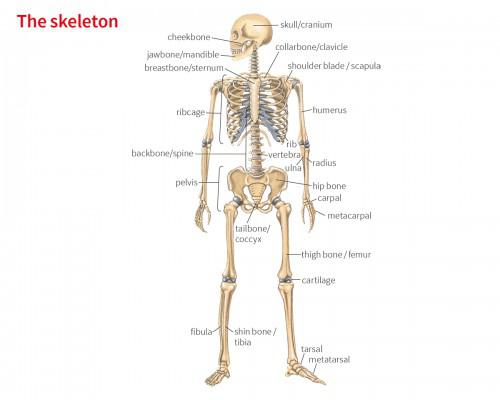
the lower jawbone, the only movable bone of the skull, which holds the lower teeth
The inferior alveolar nerve runs through a canal in the mandible.
Le nerf alvéolaire inférieur parcourt un canal situé dans la mandibule.
A fractured mandible was fixed with titanium plates.
Synonymeslower jawbonejawbonemaxillaire, maxillaire supérieur
the upper jawbone, which holds the upper teeth and forms part of the palate and nose
Implants in the back of the maxilla may need a sinus lift first.
Les implants placés dans la partie postérieure du maxillaire peuvent nécessiter un sinus lift au préalable.
The fracture extended through the maxilla above the front teeth.
Synonymesupper jawboneAntonymesmandiblelower jawbonemolaire
one of the large, broad teeth at the back of the mouth used for grinding food
The lower first molar is the tooth most often affected by decay.
La première molaire inférieure est la dent le plus souvent touchée par la carie.
Deep grooves on the molars can be protected with fissure sealants.
Synonymesback toothgrinderAntonymesincisorcanineprémolaire
one of the teeth between the canines and molars, usually with two cusps, used for crushing food; adults have eight
Two premolars were extracted to create space for orthodontic alignment.
Deux prémolaires ont été extraites afin de créer de l'espace pour l'alignement orthodontique.
The upper first premolar often has two roots.
Synonymesbicuspiddents de lait, dents temporaires
the first set of 20 teeth in children, which are later replaced by permanent teeth; also called primary or baby teeth
Deciduous teeth usually start to erupt at about six months of age.
Les dents de lait commencent généralement à faire leur éruption vers l'âge de six mois.
Early loss of deciduous teeth can cause crowding of the permanent teeth.
Synonymesbaby teethmilk teethprimary teethAntonymespermanent teethadult teethcanal radiculaire, traitement endodontique, dévitalisation
the narrow channel inside a tooth root that contains the pulp; also used informally to mean root canal treatment
This lower molar has three root canals that must all be cleaned.
Cette molaire inférieure possède trois canaux radiculaires qui doivent tous être nettoyés.
The patient was told he needed a root canal on his back tooth.
Synonymesendodontic therapyendodontic treatmentAntonymestooth extractiontooth removalcanine
the long, pointed tooth between the incisors and premolars, used for tearing food; also called the eye tooth or cuspid
An impacted upper canine was exposed and pulled into place with braces.
Une canine supérieure incluse a été dégagée chirurgicalement puis mise en place à l'aide d'un appareil orthodontique.
The canine has the longest root of all the teeth.
dent de sagesse, troisième molaire
a third molar, the last tooth at the back of each side of the jaw, usually appearing between the ages of 17 and 25
Her lower wisdom tooth was partly erupted and kept getting infected.
Sa dent de sagesse inférieure, partiellement sortie, s'infectait régulièrement.
Not every wisdom tooth needs to be removed.
dents permanentes, dentition définitive
the second set of 32 adult teeth, which replace the deciduous teeth and are meant to last for life
The first permanent teeth to erupt are usually the lower first molars, at about six.
Les premières dents permanentes à faire éruption sont généralement les premières molaires inférieures, vers six ans.
Fluoride helps protect newly erupted permanent teeth from decay.
émail
the hard, white outer layer covering the crown of a tooth; the hardest substance in the human body
Frequent acidic drinks can slowly dissolve tooth enamel.
Les boissons acides fréquentes peuvent dissoudre lentement l'émail dentaire.
Early decay limited to the enamel can sometimes be reversed with fluoride.
pulpe dentaire
the soft tissue in the centre of a tooth that contains nerves and blood vessels
Deep decay allowed bacteria to reach the dental pulp.
Une carie profonde a permis aux bactéries d'atteindre la pulpe dentaire.
The infected dental pulp was removed and the canals were cleaned.
cément
a thin, bone-like layer that covers the tooth root and anchors the fibres of the periodontal ligament
Cementum covers the root surface below the gum line.
Le cément recouvre la surface radiculaire sous la ligne gingivale.
Fibres of the periodontal ligament are embedded in the cementum.
gencive
the medical term for the gum, the pink soft tissue that covers the jawbone and surrounds the necks of the teeth; plural gingivae
Healthy gingiva is pink, firm and does not bleed on brushing.
Une gencive saine est rose, ferme et ne saigne pas au brossage.
The gingiva around the lower incisors was red and swollen.
ligament parodontal, desmodonte
the layer of fibres that attaches the tooth root to the surrounding bone and absorbs biting forces
The periodontal ligament allows teeth to move slightly during chewing.
Le ligament parodontal permet aux dents de bouger légèrement pendant la mastication.
Orthodontic forces remodel the bone through the periodontal ligament.