Zum Inhalt springen

Lektion 2/202 · 59 Wörter · 0 gelernt

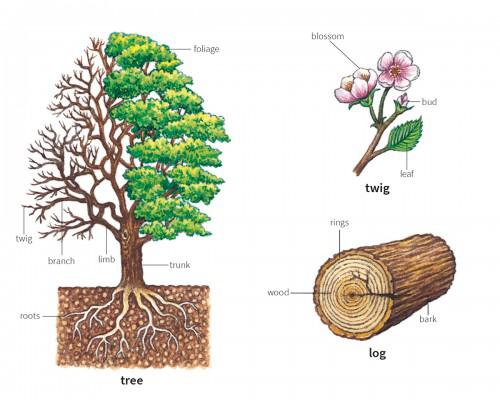
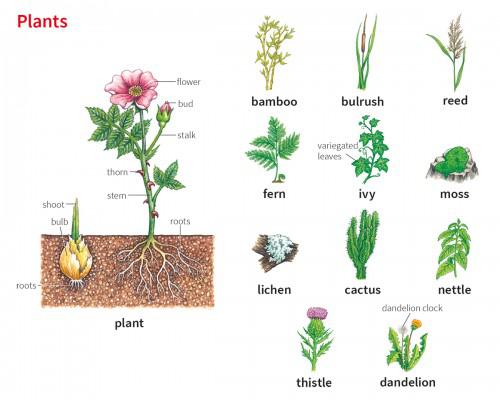
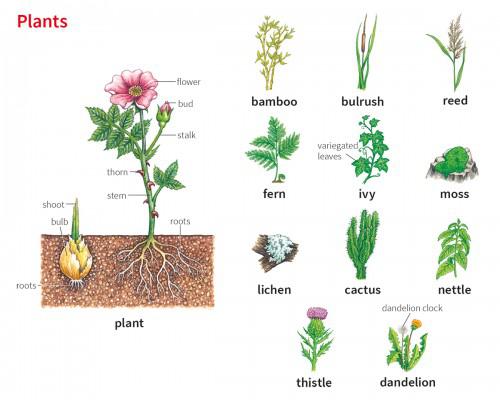
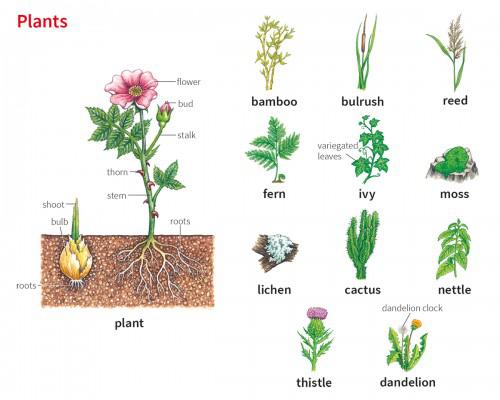
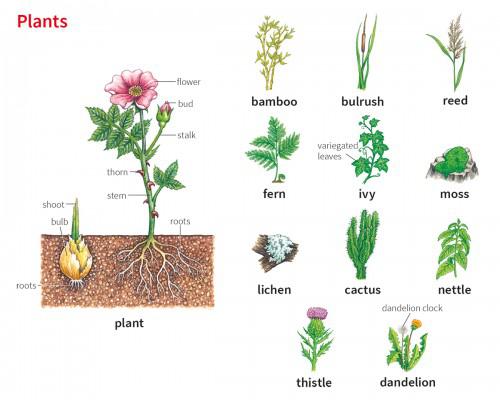
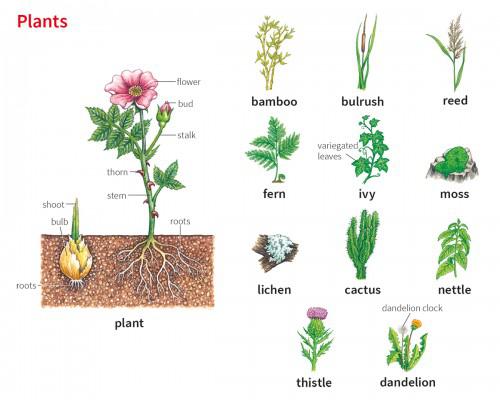
Plants

Pflanzen

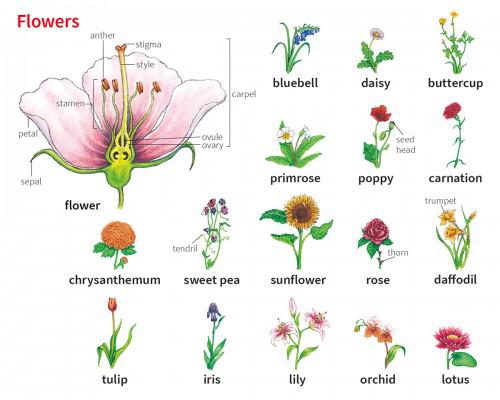
  1. 1

    wood(noun)

    /wʊd/

    das Holz

    the hard material that the trunk and branches of a tree are made of; this material when it is used to build or make things with, or as a fuel

    He chopped some wood for the fire.

    Er hackte etwas Holz für das Feuer.

    Synonymetimberlumberfirewoodkindling
    Antonymemetalstoneplastic
  2. 2

    leaf(noun)

    /liːf/

    das Blatt

    a flat green part of a plant, growing from a stem or branch or from the root

    The leaves on the trees were beginning to turn from green to orange.

    Die Blätter an den Bäumen begannen, sich von Grün zu Orange zu verfärben.

    Synonymefrondfoliageblade
    Antonymetrunkbranchroot
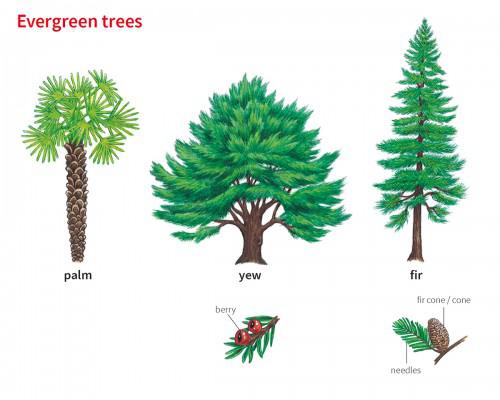
  3. 3

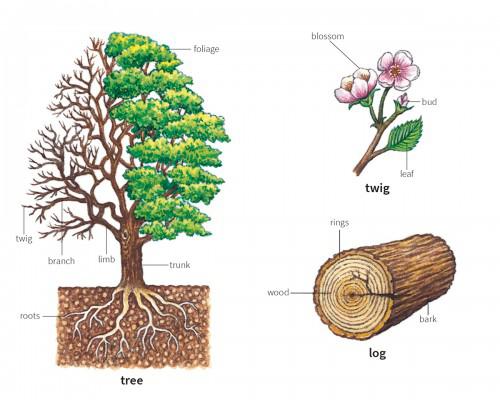
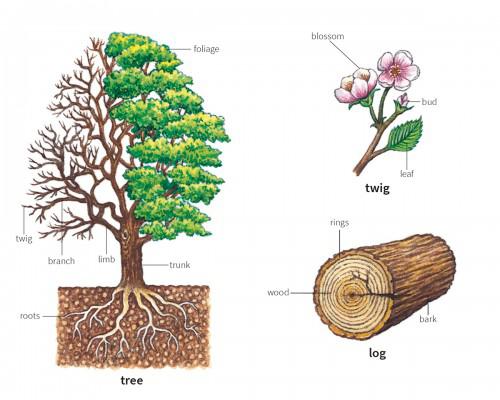
    tree(noun)

    /triː/

    der Baum

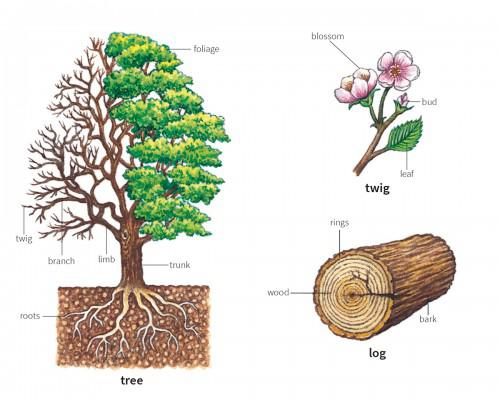
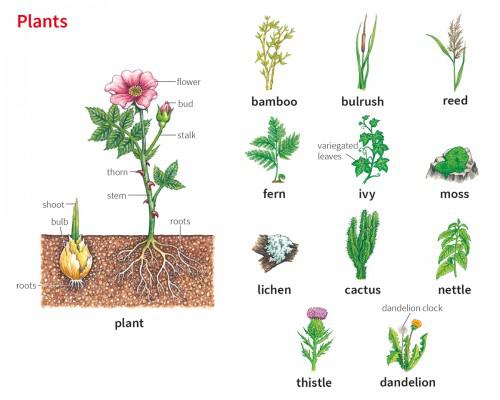
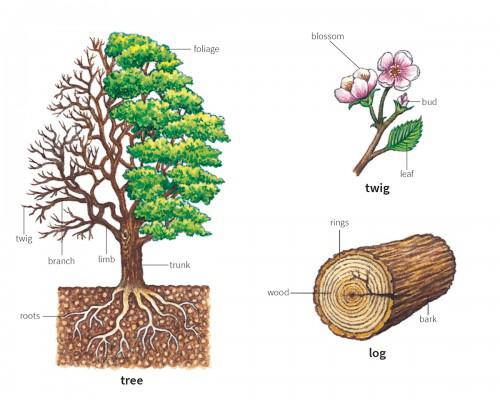
    a tall plant that can live a long time. Trees have a thick central wooden trunk from which branches grow, usually with leaves on them

    My father likes planting trees.

    Mein Vater pflanzt gern Bäume.

    to chop/cut down a tree

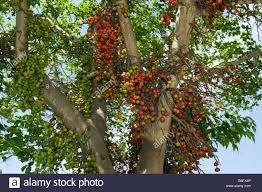
    Synonymeplantsaplingtimberwood
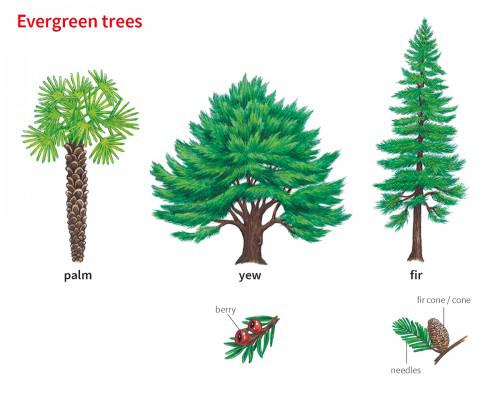
    Antonymenone (in the sense of a single word antonym)shrubbush
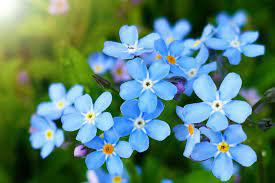
  4. 4

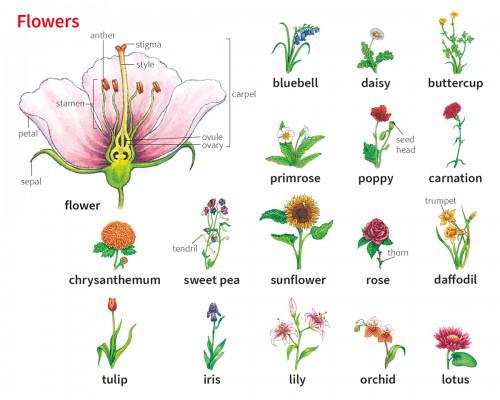
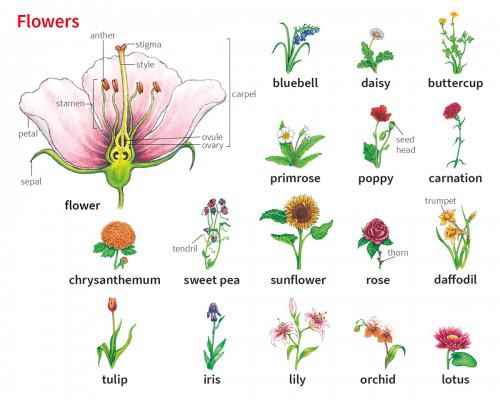
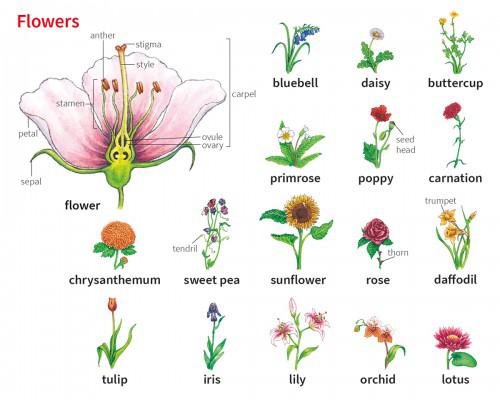
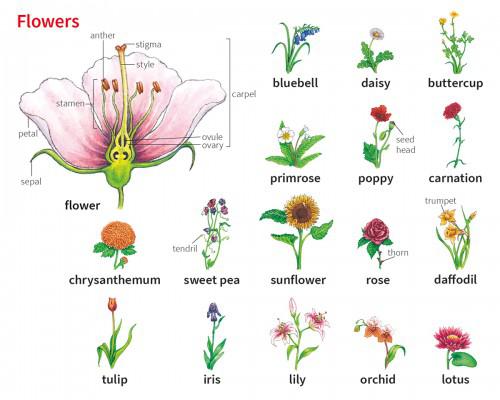
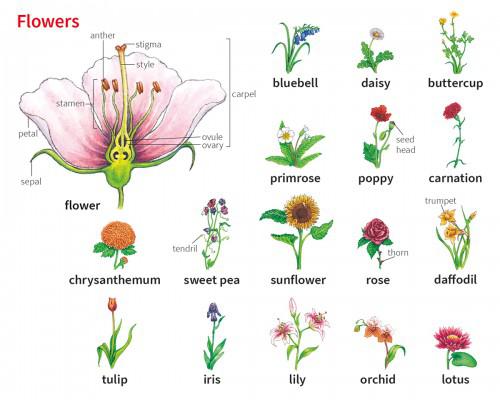
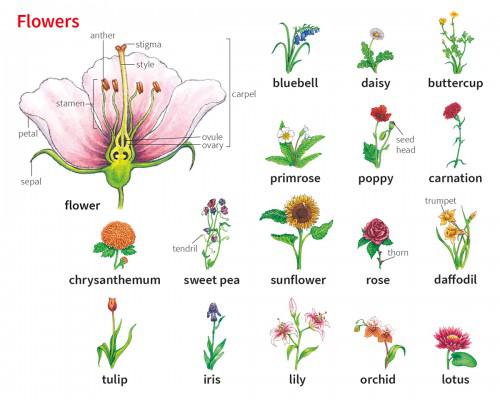
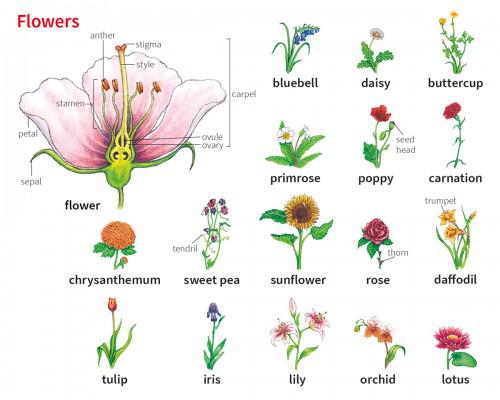
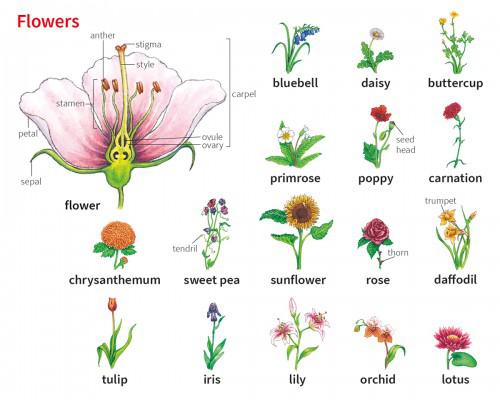
    flower(noun)

    /ˈflaʊər/

    die Blume

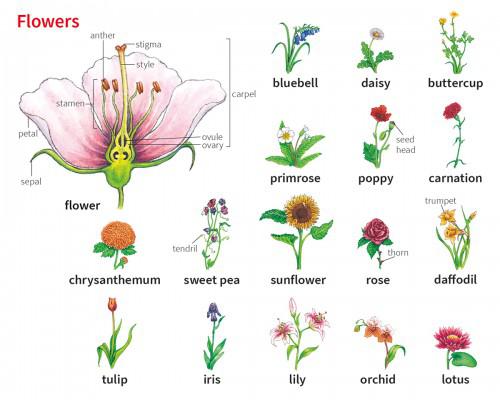
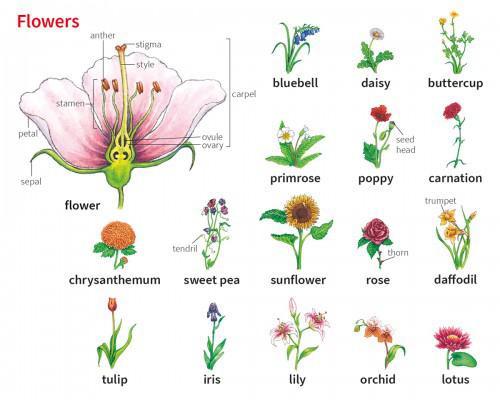
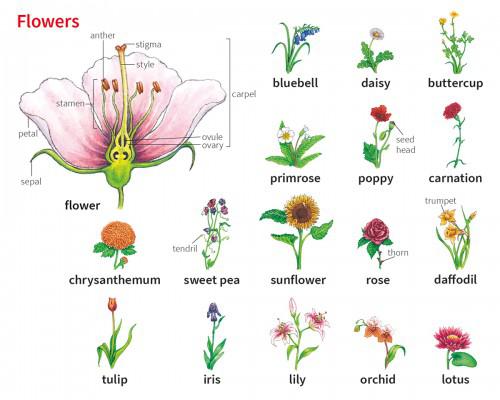
    the coloured part of a plant from which the seed or fruit develops. Flowers usually grow at the end of a stem and last only a short time.

    Do you like flowers?

    Magst du Blumen?

    The plant has a beautiful bright red flower.

    Synonymeblossombloomfloral
    Antonymeweedthornvegetation
  5. 5

    grass(noun)

    /ɡræs/

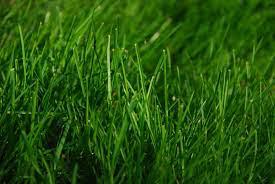
    das Gras

    a common wild plant with narrow green leaves and stems that are eaten by cows, horses, sheep, etc.

    a blade of grass

    ein Grashalm

    The dry grass caught fire.

    Synonymeturflawngreenswardherbagepasture
    Antonymebare earthsoilconcretepavement
  6. 6

    bush(noun)

    /bʊʃ/

    der Busch, der Strauch

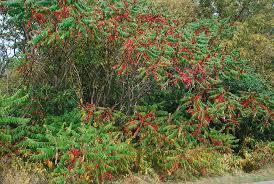
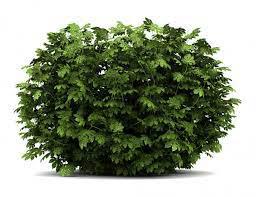
    a plant that grows thickly with several hard stems coming up from the root

    She was hiding in the bushes at the side of the lane.

    Sie versteckte sich in den Büschen am Rand des Weges.

    a rose bush

    Synonymeshrubhedgethicketscrub
    Antonymetreeopen spaceclearing
  7. 7

    branch(noun)

    /bræntʃ/

    der Ast, der Zweig

    a part of a tree that grows out from the main stem and on which leaves, flowers and fruit grow

    She climbed the tree and hid in the branches.

    Sie kletterte auf den Baum und versteckte sich in den Ästen.

    They all put a bet on the race.

    Synonymelimboffshootboughdivisionsectionarm
    Antonymetrunkmainstemwhole
  8. 8

    seed(noun)

    /siːd/

    der Samen, das Saatgut

    the small hard part produced by a plant, from which a new plant can grow
    These vegetables can be grown from seed.

    Dieses Gemüse kann aus Samen gezogen werden.

    seed potatoes(= used for planting)

    Synonymekernelgraingermsourceoriginbeginning
    Antonymefruitproductoutcomeend
  9. 9

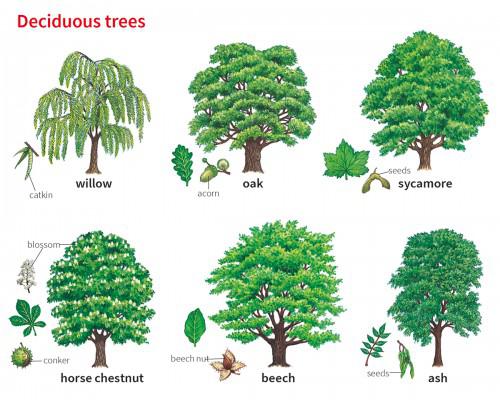
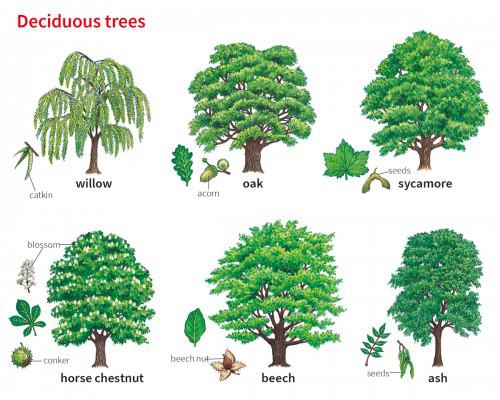
    Beech(noun)

    /biːtʃ/

    die Buche

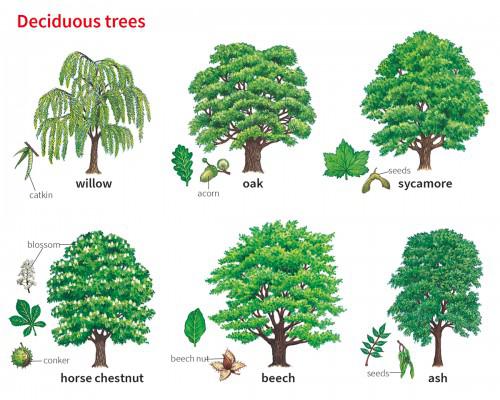
    a tall forest tree with smooth grey bark , shiny leaves and small nuts

    The great beeches towered up towards the sky.

    Die großen Buchen ragten zum Himmel empor.

    Synonymetreeforest treewoodland tree
    Antonymeshrubbushsmall plant
  10. 10

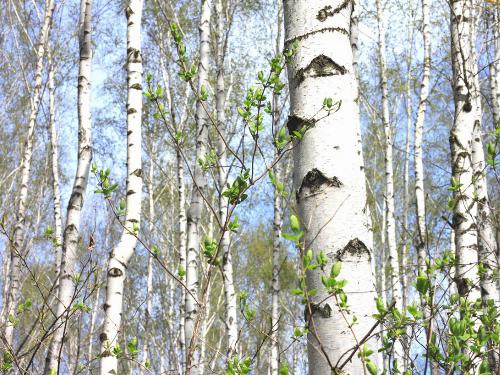
    Birch(noun)

    /bɜːrtʃ/

    die Birke

    a tree with smooth bark and thin branches that grows in northern countries

    Birch species are generally small to medium-sized trees or shrubs

    Birkenarten sind im Allgemeinen kleine bis mittelgroße Bäume oder Sträucher.

    Synonymebirch tree
  11. 11

    Bloom(noun)

    /bluːm/

    die Blüte

    a flower (usually one on a plant that people admire for its flowers)

    The plant produced a single white bloom.

    Die Pflanze brachte eine einzige weiße Blüte hervor.

    Synonymeflowerblossomflourishthrivedevelop
    Antonymewiltfadedeclinedieshrink
  12. 12

    Bluebell(noun)

    /ˈbluːbel/

    das Hasenglöckchen, die Glockenblume

    a garden or wild flower with a short stem and small blue or white flowers that have the shape of bells

    Bluebells carpeted the forest floor in spring.

    Im Frühling bedeckten Hasenglöckchen den Waldboden wie ein Teppich.

    Synonymewild hyacinthendymionflowerplant
  13. 13

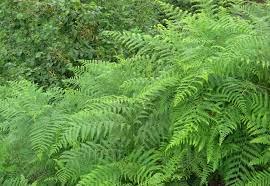
    Bracken(noun)

    /ˈbrækən/

    der Adlerfarn

    a wild plant with large leaves that grows thickly on hills and in woods and turns brown in the autumn

    The hillside was covered in brown bracken.

    Der Hang war mit braunem Adlerfarn bedeckt.

    Synonymefernbrake
    AntonymeNone (as a specific type of fernthere isn't a direct antonym)
  14. 14

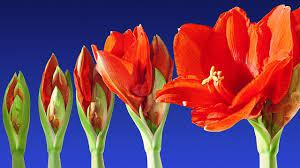
    Bud(noun)

    /bʌd/

    die Knospe

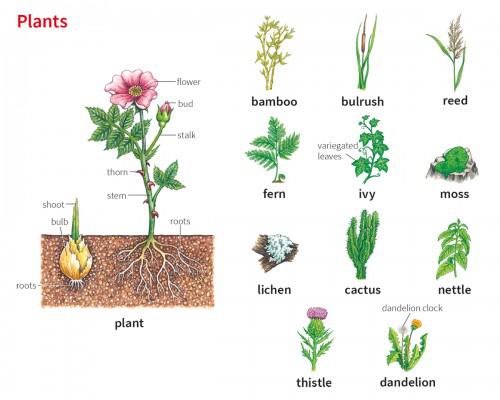
    a small closed part that grows on a plant and from which a flower, leaf or stem develops; a flower or leaf that is not fully open

    The first buds appearing in spring

    Die ersten Knospen, die im Frühling erscheinen

    Synonymesproutshootgermburgeonoffshoot
    Antonymebloomflowermature
  15. 15

    Buttercup(noun)

    /ˈbʌtərkʌp/

    die Butterblume, der Hahnenfuß

    a wild plant with small shiny yellow flowers that are like cups in shape

    The petals of buttercups are often highly lustrous

    Die Blütenblätter von Butterblumen sind oft stark glänzend.

    Synonymegoldcupcrowfoot
  16. 16

    Cactus(noun)

    /ˈkæktəs/

    der Kaktus

    a plant that grows in hot dry regions, especially one with thick stems covered in spines but without leaves. There are many different types of cactus .

    Cactus stems are often ribbed or fluted

    Kaktusstämme sind oft gerippt oder gefurcht.

    Synonymesucculentprickly plantdesert plant
    AntonymeNone (Cactus is a specific type of plant)
  17. 17

    Carnation(noun)

    /kɑːrˈneɪʃn/

    die Nelke

    a white, pink, red or yellow flower, often worn as a decoration on formal occasions

    Carnations were mentioned in Greek literature 2,000 years ago.

    Nelken wurden schon vor 2.000 Jahren in der griechischen Literatur erwähnt.

    Synonymeclove pinkpink
  18. 18

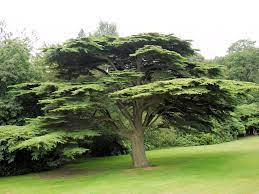
    Cedar(noun)

    /ˈsiːdər/

    die Zeder

    a tall evergreen tree with wide spreading branches

    An old cedar stood in the middle of the park.

    Mitten im Park stand eine alte Zeder.

    Synonymeevergreenconifertimber
    Antonymedeciduous (tree)broadleaf (tree)
  19. 19

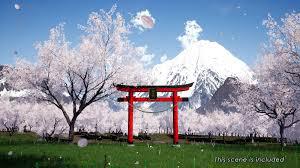
    Cherry tree(noun)

    /ˈʧɛri triː/

    der Kirschbaum

    a tree on which cherries grow, or a similar tree, grown for its flowers

    The cherry tree in our garden is covered in pink flowers.

    Der Kirschbaum in unserem Garten ist voller rosa Blüten.

    Synonymeflowering cherryPrunus tree
  20. 20

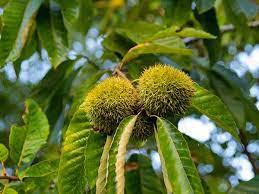
    Chestnut tree(noun)

    /ˈʧɛsnʌt triː/

    der Kastanienbaum, die Kastanie

    a large tree with spreading branches that produces smooth brown nuts inside cases that are covered with spikes

    There are several types of chestnut tree.

    Es gibt mehrere Arten von Kastanienbäumen.

    Synonymechestnutcastanea
  21. 21

    Chrysanthemum(noun)

    /krɪˈzænθəməm/

    die Chrysantheme

    a large, brightly coloured garden flower that is like a ball in shape and is made up of many long narrow petals

    In Japan, a form of bonsai chrysanthemum was developed over the centuries.

    In Japan wurde über die Jahrhunderte eine Bonsai-Form der Chrysantheme entwickelt.

    Synonymemumchrysanth
  22. 22

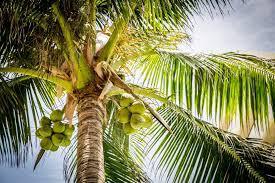
    Coconut tree(noun)

    /ˈkəʊkənʌt triː/

    die Kokospalme

    a tall tropical palm tree that produces coconuts

    She climbed the coconut tree to get a fresh coconut.

    Sie kletterte auf die Kokospalme, um eine frische Kokosnuss zu holen.

    SynonymeCoconut palm
  23. 23

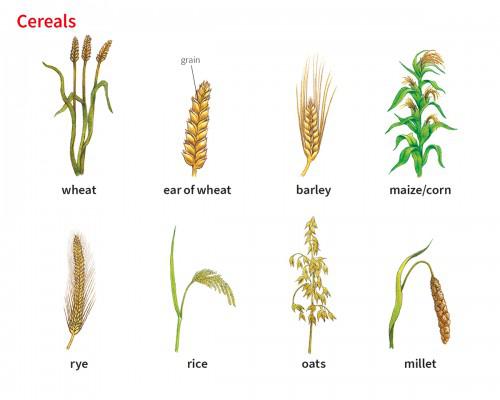
    Corn(noun)

    /kɔːrn/

    der Mais

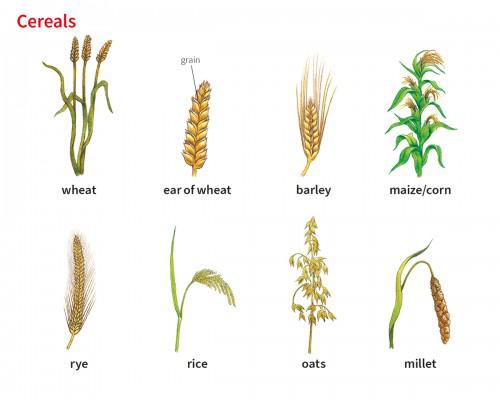
    a tall plant grown for its yellow grains that are eaten as food; maize

    The major crops are wheat, barley and corn.

    Die wichtigsten Feldfrüchte sind Weizen, Gerste und Mais.

    Synonymemaizesweetcorn
  24. 24

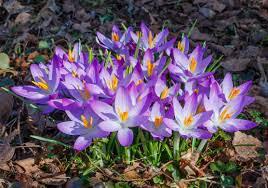
    Crocus(noun)

    /ˈkrəʊkəs/

    der Krokus

    a small yellow, purple or white flower that appears in early spring

    Purple crocuses appear in the garden in early spring.

    Im frühen Frühling blühen im Garten lila Krokusse.

    Synonymesaffron crocusautumn crocusspring crocus
    Antonymecrocuscrocus sativus
  25. 25

    Daffodil(noun)

    /ˈdæfədɪl/

    die Osterglocke, die Narzisse

    a tall yellow spring flower that is like a trumpet in shape. It is a national symbol of Wales.

    The daffodil is the national flower of Wales and the symbol of cancer charities in many countries.

    Die Osterglocke ist die Nationalblume von Wales und in vielen Ländern das Symbol von Krebshilfeorganisationen.

    Synonymenarcissusjonquil
    Antonymedaffodildaffodil garlicdaffodilly
  26. 26

    Dahlia(noun)

    /ˈdeɪliə/

    die Dahlie

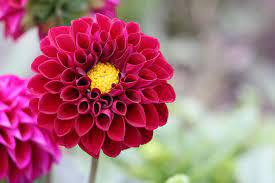
    a large brightly coloured garden flower, often like a ball in shape

    The dahlia was declared the national flower of Mexico in 1963.

    Die Dahlie wurde 1963 zur Nationalblume Mexikos erklärt.

    Synonymegarden dahliasingle dahliapompon dahlia
    Antonymedahliadahlia pinnata
  27. 27

    Daisy(noun)

    /ˈdeɪzi/

    das Gänseblümchen, die Margerite

    a small wild flower with white petals around a yellow centre; a taller plant with similar but larger flowers

    Daisies are one of the most recognizable and common flowers.

    Gänseblümchen gehören zu den bekanntesten und häufigsten Blumen.

    SynonymeBellis perennisDay's eye
    Antonymecommon daisycowpen daisycrown daisydaisydaisy fleabanedaisy wheeldaisy-bushdaisy-chain
  28. 28

    Dandelion(noun)

    /ˈdændɪlaɪən/

    der Löwenzahn

    a small wild plant with a bright yellow flower that becomes a soft white ball of seeds called a dandelion clock

    Dandelions are thought to have evolved about 30 million years ago in Eurasia

    Man nimmt an, dass sich der Löwenzahn vor etwa 30 Millionen Jahren in Eurasien entwickelt hat.

    Synonymeblowballlion's toothpiss-a-bed
  29. 29

    Fern(noun)

    /fɜːrn/

    der Farn

    a plant with large attractive leaves and no flowers that grows in wet areas or is grown in a pot. There are many types of fern .

    Ferns first appear in the fossil record about 360 million years ago in the middle Devonian period

    Farne tauchen im Fossilbericht erstmals vor etwa 360 Millionen Jahren im mittleren Devon auf.

    Synonymebrackenground coverforest plant
    Antonyme(Generally antonyms don't apply to specific plant types like ferns. More general antonyms would be) TreeShrubFlower
  30. 30

    Fig tree(noun)

    /fɪg triː/

    der Feigenbaum

    a tree on which figs grow

    Figs are a delicious treat that thrive in warm climates but can also be grown in more temperate regions with a bit of extra care.

    Feigen sind eine köstliche Frucht, die in warmen Klimazonen gedeiht, aber mit etwas zusätzlicher Pflege auch in gemäßigteren Regionen angebaut werden kann.

    Synonymefigfig plantFicus carica
  31. 31

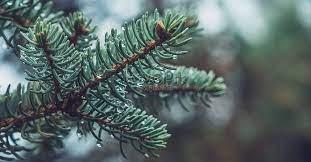
    Fir(noun)

    /fɜːr/

    die Tanne

    an evergreen forest tree with leaves like needles

    Tall fir trees cover the side of the mountain.

    Hohe Tannen bedecken den Berghang.

    Synonymeevergreenconiferpinespruce
    Antonymedeciduous tree
  32. 32

    Forget-me-not(noun)

    /fərˈɡet miː nɑːt/

    das Vergissmeinnicht

    a low-growing plant with small, light-blue flowers

    In The Netherlands, the forget-me-not has become a symbol for Alzheimer Nederland, a foundation advocating for people suffering from dementia.

    In den Niederlanden ist das Vergissmeinnicht zum Symbol von Alzheimer Nederland geworden, einer Stiftung, die sich für Menschen mit Demenz einsetzt.

    SynonymeAnchusaMyosotislove token
  33. 33

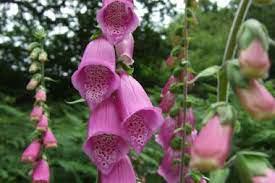
    Foxglove(noun)

    /ˈfɑːksɡlʌv/

    der Fingerhut

    a tall plant with purple or white flowers that are like bells in shape growing up its stem

    Foxglove has medicinal uses but can also be toxic to humans and other animals.

    Der Fingerhut wird medizinisch verwendet, kann für Menschen und andere Tiere aber auch giftig sein.

    SynonymeDigitalisDead Man's BellsFairy FingersWitches' Gloves
  34. 34

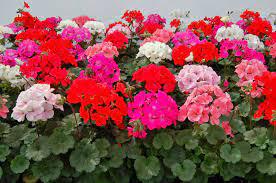
    Geranium(noun)

    /dʒəˈreɪniəm/

    die Geranie

    a garden plant with a mass of red, pink or white flowers on the end of each stem

    She keeps red geraniums on her balcony.

    Sie hat rote Geranien auf ihrem Balkon.

    Synonymecranesbill
  35. 35

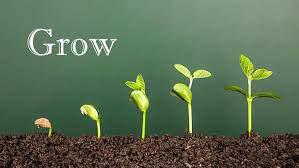
    Grow(verb)

    /ɡrəʊ/

    wachsen

    to increase in size, number, strength or quality

    The region is too dry for plants to grow.

    Die Region ist zu trocken, als dass dort Pflanzen wachsen könnten.

    Synonymedevelopincreaseexpandcultivateflourish
    Antonymeshrinkdeclinewitherdecreasediminish
  36. 36

    Hazel(noun)

    /ˈheɪzl/

    der Haselstrauch, die Hasel

    a small tree that produces small nuts (called hazelnuts ) that can be eaten

    Hazels have simple, rounded leaves with double-serrate margins.

    Haseln haben einfache, rundliche Blätter mit doppelt gesägtem Rand.

    Synonymefilbertcobnut tree
  37. 37

    Herb(noun)

    /ɜːrb/

    das Kraut, die Heilpflanze

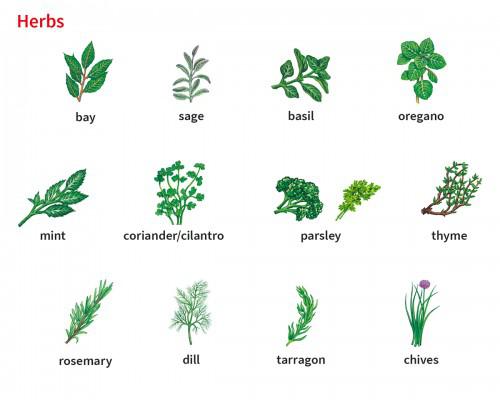
    a plant whose leaves, flowers or seeds are used to add taste to food, in medicines or for their pleasant smell. parsley , mint and oregano are all herbs .

    Herbs have a variety of uses including culinary, medicinal, and in some cases, spiritual.

    Kräuter haben vielfältige Verwendungen, unter anderem in der Küche, in der Medizin und in manchen Fällen auch im spirituellen Bereich.

    Synonymeplantbotanicalgreeneryvegetationspice
    Antonymesyntheticartificialinorganic
  38. 38

    Ivy(noun)

    /ˈaɪvi/

    der Efeu

    a climbing plant, especially one with dark green shiny leaves with five points

    Ivy seeds are spread by birds

    Efeusamen werden von Vögeln verbreitet.

    Synonymeclimbing vinecreepervine
    Antonymen/a
  39. 39

    Lily(noun)

    /ˈlɪli/

    die Lilie

    a large white or brightly coloured flower with petals that curl back from the centre. There are many types of lily .

    Lilies are usually planted as bulbs in the autumn.

    Lilien werden normalerweise im Herbst als Zwiebeln gepflanzt.

    Synonymeflowerbulbous plantplant
    AntonymeNone (as a specific type of flowerit doesn't have direct antonyms)Different flower type (e.g.rosetulip)
  40. 40

    Moss(noun)

    /mɔːs/

    das Moos

    a very small green or yellow plant without flowers that spreads over wet surfaces, rocks, trees, etc.

    Mosses are commonly confused with liverworts, hornworts and lichens.

    Moose werden häufig mit Lebermoosen, Hornmoosen und Flechten verwechselt.

    Synonymebryophytelichen (sometimes used loosely)
    Antonymevascular planttreeflower
  41. 41

    Mushroom(noun)

    /ˈmʌʃrʊm/

    der Pilz

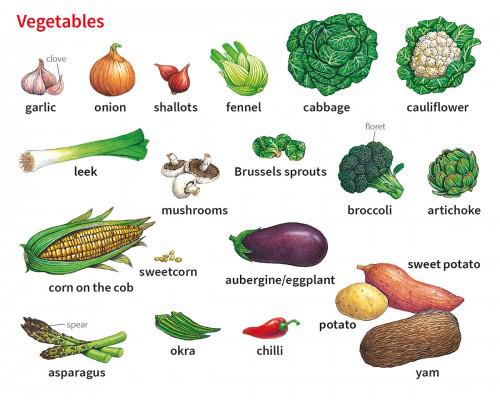
    a fungus with a round flat head and short stem . Many mushrooms can be eaten.

    They went into the woods to pick wild mushrooms.

    Sie gingen in den Wald, um wilde Pilze zu sammeln.

    Synonymefungustoadstoolagaric
    Antonymeshrinkshrivel
  42. 42

    Nettle(noun)

    /ˈnetl/

    die Brennnessel

    a wild plant with leaves that have pointed edges, are covered in fine hairs and sting (= cause you pain) if you touch them

    The nettles had spread and now covered half the garden.

    Die Brennnesseln hatten sich ausgebreitet und bedeckten nun den halben Garten.

    Synonymestinging nettleburnweed
    Antonymeharmless plantsoothing plant
  43. 43

    Oak(noun)

    /əʊk/

    die Eiche

    a large tree that produces small nuts called acorns . Oaks are common in northern countries and can live to be hundreds of years old.

    The forest is famous for its ancient oak trees.

    Der Wald ist für seine uralten Eichen berühmt.

    SynonymeQuercus (scientific name)
    Antonymepinebirchelm
  44. 44

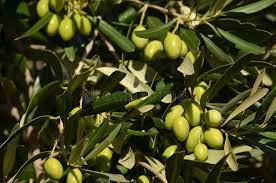
    Olive tree(noun)

    /ˈɒlɪv triː/

    der Olivenbaum

    a tree on which olives grow

    The olive tree, Olea europaea, is an evergreen tree or shrub native to Mediterranean Europe, Asia, and Africa.

    Der Olivenbaum, Olea europaea, ist ein immergrüner Baum oder Strauch, der im Mittelmeerraum Europas sowie in Asien und Afrika heimisch ist.

    SynonymeoliveOlea europaeaolive plant
    Antonymedeciduous treefruitless tree
  45. 45

    Orchid(noun)

    /ˈɔːrkɪd/

    die Orchidee

    a plant with brightly coloured flowers of unusual shapes. There are many different types of orchid and some of them are very rare.

    Orchids are easily distinguished from other plants, as they share some very evident derived characteristics or synapomorphies.

    Orchideen lassen sich leicht von anderen Pflanzen unterscheiden, da sie einige sehr auffällige abgeleitete Merkmale oder Synapomorphien teilen.

    Synonymenone (orchid is specific)
    Antonymecommon plant
  46. 46

    Pine(noun)

    /paɪn/

    die Kiefer, die Föhre

    an evergreen forest tree with leaves like needles

    Pine is one of the more extensively used types of wood used as lumber.

    Kiefernholz gehört zu den am häufigsten als Bauholz verwendeten Holzarten.

    Synonymefirevergreenconifer
    Antonymedeciduous treehardwood
  47. 47

    Poppy(noun)

    /ˈpɑːpi/

    der Mohn

    a wild or garden plant, with a large delicate flower that is usually red, and small black seeds. Opium is obtained from one type of poppy .

    Poppy oil is often used as cooking oil, salad dressing oil, or in products such as margarine.

    Mohnöl wird oft als Speiseöl, als Salatöl oder in Produkten wie Margarine verwendet.

    Synonymecorn poppyopium poppyflander's poppypapaver
    Antonymeclustered poppy mallowcorn poppypoppypoppycock
  48. 48

    Primrose(noun)

    /ˈprɪmrəʊz/

    die Schlüsselblume, die Primel

    a small wild plant that produces pale yellow flowers in spring

    Primrose is a small, perennial woodland plant that grows no more than 10cm high and can flower from December through to May

    Die Schlüsselblume ist eine kleine, mehrjährige Waldpflanze, die nicht höher als 10 cm wird und von Dezember bis Mai blühen kann.

    SynonymeCowslipOxlipPolyanthus
    Antonymecommon evening primrosecommon evening primroseprimrose
  49. 49

    Root(noun)

    /ruːt/

    die Wurzel

    the part of a plant that grows under the ground and takes in water and minerals that it sends to the rest of the plant

    Tree roots can cause damage to buildings.

    Baumwurzeln können Gebäude beschädigen.

    Synonymeoriginsourcebasecausefoundationunderlying cause
    Antonymebranchleafresultconsequenceoutgrowth
  50. 50

    Rose(noun)

    /rəʊz/

    die Rose

    a flower with a sweet smell that grows on a bush with thorns (= sharp points) on its stems

    He gave her a bunch of red roses.

    Er schenkte ihr einen Strauß roter Rosen.

    SynonymeBlossomFlowerBloomRosette
    AntonymeThornWeedUgliness
  51. 51

    Shrub(noun)

    /ʃrʌb/

    der Strauch, der Busch

    a large plant that is smaller than a tree and that has several stems of wood coming from the ground

    Shrubs are perennial woody plants

    Sträucher sind mehrjährige verholzende Pflanzen.

    Synonymebushhedgescrub
    Antonymetree
  52. 52

    Snowdrop(noun)

    /ˈsnəʊdrɑːp/

    das Schneeglöckchen

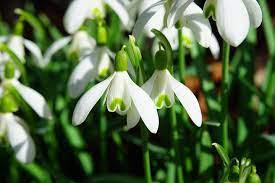
    a small white flower that appears in early spring

    Snowdrops have been known since the earliest times under various names

    Schneeglöckchen sind seit frühester Zeit unter verschiedenen Namen bekannt.

    SynonymegalanthusFebruary fair maid
  53. 53

    Thorn(noun)

    /θɔːrn/

    der Dorn

    a small sharp, pointed part on the stem of some plants, such as roses

    The rose bush has many thorns.

    Der Rosenstrauch hat viele Dornen.

    Synonymepricklespikebarbspine
    Antonymebenefitadvantagesmoothnessprotection
  54. 54

    Trunk(noun)

    /trʌŋk/

    der Stamm, der Baumstamm

    the thick main stem of a tree, that the branches grow from

    An instrument made from a hollowed-out tree trunk.

    Ein Instrument, das aus einem ausgehöhlten Baumstamm gefertigt ist.

    SynonymeStemTorsoBodyShaftBole
    AntonymeBranchLimbTwigTopCrown
  55. 55

    Tulip(noun)

    /ˈtuːlɪp/

    die Tulpe

    a large, brightly coloured spring flower, like a cup in shape, on a tall stem

    Tulips originally were found in a band stretching from Southern Europe to Central Asia

    Tulpen kamen ursprünglich in einem Gürtel von Südeuropa bis Zentralasien vor.

    Synonymebulbflowerblossom
  56. 56

    Water lily(noun)

    /ˈwɔːtər lɪli/

    die Seerose

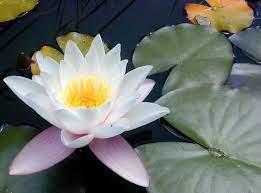
    a plant that floats on the surface of water, with large, round, flat leaves and white, yellow or pink flowers

    Pink water lilies catch the glow of sunrise.

    Rosa Seerosen fangen das Leuchten des Sonnenaufgangs ein.

    SynonymeNymphaealotuspond lily
  57. 57

    Weeping willow(noun)

    /ˈwiːpɪŋ ˈwɪləʊ/

    die Trauerweide

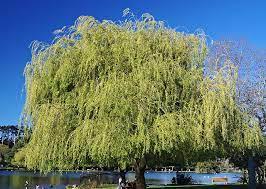
    a willow tree with long thin branches that hang down towards the ground

    Weeping willow is a medium- to large-sized deciduous tree.

    Die Trauerweide ist ein mittelgroßer bis großer Laubbaum.

    Synonymeweeping treependulous willow
    Antonymeupright treenon-weeping willow
  58. 58

    Wheat(noun)

    /wiːt/

    der Weizen

    a plant grown for its grain that is used to produce the flour for bread, cakes, pasta , etc.; the grain of this plant

    The land at Scampston is mainly sandy, so only wheats are grown.

    Der Boden in Scampston ist überwiegend sandig, deshalb wird dort nur Weizen angebaut.

    Synonymegraincereal
    AntonymeNone (in the sense of a direct opposite food)Other grains (ricecornoatsetc.)
  59. 59

    Yew(noun)

    /juː/

    die Eibe

    a small tree with dark green leaves and small red berries

    Yew trees contain the highly poisonous taxane alkaloids that have been developed as anti-cancer drugs.

    Eiben enthalten die hochgiftigen Taxan-Alkaloide, aus denen Krebsmedikamente entwickelt wurden.

    Synonymeevergreentaxus
    Antonymedyeweedeyewasheyewatereyewitnessyew