Lektion 8/10 · 15 Wörter · 0 gelernt
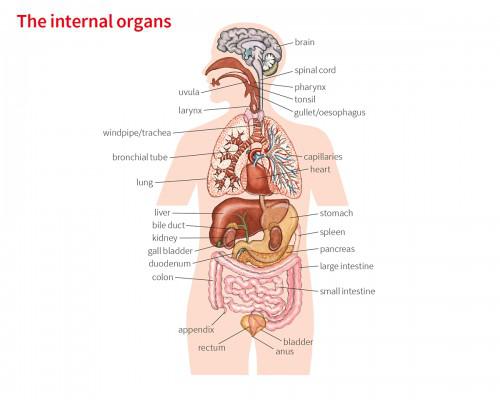
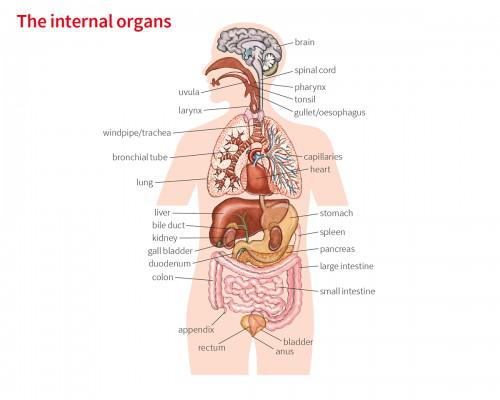
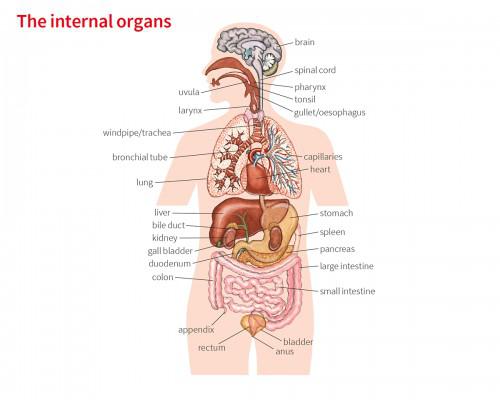
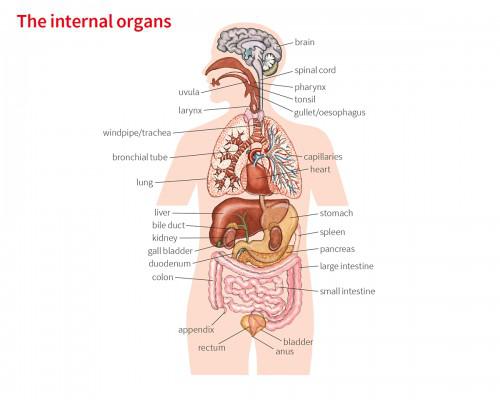
Digestive system
Verdauungssystem
der Magen
the muscular bag-shaped organ where food is stored and partly digested by acid and enzymes
The stomach produces acid that helps to digest proteins.
Der Magen produziert Säure, die bei der Verdauung von Proteinen hilft.
Endoscopy revealed an ulcer in the lining of the stomach.
SynonymebellyabdomentummygutpaunchAntonymenothing (related to lack of stomach issues/concerns)health (related to stomach health)der Blinddarm, der Wurmfortsatz
a small, narrow, closed tube attached to the first part of the large intestine
An inflamed appendix usually needs to be removed by surgery.
Ein entzündeter Blinddarm muss in der Regel operativ entfernt werden.
The pain spread across the whole abdomen after the appendix burst.
Synonymevermiform appendixcaecal appendixAntonymecorecentralessentialdas Duodenum, der Zwölffingerdarm
the first short part of the small intestine, just after the stomach, where bile and pancreatic juice enter
Most peptic ulcers occur in the first part of the duodenum.
Die meisten peptischen Ulzera entstehen im ersten Abschnitt des Zwölffingerdarms.
Bile flows into the duodenum through the common bile duct.
Synonymesmall intestine beginningfirst part of small intestineAntonymeileumjejunumdie Speiseröhre, der Ösophagus
the muscular tube that carries food from the throat to the stomach
Acid reflux can damage the lining of the esophagus.
Säurereflux kann die Schleimhaut der Speiseröhre schädigen.
The endoscope was passed down the esophagus into the stomach.
SynonymegulletfoodpipeAntonymeNonedie Leber
a large organ in the upper right abdomen that processes nutrients, makes bile and removes toxins from the blood
Heavy drinking over many years can cause scarring of the liver.
Jahrelanger starker Alkoholkonsum kann zu einer Vernarbung der Leber führen.
Blood tests showed that his liver was not working properly.
Synonymeorganviscusdie Bauchspeicheldrüse, das Pankreas
a gland behind the stomach that produces digestive enzymes and hormones such as insulin
Inflammation of the pancreas causes severe upper abdominal pain.
Eine Entzündung der Bauchspeicheldrüse verursacht starke Schmerzen im Oberbauch.
In type 1 diabetes, the pancreas produces little or no insulin.
SynonymeNoneAntonymeNonedie Peristaltik
wave-like muscle contractions that move food and waste along the digestive tract
Peristalsis moves food from the esophagus into the stomach.
Die Peristaltik befördert die Nahrung von der Speiseröhre in den Magen.
After abdominal surgery, peristalsis may stop for a short time.
Synonymeintestinal motilitygut contractionsAntonymeileusparalysisdas Rektum, der Mastdarm
the last part of the large intestine, where stool is stored before it leaves the body through the anus
The doctor performed a digital examination of the rectum.
Der Arzt führte eine digitale rektale Untersuchung durch.
Bleeding from the rectum should always be investigated.
Synonymeback passageanushindgutAntonymeesophagusstomachdie Gallenblase
a small pouch under the liver that stores bile and releases it into the intestine after meals
Gallstones form when bile becomes too concentrated in the gallbladder.
Gallensteine entstehen, wenn die Galle in der Gallenblase zu stark konzentriert wird.
She had her gallbladder removed by keyhole surgery.
Synonymecholecystdie Speicheldrüse
one of the glands in and around the mouth that produce saliva
The parotid, in front of the ear, is the largest salivary gland.
Die Ohrspeicheldrüse vor dem Ohr ist die größte Speicheldrüse.
A stone can block a salivary gland and cause swelling during meals.
SynonymeSalivarySaliva-producing glandAntonymeNoneder Dünndarm
the long, narrow part of the gut between the stomach and the large intestine where most nutrients are absorbed
Most digestion and absorption happen in the small intestine.
Der größte Teil der Verdauung und Resorption findet im Dünndarm statt.
The scan showed an obstruction in the small intestine.
Synonymesmall bowelsmall gutAntonymelarge intestineder Dickdarm
the wider last part of the gut, including the cecum, colon and rectum, where water is absorbed
The large intestine absorbs water and forms stool.
Der Dickdarm nimmt Wasser auf und formt den Stuhl.
A colonoscopy examines the inside of the large intestine.
SynonymecolonbowelAntonymesmall intestineder Gastrointestinaltrakt, der Magen-Darm-Trakt
the long passage from the mouth to the anus through which food passes and is digested; the GI tract
Bleeding from the upper gastrointestinal tract may cause black stools.
Blutungen im oberen Gastrointestinaltrakt können schwarzen Stuhl verursachen.
The drug is quickly absorbed from the gastrointestinal tract.
der Gallengang
a tube that carries bile from the liver and gallbladder to the duodenum
A stone blocking the common bile duct can cause jaundice.
Ein Stein, der den Hauptgallengang blockiert, kann eine Gelbsucht verursachen.
The abdominal ultrasound showed a dilated bile duct and gallstones.