레슨 8/10 · 15단어 · 외운 단어 0
Digestive system
소화기계
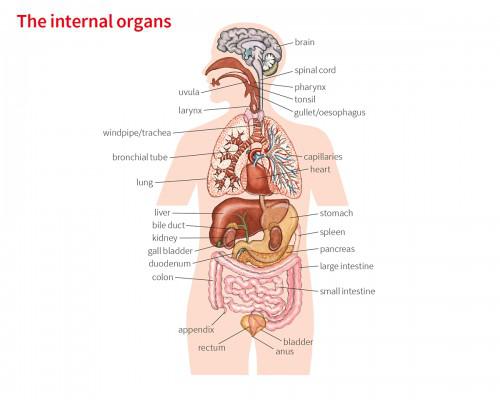
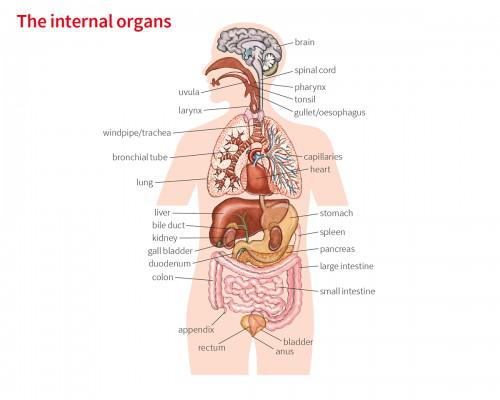
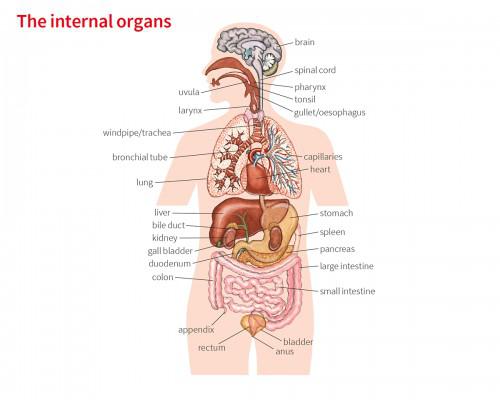
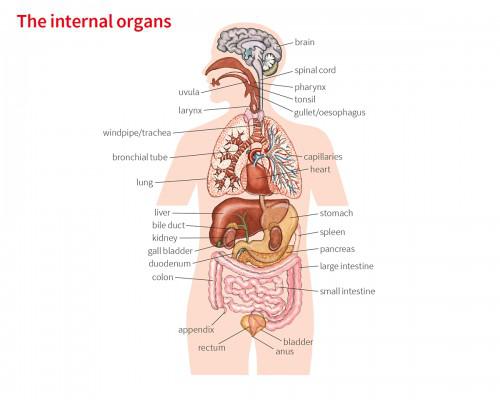
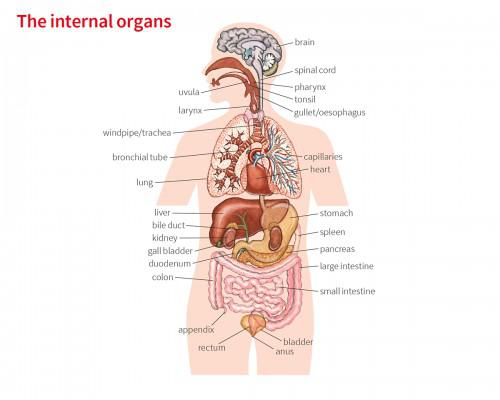
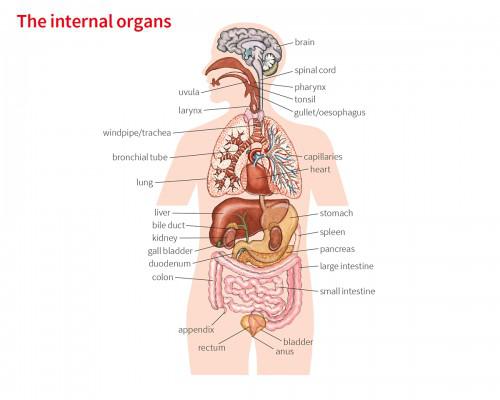
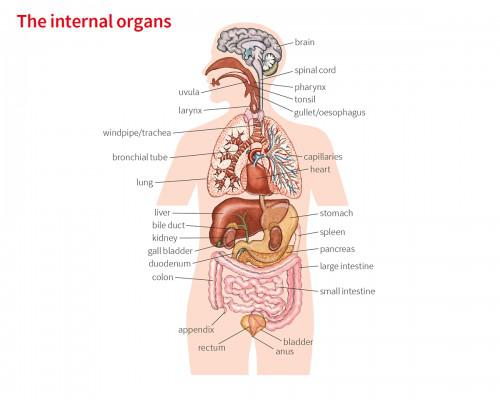
위, 위장
the muscular bag-shaped organ where food is stored and partly digested by acid and enzymes
The stomach produces acid that helps to digest proteins.
위는 단백질 소화를 돕는 위산을 분비한다.
Endoscopy revealed an ulcer in the lining of the stomach.
유의어bellyabdomentummygutpaunch반의어nothing (related to lack of stomach issues/concerns)health (related to stomach health)충수, 충수돌기, 맹장
a small, narrow, closed tube attached to the first part of the large intestine
An inflamed appendix usually needs to be removed by surgery.
염증이 생긴 충수는 대개 수술로 제거해야 한다.
The pain spread across the whole abdomen after the appendix burst.
유의어vermiform appendixcaecal appendix반의어corecentralessential십이지장
the first short part of the small intestine, just after the stomach, where bile and pancreatic juice enter
Most peptic ulcers occur in the first part of the duodenum.
대부분의 소화성 궤양은 십이지장의 첫 부분에서 발생한다.
Bile flows into the duodenum through the common bile duct.
유의어small intestine beginningfirst part of small intestine반의어ileumjejunum간
a large organ in the upper right abdomen that processes nutrients, makes bile and removes toxins from the blood
Heavy drinking over many years can cause scarring of the liver.
수년간의 과음은 간의 섬유화(흉터 형성)를 일으킬 수 있다.
Blood tests showed that his liver was not working properly.
유의어organviscus연동운동, 연동
wave-like muscle contractions that move food and waste along the digestive tract
Peristalsis moves food from the esophagus into the stomach.
연동운동은 음식물을 식도에서 위로 이동시킨다.
After abdominal surgery, peristalsis may stop for a short time.
유의어intestinal motilitygut contractions반의어ileusparalysis직장
the last part of the large intestine, where stool is stored before it leaves the body through the anus
The doctor performed a digital examination of the rectum.
의사는 직장 수지 검사를 시행했다.
Bleeding from the rectum should always be investigated.
유의어back passageanushindgut반의어esophagusstomach침샘, 타액선
one of the glands in and around the mouth that produce saliva
The parotid, in front of the ear, is the largest salivary gland.
귀 앞쪽에 있는 이하선(귀밑샘)은 가장 큰 침샘이다.
A stone can block a salivary gland and cause swelling during meals.
유의어SalivarySaliva-producing gland반의어None소장
the long, narrow part of the gut between the stomach and the large intestine where most nutrients are absorbed
Most digestion and absorption happen in the small intestine.
대부분의 소화와 흡수는 소장에서 일어난다.
The scan showed an obstruction in the small intestine.
유의어small bowelsmall gut반의어large intestine위장관, 소화관
the long passage from the mouth to the anus through which food passes and is digested; the GI tract
Bleeding from the upper gastrointestinal tract may cause black stools.
상부 위장관 출혈은 검은 변을 일으킬 수 있다.
The drug is quickly absorbed from the gastrointestinal tract.