Leçon 8/10 · 15 mots · 0 appris
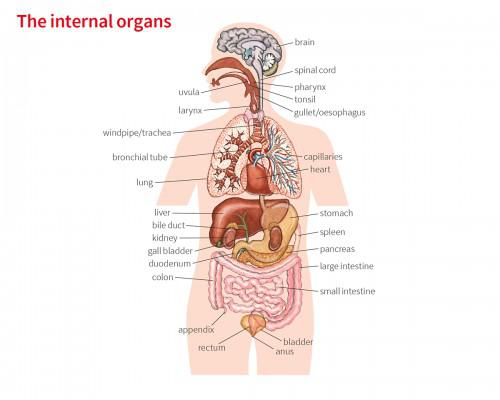
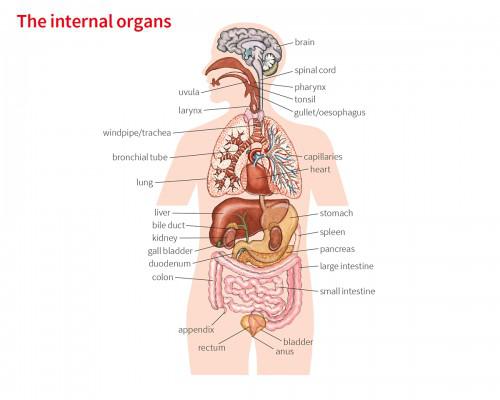
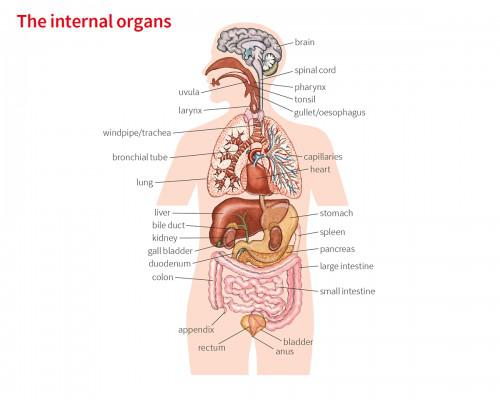
Digestive system
Appareil digestif
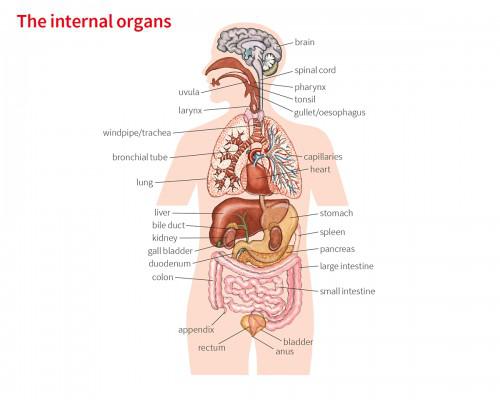
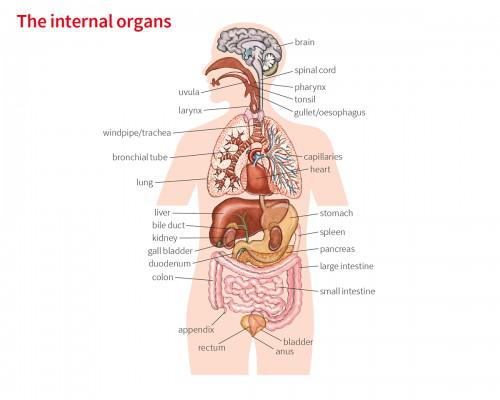
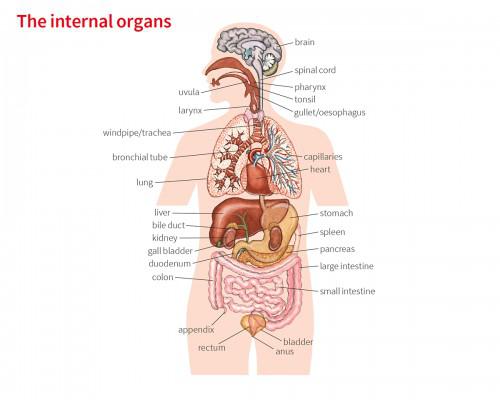
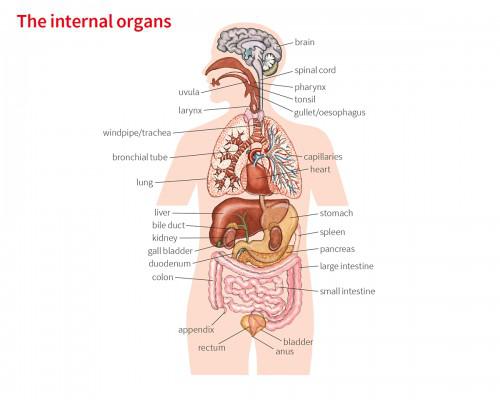
estomac
the muscular bag-shaped organ where food is stored and partly digested by acid and enzymes
The stomach produces acid that helps to digest proteins.
L'estomac produit de l'acide qui aide à digérer les protéines.
Endoscopy revealed an ulcer in the lining of the stomach.
SynonymesbellyabdomentummygutpaunchAntonymesnothing (related to lack of stomach issues/concerns)health (related to stomach health)appendice
a small, narrow, closed tube attached to the first part of the large intestine
An inflamed appendix usually needs to be removed by surgery.
Un appendice enflammé doit généralement être retiré par chirurgie.
The pain spread across the whole abdomen after the appendix burst.
Synonymesvermiform appendixcaecal appendixAntonymescorecentralessentialduodénum
the first short part of the small intestine, just after the stomach, where bile and pancreatic juice enter
Most peptic ulcers occur in the first part of the duodenum.
La plupart des ulcères gastroduodénaux siègent dans la première partie du duodénum.
Bile flows into the duodenum through the common bile duct.
Synonymessmall intestine beginningfirst part of small intestineAntonymesileumjejunumœsophage
the muscular tube that carries food from the throat to the stomach
Acid reflux can damage the lining of the esophagus.
Le reflux acide peut abîmer la muqueuse de l'œsophage.
The endoscope was passed down the esophagus into the stomach.
SynonymesgulletfoodpipeAntonymesNonefoie
a large organ in the upper right abdomen that processes nutrients, makes bile and removes toxins from the blood
Heavy drinking over many years can cause scarring of the liver.
Une forte consommation d'alcool pendant de nombreuses années peut provoquer une fibrose du foie.
Blood tests showed that his liver was not working properly.
Synonymesorganviscuspancréas
a gland behind the stomach that produces digestive enzymes and hormones such as insulin
Inflammation of the pancreas causes severe upper abdominal pain.
L'inflammation du pancréas provoque de fortes douleurs dans la partie haute de l'abdomen.
In type 1 diabetes, the pancreas produces little or no insulin.
SynonymesNoneAntonymesNonepéristaltisme
wave-like muscle contractions that move food and waste along the digestive tract
Peristalsis moves food from the esophagus into the stomach.
Le péristaltisme fait progresser les aliments de l'œsophage vers l'estomac.
After abdominal surgery, peristalsis may stop for a short time.
Synonymesintestinal motilitygut contractionsAntonymesileusparalysisrectum
the last part of the large intestine, where stool is stored before it leaves the body through the anus
The doctor performed a digital examination of the rectum.
Le médecin a pratiqué un toucher rectal.
Bleeding from the rectum should always be investigated.
Synonymesback passageanushindgutAntonymesesophagusstomachvésicule biliaire
a small pouch under the liver that stores bile and releases it into the intestine after meals
Gallstones form when bile becomes too concentrated in the gallbladder.
Les calculs biliaires se forment lorsque la bile devient trop concentrée dans la vésicule biliaire.
She had her gallbladder removed by keyhole surgery.
Synonymescholecystglande salivaire
one of the glands in and around the mouth that produce saliva
The parotid, in front of the ear, is the largest salivary gland.
La parotide, située devant l'oreille, est la plus grosse glande salivaire.
A stone can block a salivary gland and cause swelling during meals.
SynonymesSalivarySaliva-producing glandAntonymesNoneintestin grêle
the long, narrow part of the gut between the stomach and the large intestine where most nutrients are absorbed
Most digestion and absorption happen in the small intestine.
L'essentiel de la digestion et de l'absorption se déroule dans l'intestin grêle.
The scan showed an obstruction in the small intestine.
Synonymessmall bowelsmall gutAntonymeslarge intestinegros intestin, côlon
the wider last part of the gut, including the cecum, colon and rectum, where water is absorbed
The large intestine absorbs water and forms stool.
Le gros intestin absorbe l'eau et forme les selles.
A colonoscopy examines the inside of the large intestine.
SynonymescolonbowelAntonymessmall intestinetube digestif, appareil digestif
the long passage from the mouth to the anus through which food passes and is digested; the GI tract
Bleeding from the upper gastrointestinal tract may cause black stools.
Un saignement du tube digestif haut peut provoquer des selles noires.
The drug is quickly absorbed from the gastrointestinal tract.
voie biliaire, canal biliaire
a tube that carries bile from the liver and gallbladder to the duodenum
A stone blocking the common bile duct can cause jaundice.
Un calcul qui obstrue le canal cholédoque peut provoquer une jaunisse.
The abdominal ultrasound showed a dilated bile duct and gallstones.