레슨 7/10 · 15단어 · 외운 단어 0
Respiratory system
호흡기계
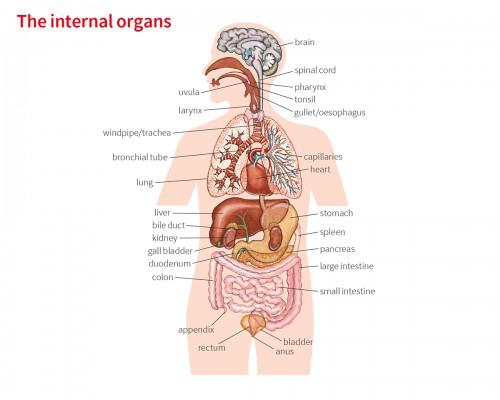
폐포
one of the millions of tiny air sacs in the lungs where oxygen and carbon dioxide are exchanged; plural alveoli
Oxygen passes from each alveolus into the surrounding capillaries.
산소는 각 폐포에서 주변 모세혈관으로 이동합니다.
In pneumonia, the alveoli fill with fluid and pus.
유의어air sacair cell흡입, 흡입법
breathing in air, gas or a medicine through the mouth or nose so that it reaches the lungs
Inhalation delivers the drug directly to the airways with fewer side effects.
흡입법은 약물을 기도에 직접 전달하므로 부작용이 더 적다.
Salbutamol given by inhalation usually relieves wheezing within a few minutes.
유의어breathing inaspirationinspiration반의어exhalationexpiration엽
a clearly separated part of an organ such as the lung, brain or liver; also the soft lower part of the ear
The right lung has three lobes and the left lung has two.
오른쪽 폐는 세 개의 엽으로, 왼쪽 폐는 두 개의 엽으로 이루어져 있다.
The CT scan showed a mass in the upper lobe of the left lung.
유의어projectionprotuberancesegmentdivision반의어hollowdepressionindentation종격동, 가슴세로칸
the central part of the chest between the two lungs, containing the heart, great vessels, trachea and esophagus
The chest CT showed enlarged lymph nodes in the mediastinum.
흉부 CT에서 종격동 림프절이 커져 있는 것이 확인되었다.
A widened mediastinum on X-ray may suggest an injury to the aorta.
유의어thoracic cavity midlineinterpleural space반의어N/A (no direct antonym)흉막, 늑막
the thin double membrane that covers the lungs and lines the inside of the chest wall
Fluid between the two layers of the pleura is called a pleural effusion.
흉막의 두 층 사이에 고인 체액을 흉막삼출이라고 한다.
Inflammation of the pleura causes sharp pain when breathing in.
유의어lung liningmembranous sac반의어None (Pleura does not have a direct antonym)가스 교환
the movement of oxygen into the blood and carbon dioxide out of it, mainly in the alveoli
Gas exchange is impaired when the alveoli are filled with fluid.
폐포에 액체가 차면 가스 교환이 저하된다.
Scarring of the lung tissue reduces gas exchange.
유의어respirationventilationaeration반의어asphyxiationsuffocation기관지
one of the two main air tubes that branch from the trachea into the lungs; plural bronchi
The inhaled peanut was stuck in the right main bronchus.
흡인된 땅콩이 우측 주기관지에 걸려 있었다.
Bronchoscopy allows doctors to look inside the bronchi.
유의어AirwayRespiratory passage반의어EsophagusAlveoli늑간근, 갈비사이근
one of the muscles between the ribs that move the chest wall during breathing
The child was using the intercostal muscles to breathe, a sign of respiratory distress.
그 아이는 호흡을 위해 늑간근을 사용하고 있었는데, 이는 호흡곤란의 징후이다.
The intercostal muscles lift the ribs when you breathe in.
계면활성제, 서팩턴트
a substance made in the alveoli that reduces surface tension and stops the air sacs from collapsing
Premature babies may lack surfactant and develop breathing problems.
미숙아는 계면활성제가 부족하여 호흡 문제가 생길 수 있다.
Surfactant can be given through a tube directly into the baby's lungs.
1회 호흡량, 일회호흡량
the amount of air breathed in or out during one normal breath, about 500 ml in an adult
The ventilator was set to deliver a tidal volume of 450 milliliters.
인공호흡기는 1회 호흡량 450밀리리터를 공급하도록 설정되었다.
Rapid shallow breathing lowers the tidal volume of each breath.