Skip to content

Lesson 2/10 · 15 words · 0 learned

Nose and sinus anatomy

  1. 1

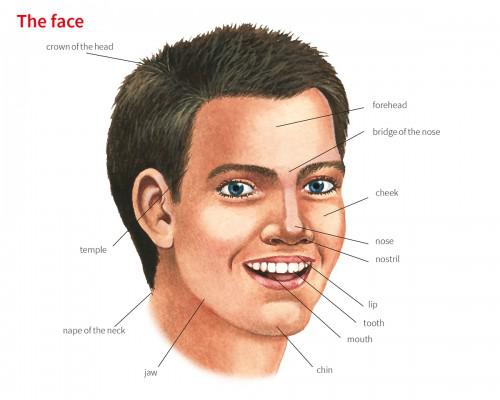
    nostril(noun)

    /ˈnɑːstrəl/

    either of the two openings at the front of the nose through which air enters

    The nosebleed started suddenly from the patient's left nostril.

    Pinch both nostrils together firmly for ten minutes to stop the bleeding.

    Synonymsnarenasal opening
    AntonymsNone
  2. 2

    olfaction(noun)

    /ɔl'fækʃn/

    the sense of smell

    Nasal polyps can reduce olfaction by blocking airflow to the top of the nose.

    Olfaction can be tested by asking the patient to identify common smells.

    Synonymssmellsense of smell
    Antonymsdeafnessblindness
  3. 3

    sinus(noun)

    /ˈsaɪnəs/

    one of the air-filled spaces in the bones of the face and skull that open into the nose

    The CT scan showed that every sinus on the right side was blocked.

    The sinuses make the skull lighter and add resonance to the voice.

    Synonymsnasal cavityparanasal sinus
    Antonymsnone
  4. 4

    adenoids(noun)

    /ˈædənɔɪdz/

    a mass of lymphoid tissue at the back of the nose, in the nasopharynx, that is largest in young children

    Large adenoids can cause snoring and mouth breathing in children.

    The adenoids usually shrink by the teenage years.

    Synonymspharyngeal tonsils
  5. 5

    nasal cavity(noun)

    ˈneɪzəl/ /ˈkævəti

    the air-filled space inside the nose, divided into two halves by the septum, that warms and filters air

    The endoscope was passed gently into the nasal cavity.

    Large polyps filled the nasal cavity and blocked her breathing.

    SynonymsNasal passageNose cavity
    AntonymsLungTrachea
  6. 6

    nasal septum(noun)

    ˈneɪ.zəl/ /ˈsep.təm

    the wall of cartilage and bone that divides the nasal cavity into left and right sides

    A deviated nasal septum can block one side of the nose.

    Most nosebleeds come from blood vessels at the front of the nasal septum.

    SynonymsNasal wallSeptum of nose
    AntonymsNone
  7. 7

    nasopharynx(noun)

    nəˈsɑfərɪŋks

    the upper part of the throat behind the nose, above the soft palate

    The nasopharynx is examined with an endoscope passed through the nose.

    Enlarged adenoids can block the nasopharynx in children.

    Synonymsupper pharynxrhinopharynx
    Antonymsoropharynxlaryngopharynx
  8. 8

    turbinate(noun)

    /ˈtɜːbɪnət/

    one of the curved bony ridges covered with mucosa on the side wall of the nose that warm and moisten air

    The inferior turbinates looked swollen and pale on examination.

    Enlarged turbinates are a common cause of a blocked nose.

  9. 9

    nasal mucosa(noun)

    /ˌneɪzl mjuːˈkəʊsə/

    the moist lining of the inside of the nose, which produces mucus and traps dust and germs

    In allergic rhinitis, the nasal mucosa is often pale and swollen.

    Overuse of decongestant sprays can damage the nasal mucosa.

  10. 10

    maxillary sinus(noun)

    /mækˈsɪləri ˌsaɪnəs/

    the largest sinus, located in the cheekbone on each side of the nose

    An infected upper tooth can spread infection to the maxillary sinus.

    The CT scan showed a fluid level in the left maxillary sinus.

  11. 11

    frontal sinus(noun)

    /ˌfrʌntl ˈsaɪnəs/

    a sinus in the forehead bone, just above the eyes

    Frontal sinusitis causes pain and pressure in the forehead.

    The frontal sinus usually develops fully by the late teenage years.

  12. 12

    ethmoid sinus(noun)

    /ˈeθmɔɪd ˌsaɪnəs/

    a group of small air cells in the bone between the nose and the eyes

    Infection in the ethmoid sinuses can spread to the eye socket.

    During surgery, the ethmoid sinus cells were opened to improve drainage.

  13. 13

    sphenoid sinus(noun)

    /ˈsfiːnɔɪd ˌsaɪnəs/

    a sinus deep in the skull behind the nose, close to the pituitary gland and the optic nerves

    The sphenoid sinus lies close to the optic nerves and carotid arteries.

    Surgeons can reach the pituitary gland through the sphenoid sinus.

  14. 14

    ostiomeatal complex(noun)

    /ˌɒstiəʊmiˈeɪtl ˌkɒmpleks/

    the narrow drainage area in the middle meatus where the frontal, maxillary and anterior ethmoid sinuses drain

    Blockage of the ostiomeatal complex is a key cause of chronic sinusitis.

    Endoscopic sinus surgery aims to reopen the ostiomeatal complex.

  15. 15

    choanae(noun)

    /kəʊˈeɪniː/

    the two openings at the back of the nasal cavity that lead into the nasopharynx

    The endoscope was advanced through the choanae into the nasopharynx.

    In choanal atresia, one or both choanae are blocked at birth.