Lektion 2/10 · 15 Wörter · 0 gelernt
Nose and sinus anatomy
Anatomie von Nase und Nasennebenhöhlen
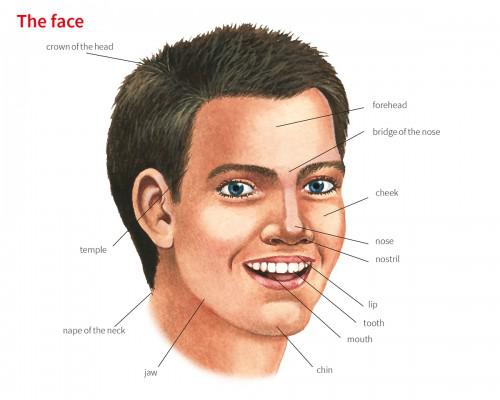
das Nasenloch, der Naseneingang
either of the two openings at the front of the nose through which air enters
The nosebleed started suddenly from the patient's left nostril.
Das Nasenbluten setzte plötzlich aus dem linken Nasenloch des Patienten ein.
Pinch both nostrils together firmly for ten minutes to stop the bleeding.
Synonymenarenasal openingAntonymeNonedie Olfaktion, der Geruchssinn
the sense of smell
Nasal polyps can reduce olfaction by blocking airflow to the top of the nose.
Nasenpolypen können das Riechvermögen verringern, indem sie den Luftstrom zum oberen Teil der Nase blockieren.
Olfaction can be tested by asking the patient to identify common smells.
Synonymesmellsense of smellAntonymedeafnessblindnessdie Nasennebenhöhle, der Sinus
one of the air-filled spaces in the bones of the face and skull that open into the nose
The CT scan showed that every sinus on the right side was blocked.
Die CT-Aufnahme zeigte, dass sämtliche Nasennebenhöhlen auf der rechten Seite verlegt waren.
The sinuses make the skull lighter and add resonance to the voice.
Synonymenasal cavityparanasal sinusAntonymenonedie Rachenmandel, die Adenoide
a mass of lymphoid tissue at the back of the nose, in the nasopharynx, that is largest in young children
Large adenoids can cause snoring and mouth breathing in children.
Vergrößerte Rachenmandeln können bei Kindern Schnarchen und Mundatmung verursachen.
The adenoids usually shrink by the teenage years.
Synonymepharyngeal tonsilsdie Nasenhöhle
the air-filled space inside the nose, divided into two halves by the septum, that warms and filters air
The endoscope was passed gently into the nasal cavity.
Das Endoskop wurde vorsichtig in die Nasenhöhle eingeführt.
Large polyps filled the nasal cavity and blocked her breathing.
SynonymeNasal passageNose cavityAntonymeLungTracheadie Nasenscheidewand, das Nasenseptum
the wall of cartilage and bone that divides the nasal cavity into left and right sides
A deviated nasal septum can block one side of the nose.
Eine Nasenscheidewandverkrümmung kann eine Seite der Nase verlegen.
Most nosebleeds come from blood vessels at the front of the nasal septum.
SynonymeNasal wallSeptum of noseAntonymeNoneder Nasenrachenraum, der Epipharynx
the upper part of the throat behind the nose, above the soft palate
The nasopharynx is examined with an endoscope passed through the nose.
Der Nasenrachenraum wird mit einem durch die Nase eingeführten Endoskop untersucht.
Enlarged adenoids can block the nasopharynx in children.
Synonymeupper pharynxrhinopharynxAntonymeoropharynxlaryngopharynxdie Nasenmuschel, die Concha nasalis
one of the curved bony ridges covered with mucosa on the side wall of the nose that warm and moisten air
The inferior turbinates looked swollen and pale on examination.
Die unteren Nasenmuscheln wirkten bei der Untersuchung geschwollen und blass.
Enlarged turbinates are a common cause of a blocked nose.
die Nasenschleimhaut
the moist lining of the inside of the nose, which produces mucus and traps dust and germs
In allergic rhinitis, the nasal mucosa is often pale and swollen.
Bei allergischer Rhinitis ist die Nasenschleimhaut oft blass und geschwollen.
Overuse of decongestant sprays can damage the nasal mucosa.
die Kieferhöhle, der Sinus maxillaris
the largest sinus, located in the cheekbone on each side of the nose
An infected upper tooth can spread infection to the maxillary sinus.
Ein infizierter Oberkieferzahn kann die Infektion auf die Kieferhöhle ausbreiten.
The CT scan showed a fluid level in the left maxillary sinus.
die Stirnhöhle, der Sinus frontalis
a sinus in the forehead bone, just above the eyes
Frontal sinusitis causes pain and pressure in the forehead.
Eine Stirnhöhlenentzündung verursacht Schmerzen und Druckgefühl in der Stirn.
The frontal sinus usually develops fully by the late teenage years.
die Siebbeinzellen, die Siebbeinhöhle
a group of small air cells in the bone between the nose and the eyes
Infection in the ethmoid sinuses can spread to the eye socket.
Eine Infektion der Siebbeinzellen kann sich auf die Augenhöhle ausbreiten.
During surgery, the ethmoid sinus cells were opened to improve drainage.
die Keilbeinhöhle, der Sinus sphenoidalis
a sinus deep in the skull behind the nose, close to the pituitary gland and the optic nerves
The sphenoid sinus lies close to the optic nerves and carotid arteries.
Die Keilbeinhöhle liegt in unmittelbarer Nähe der Sehnerven und der Halsschlagadern.
Surgeons can reach the pituitary gland through the sphenoid sinus.
der osteomeatale Komplex (OMK)
the narrow drainage area in the middle meatus where the frontal, maxillary and anterior ethmoid sinuses drain
Blockage of the ostiomeatal complex is a key cause of chronic sinusitis.
Eine Verlegung des osteomeatalen Komplexes ist eine wichtige Ursache der chronischen Sinusitis.
Endoscopic sinus surgery aims to reopen the ostiomeatal complex.
die Choanen
the two openings at the back of the nasal cavity that lead into the nasopharynx
The endoscope was advanced through the choanae into the nasopharynx.
Das Endoskop wurde durch die Choanen in den Nasenrachen vorgeschoben.
In choanal atresia, one or both choanae are blocked at birth.