Lektion 23/33 · 137 Wörter · 0 gelernt
Science
Wissenschaft
der Stern
a large ball of burning gas in space that we see as a point of light in the sky at night
Sirius is the brightest star in the sky.
Sirius ist der hellste Stern am Himmel.
She starred opposite Cary Grant in ‘Bringing up Baby’.
Synonymecelestial bodyluminarysuncelebrityidolAntonymeplanetdarknessobscuritynobodydie Physik
the scientific study of matter and energy and the relationships between them, including the study of forces, heat, light, sound, electricity and the structure of atoms
I’m not good at physics.
Ich bin nicht gut in Physik.
particle/nuclear/theoretical physics
Synonymesciencephysical sciencenatural philosophyAntonymeartshumanitiesdie Chemie
the scientific study of the structure of substances, how they react when combined or in contact with one another, and how they behave under different conditions
I like learning Chemistry in the laboratory.
Ich lerne gern Chemie im Labor.
the university's chemistry department
Synonymechemical sciencechemical analysiscompositionchemical processesAntonymephysical sciencedie Schwerkraft, die Gravitation
the force that attracts objects in space towards each other, and that on the earth pulls them towards the centre of the planet, so that things fall to the ground when they are dropped
Because of gravity, an apple falls to the ground when it drops from the tree.
Wegen der Schwerkraft fällt ein Apfel zu Boden, wenn er vom Baum fällt.
SynonymeseriousnessimportancesignificanceweightinessseveritycriticalityAntonymetrivialityunimportanceinsignificancelevityder Satellit
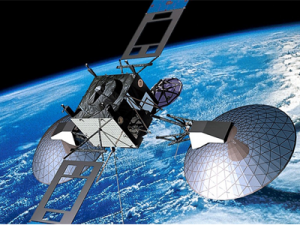
an electronic device that is sent into space and moves around the earth or another planet. It is used for communicating by radio, television, etc. and for gathering information.
a weather/communications satellite
ein Wetter-/Kommunikationssatellit
SynonymemoonorbiterspacecraftAntonymeplanetground stationdie Raumstation
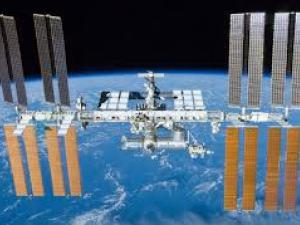
a large structure that is sent into space and remains above the earth as a base for people working and travelling in space
the International Space Station (ISS)
die Internationale Raumstation (ISS)
Synonymeorbital stationoutpost in spaceAntonymeEarthbound facilitydie Ökologie
the relation of plants and living creatures to each other and to their environment; the study of this
She hopes to study ecology at college.
Sie hofft, an der Hochschule Ökologie zu studieren.
Synonymeenvironmental scienceenvironmentalismbiotic scienceAntonymenone (ecology as a field of study doesn't have a direct antonym. Related fields like urban planning might be considered distantly opposite in some contexts.)die Umlaufbahn, die Bahn, der Orbit
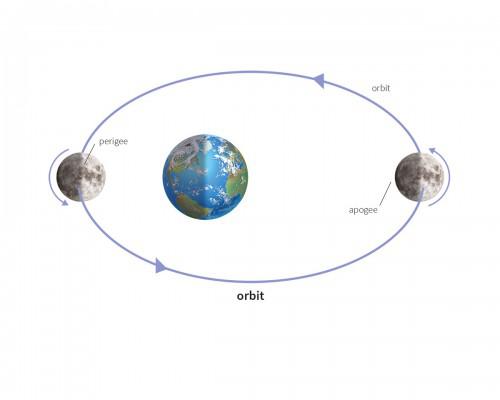
a curved path followed by a planet or an object as it moves around another planet, star, moon, etc.
The satellite is now in orbit around the Earth.
Der Satellit befindet sich jetzt in der Umlaufbahn um die Erde.
Synonymerevolvecircleencirclego aroundrotate aroundAntonymestagnatestandstillstopremain stationarydie Rakete
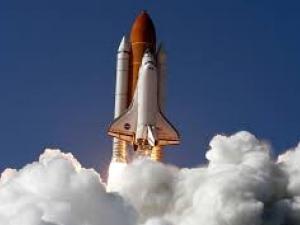
a spacecraft in the shape of a tube that is driven by a stream of gases let out behind it when fuel is burned inside
The rocket carried three astronauts into space last month.
Die Rakete brachte letzten Monat drei Astronauten ins All.
Synonymesoarsurgeskyrocketincrease rapidlyboomAntonymeplummetdecrease rapidlydeclinedropdie Artenvielfalt, die Biodiversität
the existence of a large number of different kinds of animals and plants which make a balanced environment
A new National Biological Survey will protect species habitat and biodiversity.
Eine neue nationale biologische Erhebung wird die Lebensräume der Arten und die Artenvielfalt schützen.
Synonymevariety of lifebiological diversityecological diversityspecies richnessgenetic diversityAntonymemonocultureuniformitylack of diversitybiological uniformitydie Kernenergie, die Atomenergie
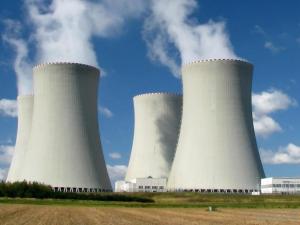
a powerful form of energy produced by changing matter into energy by splitting the nuclei (= central parts) of atoms . It is used to produce electricity.
I think nuclear energy will be widely used in the future.
Ich denke, dass Kernenergie in Zukunft weit verbreitet genutzt wird.
Synonymeatomic energyatomic powernuclear powerAntonymerenewable energysolar energywind energyhydroelectric energyder Klimawandel
changes in the earth’s weather, including changes in temperature, wind patterns and rainfall , especially the increase in the temperature of the earth’s atmosphere that is caused by the increase of particular gases, especially carbon dioxide
In any case, climate change is already disrupting the lives of millions of human beings.
Auf jeden Fall beeinträchtigt der Klimawandel bereits das Leben von Millionen Menschen.
Synonymeglobal warmingclimatic changeenvironmental changeclimate crisisAntonymeclimate stabilityenvironmental equilibriumdie Anatomie
the scientific study of the physical structure of humans, animals or plants
Medical students must study human anatomy in their first year.
Medizinstudenten müssen im ersten Jahr die menschliche Anatomie studieren.
Synonymestructurebodily structureorganizationmorphologyphysiologyformcompositionAntonymedisorganizationformlessnessamorphousnessdie Astrobiologie
the scientific study of life on other planets
Astrobiology is the study of the origin, evolution, distribution, and future of life in the universe.
Die Astrobiologie ist die Wissenschaft vom Ursprung, der Entwicklung, der Verbreitung und der Zukunft des Lebens im Universum.
SynonymeexobiologybioastronomyAntonymeNonedie Astrogeologie
the scientific study of the rocks, surfaces and structure of planets, moons and other bodies in space
Astrogeology helps us understand the surfaces of other planets.
Die Astrogeologie hilft uns, die Oberflächen anderer Planeten zu verstehen.
SynonymePlanetary geologyExogeologyAntonymeTerrestrial geologydie Astronomie
the scientific study of the sun, moon, stars, planets, etc.
Astronomy is the scientific study of celestial objects and phenomena.
Die Astronomie ist die wissenschaftliche Erforschung von Himmelskörpern und Himmelserscheinungen.
Synonymecelestial mechanicsspace scienceastro-scienceAntonymeastrologydie Astrophysik
the scientific study of the physical and chemical structure of the stars, planets, etc.
Astrophysics studies the physics of celestial objects.
Die Astrophysik untersucht die Physik der Himmelskörper.
Synonymeastronomical physicsspace physicsAntonymegeophysicsterrestrial physicsdie Biophysik
the science that uses the laws and methods of physics to study biology
Biophysics applies physics principles to biological systems.
Die Biophysik wendet physikalische Prinzipien auf biologische Systeme an.
Synonymebiological physicsphysical biologyAntonymepure biologypure physicsdas Schwarze Loch
an area in space that nothing, not even light, can escape from, because gravity (= the force that pulls objects in space towards each other) is so strong there
The black hole consumed the nearby star.
Das Schwarze Loch verschlang den nahegelegenen Stern.
Synonymegravitational singularitycosmic vacuumAntonymewhite hole (theoretical)die kognitive Neurowissenschaft
the scientific study of how the brain and nervous system make thinking, learning and memory possible
Cognitive neuroscience explores the neural mechanisms underlying thought and behavior.
Die kognitive Neurowissenschaft erforscht die neuronalen Mechanismen, die Denken und Verhalten zugrunde liegen.
Synonymebehavioral neurosciencebiopsychologyneuropsychologyAntonymeN/Adie Kognitionswissenschaft
the study of the mind and how it works, combining ideas from psychology, linguistics, computer science and philosophy
Cognitive science explores how the mind processes information.
Die Kognitionswissenschaft erforscht, wie der Geist Informationen verarbeitet.
Synonymecognitive studiesmind scienceAntonymeN/A (There is no direct antonym as it's a specific field of study.)die Kosmologie
the scientific study of the universe and its origin and development
Cosmology seeks to understand the origin and evolution of the universe.
Die Kosmologie versucht, den Ursprung und die Entwicklung des Universums zu verstehen.
Synonymeastronomyastro physicsuniverse studiesorigin scienceAntonymenonedie Kybernetik
the scientific study of communication and control systems, which involves comparing human and animal brains with machines and electronic devices
Cybernetics explores the relationship between biological and mechanical systems.
Die Kybernetik erforscht die Beziehung zwischen biologischen und mechanischen Systemen.
Synonymecontrol systemsautomationsystems theoryAntonymerandomnessdisorderchaosdie dunkle Materie
according to some theories, material that exists in space but does not reflect any light
Scientists study dark matter to understand the universe's structure.
Wissenschaftler erforschen die dunkle Materie, um den Aufbau des Universums zu verstehen.
Synonymeunseen matterhidden massAntonymeluminous mattervisible matterder Elektromagnetismus
the production of a magnetic field by means of an electric current, or of an electric current by means of a magnetic field
Electromagnetism is a fundamental force of nature.
Der Elektromagnetismus ist eine fundamentale Naturkraft.
SynonymeElectromagnetic forceEM interactionAntonymeGravityWeak nuclear forceStrong nuclear forcedie Endokrinologie
the branch of medicine that is the study of the endocrine system and hormones
Endocrinology is the study of hormones and their effects.
Die Endokrinologie ist die Lehre von den Hormonen und ihren Wirkungen.
Synonymehormone studyhormone scienceAntonymeexocrinologydie Evolution, die Entwicklung
the slow steady development of plants, animals, etc. during the history of the earth, as they adapt to changes in their environment
The evolution of species is a complex process.
Die Evolution der Arten ist ein komplexer Prozess.
SynonymedevelopmentprogressgrowthadvancementAntonymedevolutionregressionstagnationder Außerirdische
(in stories) a creature that comes from another planet; a creature that may exist on another planet
The movie was about an extraterrestrial who visited Earth.
In dem Film ging es um einen Außerirdischen, der die Erde besuchte.
Synonymealiennon-terrestrialotherworldlyAntonymeterrestrialearthlydie Genetik, die Vererbungslehre
the scientific study of the ways in which different characteristics are passed from each generation of living things to the next
Genetics plays a crucial role in determining our physical traits.
Die Genetik spielt eine entscheidende Rolle bei der Ausprägung unserer körperlichen Merkmale.
SynonymeheredityinheritancegenesAntonymeenvironmental factorsdie Geologie
the scientific study of the physical structure of the earth, including the origin and history of the rocks and soil of which the earth is made
Geology helps us understand the Earth's history.
Die Geologie hilft uns, die Geschichte der Erde zu verstehen.
Synonymeearth sciencegeosciencedie Geophysik
the scientific study of the physics of the earth, including its atmosphere, climate and magnetism
Geophysics is used to study the Earth's subsurface.
Die Geophysik wird zur Erforschung des Erduntergrunds eingesetzt.
SynonymeEarth physicsSolid Earth geophysicsAntonymeNoneder Meteor, die Sternschnuppe
a piece of rock from outer space that makes a bright line across the night sky as it burns up while falling through the earth’s atmosphere
A meteor streaked across the night sky.
Ein Meteor zog über den Nachthimmel.
Synonymeshooting starfalling starbolideAntonymeasteroidcometplanetder Nebel, der Sternennebel
a mass of dust or gas that can be seen in the night sky, often appearing very bright; a bright area in the night sky caused by a large cloud of stars that are far away
The telescope revealed a beautiful nebula.
Das Teleskop zeigte einen wunderschönen Nebel.
Synonymestar cloudinterstellar cloudAntonymeempty spacevoiddie Petrologie, die Gesteinskunde
the scientific study of how rocks are made and what they are made of
The geologist specialized in petrology to understand the origin of the rocks.
Der Geologe spezialisierte sich auf Petrologie, um die Entstehung der Gesteine zu verstehen.
SynonymelithologygeologyAntonymenonedie Pharmakologie
the science of drugs, including how they act on the body and how they are used to treat disease
Pharmacology is a core subject for medical and pharmacy students.
Die Pharmakologie ist ein Kernfach für Medizin- und Pharmaziestudierende.
Clinical pharmacology studies how drugs work in real patients.
Synonymedrug studymedicinal chemistrypharmaceuticsAntonymenonedie Photosynthese
the process by which green plants turn carbon dioxide and water into food using energy obtained from light from the sun
Photosynthesis is essential for plant life.
Die Photosynthese ist für das Pflanzenleben unerlässlich.
Synonymecarbon assimilationphotosynthetic activityAntonymerespirationdie Raumzeit
the universe considered as a continuum with four measurements—length, width , depth and time—inside which any event or physical object is located
Einstein's theory deals with space-time.
Einsteins Theorie befasst sich mit der Raumzeit.
Synonymespace and timecontinuumAntonymespacetimedie Thermodynamik
the science that deals with the relations between heat and other forms of energy
Thermodynamics explains how energy is converted and used.
Die Thermodynamik erklärt, wie Energie umgewandelt und genutzt wird.
Synonymethermodynamic principlesthermal physicsAntonymenonedie Gentechnik, die Gentechnologie
the science of changing how a living creature or plant develops by changing the information in its genes
Genetic engineering is used to modify crops for better yields.
Gentechnik wird eingesetzt, um Nutzpflanzen für höhere Erträge zu verändern.
Synonymegene editingbiotechnologygene manipulationAntonymenatural selectiontraditional breedingdie künstliche Intelligenz, die KI
the ability of computer systems to do tasks that normally need human intelligence, such as understanding language or making decisions
The bank uses artificial intelligence to detect unusual transactions.
Die Bank setzt künstliche Intelligenz ein, um ungewöhnliche Transaktionen zu erkennen.
Artificial intelligence is changing how customer service teams work.
SynonymeAImachine intelligenceAntonymenatural intelligencehuman intelligencedie Nanotechnologie
the branch of technology that deals with structures that are less than 100 nanometres long. Scientists often build these structures using individual molecules of substances.
Nanotechnology is used in many fields, including medicine and manufacturing.
Nanotechnologie wird in vielen Bereichen eingesetzt, unter anderem in der Medizin und in der Fertigung.
Synonymemolecular manufacturingnanoscale technologyAntonymemacrotechnologydie Kernphysik
the area of physics which deals with the nucleus of atoms and with nuclear energy
Nuclear physics is crucial for understanding atomic energy.
Die Kernphysik ist entscheidend für das Verständnis der Atomenergie.
Synonymeatomic physicsnuclear scienceAntonymeclassical physicsdie Paläontologie
the study of fossils (= the parts of dead animals or plants in rocks) as a guide to the history of life on earth
She studied paleontology to learn about dinosaurs.
Sie studierte Paläontologie, um etwas über Dinosaurier zu lernen.
Synonymefossil studyfossil scienceAntonymenonedie Raumsonde
a spacecraft without people on board that obtains information and sends it back to earth
The space probe sent back images of Jupiter.
Die Raumsonde sandte Bilder von Jupiter zurück.
Synonymeunmanned spacecraftrobotic probeplanetary probeAntonymemanned spacecraftder Weltraumspaziergang, der Außenbordeinsatz
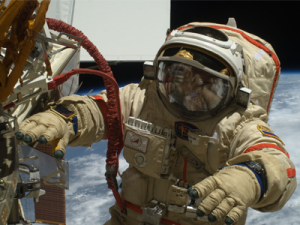
a period of time that an astronaut spends in space outside a spacecraft
The astronaut performed a spacewalk to repair the satellite.
Der Astronaut führte einen Weltraumspaziergang durch, um den Satelliten zu reparieren.
Synonymeextravehicular activityEVAAntonymeindoor activitygrounded activitydie analytische Chemie
The branch of chemistry that identifies substances and measures their chemical components.
Analytical chemistry is used to identify and quantify the chemical components of substances.
Die analytische Chemie dient dazu, die chemischen Bestandteile von Substanzen zu identifizieren und zu quantifizieren.
SynonymeChemical analysisQuantitative analysisQualitative analysisAntonymeOrganic chemistryBiochemistrydas Tierverhalten
The way animals act and respond, or the scientific study of this.
The students studied animal behavior in the wild.
Die Studenten untersuchten das Verhalten von Tieren in freier Wildbahn.
SynonymeEthologyAnimal conductAnimal psychologyAntonymeInanimate behaviorPlant behaviordie Tierphysiologie
The scientific study of how the bodies and organs of animals work.
Animal physiology explores how animals function.
Die Tierphysiologie erforscht, wie Tiere funktionieren.
Synonymezoophysiologycomparative physiologyAntonymeplant physiologydie Astrochemie
The study of the chemical substances and reactions found in space.
Astrochemistry helps us understand the origin of life.
Die Astrochemie hilft uns, den Ursprung des Lebens zu verstehen.
SynonymeCosmochemistrySpace chemistryAntonymeTerrestrial chemistryGeochemistryder Atomaufbau, die Atomstruktur
The arrangement of protons, neutrons and electrons that make up an atom.
Understanding atomic structure is fundamental to chemistry.
Das Verständnis des Atomaufbaus ist grundlegend für die Chemie.
Synonymeatomic arrangementnuclear structureAntonymemacroscopic structuremolecular structuredie Biotechnik, das Bioengineering
The use of engineering methods to solve problems in biology and medicine.
Bioengineering has led to advancements in medical treatments.
Die Biotechnik hat zu Fortschritten in der medizinischen Behandlung geführt.
SynonymeBiomedical engineeringGenetic engineeringBiotechnologyAntonymeMechanical engineeringChemical engineeringdie Bioethik
The study of moral questions raised by advances in biology and medicine.
Bioethics explores the moral issues arising from advances in biology and medicine.
Die Bioethik untersucht die moralischen Fragen, die sich aus den Fortschritten in Biologie und Medizin ergeben.
SynonymeMedical ethicsEthics of scienceMoral philosophy of biologyAntonymeAmoral scienceUnethical researchdie Bioinformatik
The use of computers to store and analyse large amounts of biological data.
Bioinformatics combines biology and computer science to analyze large datasets.
Die Bioinformatik verbindet Biologie und Informatik, um große Datenmengen zu analysieren.
SynonymeComputational biologyData science in biologyAntonymeExperimental biologydie Biomechanik
The scientific study of the physical movement and structure of living things, using the principles of mechanics.
Biomechanics studies the mechanical aspects of living organisms.
Die Biomechanik untersucht die mechanischen Aspekte lebender Organismen.
SynonymeKinesiologyHuman kineticsAntonymeNonedie Biomechatronik
The science of combining biology, mechanics and electronics to design devices that work with the human body.
Biomechatronics combines biology, mechanics, and electronics to design innovative devices.
Die Biomechatronik verbindet Biologie, Mechanik und Elektronik, um innovative Geräte zu entwickeln.
SynonymeBioengineeringBiomechanical engineeringAntonymeNonedie Biotechnologie
The use of living cells and bacteria in industrial and scientific processes, for example to make medicines.
Biotechnology is being used to develop new medicines.
Die Biotechnologie wird eingesetzt, um neue Medikamente zu entwickeln.
SynonymeBioengineeringGenetic engineeringBiotechAntonymeConventional methodsTraditional techniquesdie chemischen Reaktionen
Processes in which substances act on each other and are changed into different substances.
Chemical reactions are fundamental to understanding how the world works.
Chemische Reaktionen sind grundlegend, um zu verstehen, wie die Welt funktioniert.
Synonymechemical processeschemical changestransformationsAntonymephysical changesstabilitydie Klimamodellierung
The use of computer models to simulate the earth's climate and predict how it may change.
Climate modeling is essential for understanding future climate change.
Die Klimamodellierung ist unerlässlich, um den künftigen Klimawandel zu verstehen.
Synonymeclimate simulationclimate projectionclimate predictionAntonymeclimate observationhistorical weather datadie computergestützte Biologie
The use of computers and mathematical models to study and understand biological systems and data.
Computational biology uses computer algorithms to model biological systems.
Die computergestützte Biologie nutzt Computeralgorithmen, um biologische Systeme zu modellieren.
SynonymeBioinformaticsMathematical biologySystems biologyAntonymeExperimental biologyTraditional biologydie Naturschutzbiologie
The scientific study of how to protect species, their habitats and the earth's biodiversity.
Conservation biology is crucial for protecting endangered species.
Die Naturschutzbiologie ist entscheidend für den Schutz bedrohter Arten.
SynonymeConservation scienceEnvironmental biologyAntonymeExploitation biologyDestructive ecologydie Umweltchemie
The study of chemical processes in the environment and the effects of chemicals on air, water and soil.
Environmental chemistry studies the effects of chemicals on the environment.
Die Umweltchemie untersucht die Auswirkungen von Chemikalien auf die Umwelt.
SynonymeGreen chemistryEcological chemistryAntonymeIndustrial chemistrydie Umweltverträglichkeitsprüfung
An official study of the likely effects of a planned project on the environment.
The environmental impact assessment showed minimal damage.
Die Umweltverträglichkeitsprüfung ergab nur geringe Schäden.
Synonymeenvironmental assessmentimpact studyecological assessmentAntonymeenvironmental neglectnon-assessmentdie Umweltwissenschaft
The study of the natural environment and the ways in which humans affect it.
Environmental science is a multidisciplinary field.
Die Umweltwissenschaft ist ein interdisziplinäres Fachgebiet.
Synonymeecologyconservation scienceenvironmental studiesAntonymeN/Adie Evolutionsbiologie
The branch of biology that studies how living things have developed and changed over time.
Evolutionary biology explains how life on Earth has changed over time.
Die Evolutionsbiologie erklärt, wie sich das Leben auf der Erde im Laufe der Zeit verändert hat.
SynonymeEvolutionary scienceDarwinian biologyAntonymeCreation sciencedie genetische Beratung, die Genberatung
Advice given to people about the risk of passing on or having an inherited disease.
She sought genetic counseling before starting a family.
Sie suchte eine genetische Beratung auf, bevor sie eine Familie gründete.
SynonymeGenetic guidanceGenetic consultationAntonymeNonedie genetische Variation
The differences in genes between individual living things of the same species.
Genetic variation allows populations to adapt to changing environments.
Die genetische Variation ermöglicht es Populationen, sich an veränderte Umweltbedingungen anzupassen.
SynonymeGenetic diversityAllelic variationAntonymeGenetic uniformityGenetic homogeneitydie Genomsequenzierung
The process of finding the exact order of all the DNA in an organism's genome.
Genome sequencing can help identify genetic diseases.
Die Genomsequenzierung kann helfen, genetische Krankheiten zu erkennen.
SynonymeDNA sequencingGenetic mappingAntonymeN/Adas Hubble-Weltraumteleskop
A large telescope in orbit around the earth that takes images of distant stars and galaxies.
The Hubble Space Telescope has provided stunning images of distant galaxies.
Das Hubble-Weltraumteleskop hat beeindruckende Bilder ferner Galaxien geliefert.
SynonymeHSTHubbledie Immuntherapie
The treatment of disease by using or strengthening the body's immune system.
Immunotherapy has shown promise in treating certain types of cancer.
Die Immuntherapie hat sich bei der Behandlung bestimmter Krebsarten als vielversprechend erwiesen.
SynonymeBiological therapyImmune system therapyAntonymeChemotherapyRadiation therapydie anorganische Chemie
The branch of chemistry that studies substances that do not contain carbon-hydrogen bonds.
Inorganic chemistry studies compounds that do not contain carbon-hydrogen bonds.
Die anorganische Chemie untersucht Verbindungen, die keine Kohlenstoff-Wasserstoff-Bindungen enthalten.
Synonymenon-organic chemistrymineral chemistryAntonymeorganic chemistrydie Internationale Raumstation
A large spacecraft in orbit around the earth where astronauts from several countries live and work.
The International Space Station orbits the Earth.
Die Internationale Raumstation umkreist die Erde.
SynonymeISSSpace StationAntonymeEarthGrounddie Mondlandefähre
A small spacecraft that carries astronauts between the main spacecraft orbiting the moon and the moon's surface.
The lunar module successfully landed on the moon.
Die Mondlandefähre landete erfolgreich auf dem Mond.
Synonymemoon landerLEM (Lunar Excursion Module)Antonymecommand modulespacecraftder Mars-Rover
A vehicle that is sent to Mars to move across its surface and collect scientific information.
The Mars Rover sent back stunning images of the Martian surface.
Der Mars Rover sendete beeindruckende Bilder der Marsoberfläche zurück.
SynonymeMars explorerPlanetary roverAntonymeStationary probeOrbiterdie mikrobielle Ökologie
The scientific study of how microorganisms interact with each other and with their environment.
Microbial ecology studies the interactions of microorganisms with each other and their environment.
Die mikrobielle Ökologie untersucht die Wechselwirkungen von Mikroorganismen untereinander und mit ihrer Umwelt.
SynonymeMicrobial biogeochemistryEnvironmental microbiologyAntonymeMacrobial ecologydie Molekularbiologie
The scientific study of the structure and function of the molecules that make up living things.
Molecular biology studies the structure and function of macromolecules.
Die Molekularbiologie untersucht den Aufbau und die Funktion von Makromolekülen.
SynonymeNoneAntonymeClassical biologyOrganismal biologydie Molekulargenetik
The branch of genetics that studies the structure and function of genes at the level of molecules.
Molecular genetics is used to study the structure and function of genes at a molecular level.
Die Molekulargenetik wird genutzt, um Aufbau und Funktion von Genen auf molekularer Ebene zu untersuchen.
SynonymeNoneGene scienceMolecular biology of heredityAntonymeClassical geneticsdie Mondlandung
An occasion when a spacecraft lands on the moon, especially the first one in 1969.
The moon landing was a major achievement for humanity.
Die Mondlandung war eine große Errungenschaft für die Menschheit.
Synonymelunar landingmoonshotApollo missionAntonymespace launch failureearthbounddie Neurochemie
The scientific study of the chemical processes that happen in the nervous system.
Neurochemistry studies the chemical processes within the nervous system.
Die Neurochemie untersucht die chemischen Vorgänge im Nervensystem.
SynonymeBrain chemistryNeurochemical processesAntonymeN/Adie Neuropsychologie
The scientific study of the relationship between the brain and the way people think and behave.
Neuropsychology studies the relationship between the brain and behavior.
Die Neuropsychologie untersucht die Beziehung zwischen Gehirn und Verhalten.
SynonymeBehavioral neuroscienceBiological psychologyAntonymeNonedie organische Chemie
The branch of chemistry that studies substances containing carbon.
She is studying organic chemistry at the university.
Sie studiert organische Chemie an der Universität.
SynonymeCarbon chemistryChemistry of carbon compoundsAntonymeInorganic chemistrydie physikalische Chemie
The branch of chemistry that uses the methods of physics to study chemical systems and reactions.
Physical chemistry explores the fundamental principles underlying chemical systems.
Die physikalische Chemie erforscht die grundlegenden Prinzipien chemischer Systeme.
SynonymeChemical physicsTheoretical chemistryAntonymeOrganic chemistryBiochemistrydie Planetenforschung
The scientific study of planets, moons and planetary systems, and how they form and change.
Planetary science studies the formation and evolution of planets.
Die Planetenforschung untersucht die Entstehung und Entwicklung von Planeten.
SynonymeplanetologycosmologyAntonymenonedie Pflanzenphysiologie
The scientific study of how plants work, grow and stay alive.
Plant physiology explores how plants function and grow.
Die Pflanzenphysiologie erforscht, wie Pflanzen funktionieren und wachsen.
SynonymePlant biologyPhytophysiologyAntonymeAnimal physiologydie Polymerchemie
The branch of chemistry that studies polymers and how they are made and used.
Polymer chemistry is crucial for developing new materials.
Die Polymerchemie ist entscheidend für die Entwicklung neuer Materialien.
SynonymeMacromolecular chemistryPolymer scienceAntonymeInorganic chemistryAtomic chemistrydie Proteomik
The scientific study of all the proteins in a living thing, and their structure and function.
Proteomics is used to study protein structure and function.
Die Proteomik wird genutzt, um Struktur und Funktion von Proteinen zu untersuchen.
SynonymeProtein analysisProtein profilingProtein characterizationAntonymeGenomicsdas Quantencomputing
A type of computing that uses the principles of quantum mechanics to process information.
Quantum computing holds the potential to revolutionize various fields.
Das Quantencomputing hat das Potenzial, verschiedene Bereiche zu revolutionieren.
SynonymeQuantum information scienceQuantum computationAntonymeClassical computingdie Quantenmechanik
The branch of physics that studies the behaviour of atoms and very small particles.
Quantum mechanics governs the behavior of atoms and subatomic particles.
Die Quantenmechanik bestimmt das Verhalten von Atomen und subatomaren Teilchen.
SynonymeQuantum physicsQuantum theoryAntonymeClassical mechanicsNewtonian mechanicsdie Quantentheorie
A theory in physics based on the idea that energy exists in very small fixed units.
Quantum theory explains the behavior of matter and energy at the atomic and subatomic levels.
Die Quantentheorie erklärt das Verhalten von Materie und Energie auf atomarer und subatomarer Ebene.
SynonymeQuantum mechanicsQuantum physicsAntonymeClassical mechanicsNewtonian physicsdie Raumfahrtbehörde, die Weltraumbehörde
A government organization that is responsible for a country's space travel and research.
NASA is a well-known space agency.
Die NASA ist eine bekannte Raumfahrtbehörde.
Synonymespace administrationaerospace organizationAntonymeN/Adie Besiedlung des Weltraums
The process of setting up permanent human communities on other planets or in space.
Space colonization could open up new resources for humanity.
Die Besiedlung des Weltraums könnte der Menschheit neue Ressourcen erschließen.
SynonymeSpace settlementOff-world colonizationAntonymeEarth-bound existencePlanetary confinementder Weltraumschrott, der Weltraummüll
Broken pieces of old satellites, rockets and other man-made objects that remain in orbit around the earth.
Space debris poses a threat to orbiting satellites.
Weltraumschrott stellt eine Gefahr für Satelliten im Orbit dar.
Synonymespace junkorbital debrisspace wasteAntonymefunctional satelliteoperational spacecraftdie Raumfahrttechnik
The design and building of spacecraft, rockets, satellites and other equipment used in space.
Space engineering is crucial for developing advanced rockets.
Die Raumfahrttechnik ist entscheidend für die Entwicklung moderner Raketen.
SynonymeAerospace engineeringAstronautical engineeringAntonymeTerrestrial engineeringCivil engineeringdie Weltraumforschung, die Raumfahrt
The use of spacecraft and technology to discover and study outer space.
Space exploration has led to numerous technological advancements.
Die Weltraumforschung hat zu zahlreichen technologischen Fortschritten geführt.
SynonymeSpace researchCosmic explorationAstronauticsAntonymeTerrestrial focusEarthbound researchdie Weltraumforschungsmissionen
Planned journeys or operations sent into space to discover and study planets, stars and other objects.
Space exploration missions are expensive but potentially very rewarding.
Weltraumforschungsmissionen sind teuer, aber potenziell sehr lohnend.
Synonymespace missionsastronautical missionscosmic explorationspace voyagesAntonymeearthbound researchground-based studiesdie Weltraummission, die Raumfahrtmission
A planned journey or operation into space to carry out a particular task.
The space mission was a success.
Die Weltraummission war ein Erfolg.
SynonymeSpace flightCosmic missionExtraterrestrial expeditionAntonymeEarthbound projectTerrestrial activitydie Weltraumphysik
The branch of physics that studies plasma, radiation and magnetic fields in space, especially near planets and the sun.
Space physics studies the plasma environment of planets.
Die Weltraumphysik untersucht die Plasmaumgebung von Planeten.
SynonymeAstrophysicsSpace scienceAntonymeTerrestrial physicsdie Weltraumforschung
Scientific study of outer space and the objects in it.
Space research is crucial for understanding the universe.
Die Weltraumforschung ist entscheidend, um das Universum zu verstehen.
SynonymeSpace explorationCosmic studyAstronautics researchAntonymeEarth-bound researchTerrestrial studiesdie Raumfahrttechnologie, die Weltraumtechnik
The machines, equipment and scientific methods used for travelling in and studying space.
Space technology has enabled us to explore other planets.
Die Raumfahrttechnologie hat es uns ermöglicht, andere Planeten zu erforschen.
SynonymeAerospace technologySpace exploration technologyAntonymeEarth-bound technologyTerrestrial technologydas Weltraumteleskop
A telescope placed in orbit around the earth to observe distant objects without interference from the atmosphere.
The Hubble Space Telescope has provided stunning images of the universe.
Das Hubble-Weltraumteleskop hat atemberaubende Bilder des Universums geliefert.
Synonymeorbital telescopeastronomical satelliteAntonymeground-based telescopeder Weltraumtourismus
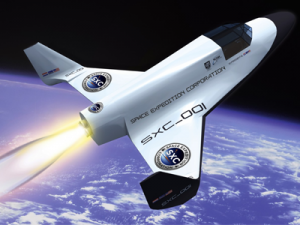
The business of taking paying passengers on trips into space for pleasure.
Space tourism is becoming a reality for wealthy individuals.
Weltraumtourismus wird für wohlhabende Menschen zur Realität.
SynonymeCommercial space travelSuborbital tourismAntonymeTraditional tourismDomestic traveldie Sternentwicklung
The process by which a star changes over its lifetime, from its formation to its death.
Stellar evolution explains the life cycle of stars.
Die Sternentwicklung erklärt den Lebenszyklus von Sternen.
Synonymestar formationstar life cyclestar developmentAntonymestellar creation