Leçon 23/33 · 137 mots · 0 appris
Science
étoile
a large ball of burning gas in space that we see as a point of light in the sky at night
Sirius is the brightest star in the sky.
Sirius est l'étoile la plus brillante du ciel.
She starred opposite Cary Grant in ‘Bringing up Baby’.
Synonymescelestial bodyluminarysuncelebrityidolAntonymesplanetdarknessobscuritynobodyphysique
the scientific study of matter and energy and the relationships between them, including the study of forces, heat, light, sound, electricity and the structure of atoms
I’m not good at physics.
Je ne suis pas bon en physique.
particle/nuclear/theoretical physics
Synonymessciencephysical sciencenatural philosophyAntonymesartshumanitieschimie
the scientific study of the structure of substances, how they react when combined or in contact with one another, and how they behave under different conditions
I like learning Chemistry in the laboratory.
J'aime apprendre la chimie au laboratoire.
the university's chemistry department
Synonymeschemical sciencechemical analysiscompositionchemical processesAntonymesphysical sciencegravité, pesanteur
the force that attracts objects in space towards each other, and that on the earth pulls them towards the centre of the planet, so that things fall to the ground when they are dropped
Because of gravity, an apple falls to the ground when it drops from the tree.
À cause de la gravité, une pomme tombe par terre quand elle se détache de l'arbre.
SynonymesseriousnessimportancesignificanceweightinessseveritycriticalityAntonymestrivialityunimportanceinsignificancelevitysatellite
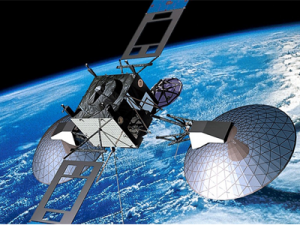
an electronic device that is sent into space and moves around the earth or another planet. It is used for communicating by radio, television, etc. and for gathering information.
a weather/communications satellite
un satellite météorologique / de communication
SynonymesmoonorbiterspacecraftAntonymesplanetground stationstation spatiale
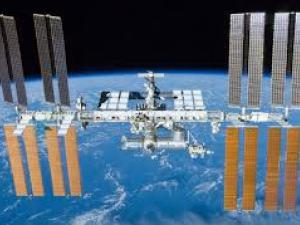
a large structure that is sent into space and remains above the earth as a base for people working and travelling in space
the International Space Station (ISS)
la Station spatiale internationale (ISS)
Synonymesorbital stationoutpost in spaceAntonymesEarthbound facilityécologie
the relation of plants and living creatures to each other and to their environment; the study of this
She hopes to study ecology at college.
Elle espère étudier l'écologie à l'université.
Synonymesenvironmental scienceenvironmentalismbiotic scienceAntonymesnone (ecology as a field of study doesn't have a direct antonym. Related fields like urban planning might be considered distantly opposite in some contexts.)orbite
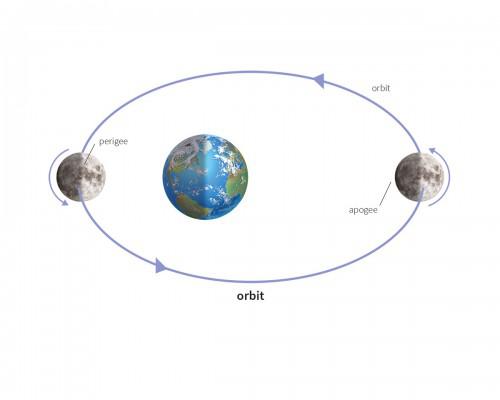
a curved path followed by a planet or an object as it moves around another planet, star, moon, etc.
The satellite is now in orbit around the Earth.
Le satellite est maintenant en orbite autour de la Terre.
Synonymesrevolvecircleencirclego aroundrotate aroundAntonymesstagnatestandstillstopremain stationaryfusée
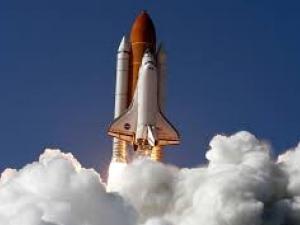
a spacecraft in the shape of a tube that is driven by a stream of gases let out behind it when fuel is burned inside
The rocket carried three astronauts into space last month.
La fusée a emmené trois astronautes dans l'espace le mois dernier.
Synonymessoarsurgeskyrocketincrease rapidlyboomAntonymesplummetdecrease rapidlydeclinedropbiodiversité
the existence of a large number of different kinds of animals and plants which make a balanced environment
A new National Biological Survey will protect species habitat and biodiversity.
Un nouveau relevé biologique national protégera l'habitat des espèces et la biodiversité.
Synonymesvariety of lifebiological diversityecological diversityspecies richnessgenetic diversityAntonymesmonocultureuniformitylack of diversitybiological uniformityénergie nucléaire
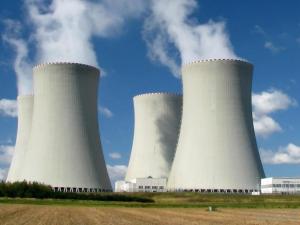
a powerful form of energy produced by changing matter into energy by splitting the nuclei (= central parts) of atoms . It is used to produce electricity.
I think nuclear energy will be widely used in the future.
Je pense que l'énergie nucléaire sera largement utilisée à l'avenir.
Synonymesatomic energyatomic powernuclear powerAntonymesrenewable energysolar energywind energyhydroelectric energychangement climatique
changes in the earth’s weather, including changes in temperature, wind patterns and rainfall , especially the increase in the temperature of the earth’s atmosphere that is caused by the increase of particular gases, especially carbon dioxide
In any case, climate change is already disrupting the lives of millions of human beings.
En tout cas, le changement climatique perturbe déjà la vie de millions d'êtres humains.
Synonymesglobal warmingclimatic changeenvironmental changeclimate crisisAntonymesclimate stabilityenvironmental equilibriumanatomie
the scientific study of the physical structure of humans, animals or plants
Medical students must study human anatomy in their first year.
Les étudiants en médecine doivent étudier l'anatomie humaine dès leur première année.
Synonymesstructurebodily structureorganizationmorphologyphysiologyformcompositionAntonymesdisorganizationformlessnessamorphousnessastrobiologie
the scientific study of life on other planets
Astrobiology is the study of the origin, evolution, distribution, and future of life in the universe.
L'astrobiologie est l'étude de l'origine, de l'évolution, de la répartition et de l'avenir de la vie dans l'univers.
SynonymesexobiologybioastronomyAntonymesNoneastrogéologie
the scientific study of the rocks, surfaces and structure of planets, moons and other bodies in space
Astrogeology helps us understand the surfaces of other planets.
L'astrogéologie nous aide à comprendre la surface des autres planètes.
SynonymesPlanetary geologyExogeologyAntonymesTerrestrial geologyastronomie
the scientific study of the sun, moon, stars, planets, etc.
Astronomy is the scientific study of celestial objects and phenomena.
L'astronomie est l'étude scientifique des objets et des phénomènes célestes.
Synonymescelestial mechanicsspace scienceastro-scienceAntonymesastrologyastrophysique
the scientific study of the physical and chemical structure of the stars, planets, etc.
Astrophysics studies the physics of celestial objects.
L'astrophysique étudie la physique des objets célestes.
Synonymesastronomical physicsspace physicsAntonymesgeophysicsterrestrial physicsbiophysique
the science that uses the laws and methods of physics to study biology
Biophysics applies physics principles to biological systems.
La biophysique applique les principes de la physique aux systèmes biologiques.
Synonymesbiological physicsphysical biologyAntonymespure biologypure physicstrou noir
an area in space that nothing, not even light, can escape from, because gravity (= the force that pulls objects in space towards each other) is so strong there
The black hole consumed the nearby star.
Le trou noir a englouti l'étoile voisine.
Synonymesgravitational singularitycosmic vacuumAntonymeswhite hole (theoretical)neurosciences cognitives
the scientific study of how the brain and nervous system make thinking, learning and memory possible
Cognitive neuroscience explores the neural mechanisms underlying thought and behavior.
Les neurosciences cognitives étudient les mécanismes neuronaux qui sous-tendent la pensée et le comportement.
Synonymesbehavioral neurosciencebiopsychologyneuropsychologyAntonymesN/Asciences cognitives
the study of the mind and how it works, combining ideas from psychology, linguistics, computer science and philosophy
Cognitive science explores how the mind processes information.
Les sciences cognitives étudient la façon dont l'esprit traite l'information.
Synonymescognitive studiesmind scienceAntonymesN/A (There is no direct antonym as it's a specific field of study.)cosmologie
the scientific study of the universe and its origin and development
Cosmology seeks to understand the origin and evolution of the universe.
La cosmologie cherche à comprendre l'origine et l'évolution de l'univers.
Synonymesastronomyastro physicsuniverse studiesorigin scienceAntonymesnonecybernétique
the scientific study of communication and control systems, which involves comparing human and animal brains with machines and electronic devices
Cybernetics explores the relationship between biological and mechanical systems.
La cybernétique explore la relation entre les systèmes biologiques et mécaniques.
Synonymescontrol systemsautomationsystems theoryAntonymesrandomnessdisorderchaosmatière noire
according to some theories, material that exists in space but does not reflect any light
Scientists study dark matter to understand the universe's structure.
Les scientifiques étudient la matière noire pour comprendre la structure de l'univers.
Synonymesunseen matterhidden massAntonymesluminous mattervisible matterélectromagnétisme
the production of a magnetic field by means of an electric current, or of an electric current by means of a magnetic field
Electromagnetism is a fundamental force of nature.
L'électromagnétisme est une force fondamentale de la nature.
SynonymesElectromagnetic forceEM interactionAntonymesGravityWeak nuclear forceStrong nuclear forceendocrinologie
the branch of medicine that is the study of the endocrine system and hormones
Endocrinology is the study of hormones and their effects.
L'endocrinologie est l'étude des hormones et de leurs effets.
Synonymeshormone studyhormone scienceAntonymesexocrinologyévolution
the slow steady development of plants, animals, etc. during the history of the earth, as they adapt to changes in their environment
The evolution of species is a complex process.
L'évolution des espèces est un processus complexe.
SynonymesdevelopmentprogressgrowthadvancementAntonymesdevolutionregressionstagnationextraterrestre
(in stories) a creature that comes from another planet; a creature that may exist on another planet
The movie was about an extraterrestrial who visited Earth.
Le film parlait d'un extraterrestre qui visitait la Terre.
Synonymesaliennon-terrestrialotherworldlyAntonymesterrestrialearthlygénétique
the scientific study of the ways in which different characteristics are passed from each generation of living things to the next
Genetics plays a crucial role in determining our physical traits.
La génétique joue un rôle crucial dans la détermination de nos traits physiques.
SynonymesheredityinheritancegenesAntonymesenvironmental factorsgéologie
the scientific study of the physical structure of the earth, including the origin and history of the rocks and soil of which the earth is made
Geology helps us understand the Earth's history.
La géologie nous aide à comprendre l'histoire de la Terre.
Synonymesearth sciencegeosciencegéophysique
the scientific study of the physics of the earth, including its atmosphere, climate and magnetism
Geophysics is used to study the Earth's subsurface.
La géophysique est utilisée pour étudier le sous-sol terrestre.
SynonymesEarth physicsSolid Earth geophysicsAntonymesNonemétéore, étoile filante
a piece of rock from outer space that makes a bright line across the night sky as it burns up while falling through the earth’s atmosphere
A meteor streaked across the night sky.
Un météore a traversé le ciel nocturne.
Synonymesshooting starfalling starbolideAntonymesasteroidcometplanetnébuleuse
a mass of dust or gas that can be seen in the night sky, often appearing very bright; a bright area in the night sky caused by a large cloud of stars that are far away
The telescope revealed a beautiful nebula.
Le télescope a révélé une magnifique nébuleuse.
Synonymesstar cloudinterstellar cloudAntonymesempty spacevoidpétrologie
the scientific study of how rocks are made and what they are made of
The geologist specialized in petrology to understand the origin of the rocks.
Le géologue s'est spécialisé en pétrologie pour comprendre l'origine des roches.
SynonymeslithologygeologyAntonymesnonepharmacologie
the science of drugs, including how they act on the body and how they are used to treat disease
Pharmacology is a core subject for medical and pharmacy students.
La pharmacologie est une matière fondamentale pour les étudiants en médecine et en pharmacie.
Clinical pharmacology studies how drugs work in real patients.
Synonymesdrug studymedicinal chemistrypharmaceuticsAntonymesnonephotosynthèse
the process by which green plants turn carbon dioxide and water into food using energy obtained from light from the sun
Photosynthesis is essential for plant life.
La photosynthèse est essentielle à la vie des plantes.
Synonymescarbon assimilationphotosynthetic activityAntonymesrespirationespace-temps
the universe considered as a continuum with four measurements—length, width , depth and time—inside which any event or physical object is located
Einstein's theory deals with space-time.
La théorie d'Einstein traite de l'espace-temps.
Synonymesspace and timecontinuumAntonymesspacetimethermodynamique
the science that deals with the relations between heat and other forms of energy
Thermodynamics explains how energy is converted and used.
La thermodynamique explique comment l'énergie est convertie et utilisée.
Synonymesthermodynamic principlesthermal physicsAntonymesnonegénie génétique
the science of changing how a living creature or plant develops by changing the information in its genes
Genetic engineering is used to modify crops for better yields.
Le génie génétique est utilisé pour modifier les cultures afin d'améliorer les rendements.
Synonymesgene editingbiotechnologygene manipulationAntonymesnatural selectiontraditional breedingintelligence artificielle, IA
the ability of computer systems to do tasks that normally need human intelligence, such as understanding language or making decisions
The bank uses artificial intelligence to detect unusual transactions.
La banque utilise l'intelligence artificielle pour détecter les transactions inhabituelles.
Artificial intelligence is changing how customer service teams work.
SynonymesAImachine intelligenceAntonymesnatural intelligencehuman intelligencenanotechnologie
the branch of technology that deals with structures that are less than 100 nanometres long. Scientists often build these structures using individual molecules of substances.
Nanotechnology is used in many fields, including medicine and manufacturing.
La nanotechnologie est utilisée dans de nombreux domaines, dont la médecine et l'industrie.
Synonymesmolecular manufacturingnanoscale technologyAntonymesmacrotechnologyphysique nucléaire
the area of physics which deals with the nucleus of atoms and with nuclear energy
Nuclear physics is crucial for understanding atomic energy.
La physique nucléaire est essentielle pour comprendre l'énergie atomique.
Synonymesatomic physicsnuclear scienceAntonymesclassical physicspaléontologie
the study of fossils (= the parts of dead animals or plants in rocks) as a guide to the history of life on earth
She studied paleontology to learn about dinosaurs.
Elle a étudié la paléontologie pour en apprendre davantage sur les dinosaures.
Synonymesfossil studyfossil scienceAntonymesnonesystème solaire
the sun and all the planets that move around it
The solar system consists of the sun and all the planets that orbit it.
Le système solaire se compose du soleil et de toutes les planètes qui gravitent autour de lui.
Synonymesplanetary systemstar systemsonde spatiale
a spacecraft without people on board that obtains information and sends it back to earth
The space probe sent back images of Jupiter.
La sonde spatiale a renvoyé des images de Jupiter.
Synonymesunmanned spacecraftrobotic probeplanetary probeAntonymesmanned spacecraftsortie dans l'espace, sortie extravéhiculaire
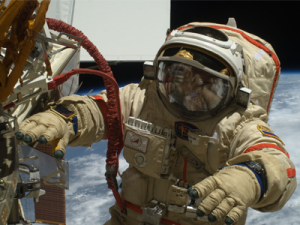
a period of time that an astronaut spends in space outside a spacecraft
The astronaut performed a spacewalk to repair the satellite.
L'astronaute a effectué une sortie dans l'espace pour réparer le satellite.
Synonymesextravehicular activityEVAAntonymesindoor activitygrounded activitychimie analytique
The branch of chemistry that identifies substances and measures their chemical components.
Analytical chemistry is used to identify and quantify the chemical components of substances.
La chimie analytique sert à identifier et à quantifier les composants chimiques des substances.
SynonymesChemical analysisQuantitative analysisQualitative analysisAntonymesOrganic chemistryBiochemistrycomportement animal
The way animals act and respond, or the scientific study of this.
The students studied animal behavior in the wild.
Les étudiants ont étudié le comportement animal en milieu naturel.
SynonymesEthologyAnimal conductAnimal psychologyAntonymesInanimate behaviorPlant behaviorphysiologie animale
The scientific study of how the bodies and organs of animals work.
Animal physiology explores how animals function.
La physiologie animale étudie le fonctionnement des animaux.
Synonymeszoophysiologycomparative physiologyAntonymesplant physiologyastrochimie
The study of the chemical substances and reactions found in space.
Astrochemistry helps us understand the origin of life.
L'astrochimie nous aide à comprendre l'origine de la vie.
SynonymesCosmochemistrySpace chemistryAntonymesTerrestrial chemistryGeochemistrystructure atomique
The arrangement of protons, neutrons and electrons that make up an atom.
Understanding atomic structure is fundamental to chemistry.
Comprendre la structure atomique est fondamental en chimie.
Synonymesatomic arrangementnuclear structureAntonymesmacroscopic structuremolecular structurebio-ingénierie, génie biologique
The use of engineering methods to solve problems in biology and medicine.
Bioengineering has led to advancements in medical treatments.
La bio-ingénierie a permis des progrès dans les traitements médicaux.
SynonymesBiomedical engineeringGenetic engineeringBiotechnologyAntonymesMechanical engineeringChemical engineeringbioéthique
The study of moral questions raised by advances in biology and medicine.
Bioethics explores the moral issues arising from advances in biology and medicine.
La bioéthique explore les questions morales soulevées par les progrès de la biologie et de la médecine.
SynonymesMedical ethicsEthics of scienceMoral philosophy of biologyAntonymesAmoral scienceUnethical researchbio-informatique
The use of computers to store and analyse large amounts of biological data.
Bioinformatics combines biology and computer science to analyze large datasets.
La bio-informatique associe la biologie et l'informatique pour analyser de grands ensembles de données.
SynonymesComputational biologyData science in biologyAntonymesExperimental biologybiomécanique
The scientific study of the physical movement and structure of living things, using the principles of mechanics.
Biomechanics studies the mechanical aspects of living organisms.
La biomécanique étudie les aspects mécaniques des organismes vivants.
SynonymesKinesiologyHuman kineticsAntonymesNonebiomécatronique
The science of combining biology, mechanics and electronics to design devices that work with the human body.
Biomechatronics combines biology, mechanics, and electronics to design innovative devices.
La biomécatronique associe biologie, mécanique et électronique pour concevoir des dispositifs innovants.
SynonymesBioengineeringBiomechanical engineeringAntonymesNonebiotechnologie
The use of living cells and bacteria in industrial and scientific processes, for example to make medicines.
Biotechnology is being used to develop new medicines.
La biotechnologie est utilisée pour mettre au point de nouveaux médicaments.
SynonymesBioengineeringGenetic engineeringBiotechAntonymesConventional methodsTraditional techniquesdivision cellulaire
The process by which a cell divides to form two or more new cells.
Cell division is essential for growth and repair.
La division cellulaire est essentielle à la croissance et à la réparation.
SynonymesMitosisCytokinesisCell proliferationAntonymesCell deathApoptosisréactions chimiques
Processes in which substances act on each other and are changed into different substances.
Chemical reactions are fundamental to understanding how the world works.
Les réactions chimiques sont fondamentales pour comprendre le fonctionnement du monde.
Synonymeschemical processeschemical changestransformationsAntonymesphysical changesstabilitymodélisation climatique
The use of computer models to simulate the earth's climate and predict how it may change.
Climate modeling is essential for understanding future climate change.
La modélisation climatique est essentielle pour comprendre le changement climatique à venir.
Synonymesclimate simulationclimate projectionclimate predictionAntonymesclimate observationhistorical weather databiologie computationnelle
The use of computers and mathematical models to study and understand biological systems and data.
Computational biology uses computer algorithms to model biological systems.
La biologie computationnelle utilise des algorithmes informatiques pour modéliser les systèmes biologiques.
SynonymesBioinformaticsMathematical biologySystems biologyAntonymesExperimental biologyTraditional biologybiologie de la conservation
The scientific study of how to protect species, their habitats and the earth's biodiversity.
Conservation biology is crucial for protecting endangered species.
La biologie de la conservation est essentielle pour protéger les espèces menacées.
SynonymesConservation scienceEnvironmental biologyAntonymesExploitation biologyDestructive ecologychimie environnementale
The study of chemical processes in the environment and the effects of chemicals on air, water and soil.
Environmental chemistry studies the effects of chemicals on the environment.
La chimie environnementale étudie les effets des produits chimiques sur l'environnement.
SynonymesGreen chemistryEcological chemistryAntonymesIndustrial chemistryétude d'impact environnemental
An official study of the likely effects of a planned project on the environment.
The environmental impact assessment showed minimal damage.
L'étude d'impact environnemental a montré des dommages minimes.
Synonymesenvironmental assessmentimpact studyecological assessmentAntonymesenvironmental neglectnon-assessmentsciences de l'environnement
The study of the natural environment and the ways in which humans affect it.
Environmental science is a multidisciplinary field.
Les sciences de l'environnement sont un domaine pluridisciplinaire.
Synonymesecologyconservation scienceenvironmental studiesAntonymesN/Abiologie évolutive
The branch of biology that studies how living things have developed and changed over time.
Evolutionary biology explains how life on Earth has changed over time.
La biologie évolutive explique comment la vie sur Terre a changé au fil du temps.
SynonymesEvolutionary scienceDarwinian biologyAntonymesCreation scienceconseil génétique
Advice given to people about the risk of passing on or having an inherited disease.
She sought genetic counseling before starting a family.
Elle a eu recours au conseil génétique avant de fonder une famille.
SynonymesGenetic guidanceGenetic consultationAntonymesNonevariation génétique
The differences in genes between individual living things of the same species.
Genetic variation allows populations to adapt to changing environments.
La variation génétique permet aux populations de s'adapter à des environnements changeants.
SynonymesGenetic diversityAllelic variationAntonymesGenetic uniformityGenetic homogeneityséquençage du génome
The process of finding the exact order of all the DNA in an organism's genome.
Genome sequencing can help identify genetic diseases.
Le séquençage du génome peut aider à identifier des maladies génétiques.
SynonymesDNA sequencingGenetic mappingAntonymesN/Atélescope spatial Hubble
A large telescope in orbit around the earth that takes images of distant stars and galaxies.
The Hubble Space Telescope has provided stunning images of distant galaxies.
Le télescope spatial Hubble a fourni des images saisissantes de galaxies lointaines.
SynonymesHSTHubbleimmunothérapie
The treatment of disease by using or strengthening the body's immune system.
Immunotherapy has shown promise in treating certain types of cancer.
L'immunothérapie s'est montrée prometteuse dans le traitement de certains types de cancer.
SynonymesBiological therapyImmune system therapyAntonymesChemotherapyRadiation therapychimie inorganique, chimie minérale
The branch of chemistry that studies substances that do not contain carbon-hydrogen bonds.
Inorganic chemistry studies compounds that do not contain carbon-hydrogen bonds.
La chimie inorganique étudie les composés qui ne contiennent pas de liaisons carbone-hydrogène.
Synonymesnon-organic chemistrymineral chemistryAntonymesorganic chemistryStation spatiale internationale
A large spacecraft in orbit around the earth where astronauts from several countries live and work.
The International Space Station orbits the Earth.
La Station spatiale internationale est en orbite autour de la Terre.
SynonymesISSSpace StationAntonymesEarthGroundmodule lunaire
A small spacecraft that carries astronauts between the main spacecraft orbiting the moon and the moon's surface.
The lunar module successfully landed on the moon.
Le module lunaire s'est posé avec succès sur la Lune.
Synonymesmoon landerLEM (Lunar Excursion Module)Antonymescommand modulespacecraftrover martien, astromobile martienne
A vehicle that is sent to Mars to move across its surface and collect scientific information.
The Mars Rover sent back stunning images of the Martian surface.
Le rover martien a renvoyé des images saisissantes de la surface de Mars.
SynonymesMars explorerPlanetary roverAntonymesStationary probeOrbiterécologie microbienne
The scientific study of how microorganisms interact with each other and with their environment.
Microbial ecology studies the interactions of microorganisms with each other and their environment.
L'écologie microbienne étudie les interactions des micro-organismes entre eux et avec leur environnement.
SynonymesMicrobial biogeochemistryEnvironmental microbiologyAntonymesMacrobial ecologybiologie moléculaire
The scientific study of the structure and function of the molecules that make up living things.
Molecular biology studies the structure and function of macromolecules.
La biologie moléculaire étudie la structure et la fonction des macromolécules.
SynonymesNoneAntonymesClassical biologyOrganismal biologygénétique moléculaire
The branch of genetics that studies the structure and function of genes at the level of molecules.
Molecular genetics is used to study the structure and function of genes at a molecular level.
La génétique moléculaire sert à étudier la structure et la fonction des gènes au niveau moléculaire.
SynonymesNoneGene scienceMolecular biology of heredityAntonymesClassical geneticsalunissage
An occasion when a spacecraft lands on the moon, especially the first one in 1969.
The moon landing was a major achievement for humanity.
L'alunissage a été un accomplissement majeur pour l'humanité.
Synonymeslunar landingmoonshotApollo missionAntonymesspace launch failureearthboundneurochimie
The scientific study of the chemical processes that happen in the nervous system.
Neurochemistry studies the chemical processes within the nervous system.
La neurochimie étudie les processus chimiques au sein du système nerveux.
SynonymesBrain chemistryNeurochemical processesAntonymesN/Aneuropsychologie
The scientific study of the relationship between the brain and the way people think and behave.
Neuropsychology studies the relationship between the brain and behavior.
La neuropsychologie étudie la relation entre le cerveau et le comportement.
SynonymesBehavioral neuroscienceBiological psychologyAntonymesNonechimie organique
The branch of chemistry that studies substances containing carbon.
She is studying organic chemistry at the university.
Elle étudie la chimie organique à l'université.
SynonymesCarbon chemistryChemistry of carbon compoundsAntonymesInorganic chemistrychimie physique
The branch of chemistry that uses the methods of physics to study chemical systems and reactions.
Physical chemistry explores the fundamental principles underlying chemical systems.
La chimie physique explore les principes fondamentaux qui régissent les systèmes chimiques.
SynonymesChemical physicsTheoretical chemistryAntonymesOrganic chemistryBiochemistryplanétologie, science planétaire
The scientific study of planets, moons and planetary systems, and how they form and change.
Planetary science studies the formation and evolution of planets.
La planétologie étudie la formation et l'évolution des planètes.
SynonymesplanetologycosmologyAntonymesnonephysiologie végétale
The scientific study of how plants work, grow and stay alive.
Plant physiology explores how plants function and grow.
La physiologie végétale explore le fonctionnement et la croissance des plantes.
SynonymesPlant biologyPhytophysiologyAntonymesAnimal physiologychimie des polymères
The branch of chemistry that studies polymers and how they are made and used.
Polymer chemistry is crucial for developing new materials.
La chimie des polymères est essentielle pour mettre au point de nouveaux matériaux.
SynonymesMacromolecular chemistryPolymer scienceAntonymesInorganic chemistryAtomic chemistryprotéomique
The scientific study of all the proteins in a living thing, and their structure and function.
Proteomics is used to study protein structure and function.
La protéomique sert à étudier la structure et la fonction des protéines.
SynonymesProtein analysisProtein profilingProtein characterizationAntonymesGenomicsinformatique quantique, calcul quantique
A type of computing that uses the principles of quantum mechanics to process information.
Quantum computing holds the potential to revolutionize various fields.
L'informatique quantique pourrait révolutionner de nombreux domaines.
SynonymesQuantum information scienceQuantum computationAntonymesClassical computingmécanique quantique
The branch of physics that studies the behaviour of atoms and very small particles.
Quantum mechanics governs the behavior of atoms and subatomic particles.
La mécanique quantique régit le comportement des atomes et des particules subatomiques.
SynonymesQuantum physicsQuantum theoryAntonymesClassical mechanicsNewtonian mechanicsthéorie quantique
A theory in physics based on the idea that energy exists in very small fixed units.
Quantum theory explains the behavior of matter and energy at the atomic and subatomic levels.
La théorie quantique explique le comportement de la matière et de l'énergie aux niveaux atomique et subatomique.
SynonymesQuantum mechanicsQuantum physicsAntonymesClassical mechanicsNewtonian physicscolonisation spatiale
The process of setting up permanent human communities on other planets or in space.
Space colonization could open up new resources for humanity.
La colonisation spatiale pourrait ouvrir de nouvelles ressources à l'humanité.
SynonymesSpace settlementOff-world colonizationAntonymesEarth-bound existencePlanetary confinementdébris spatiaux
Broken pieces of old satellites, rockets and other man-made objects that remain in orbit around the earth.
Space debris poses a threat to orbiting satellites.
Les débris spatiaux représentent une menace pour les satellites en orbite.
Synonymesspace junkorbital debrisspace wasteAntonymesfunctional satelliteoperational spacecraftingénierie spatiale
The design and building of spacecraft, rockets, satellites and other equipment used in space.
Space engineering is crucial for developing advanced rockets.
L'ingénierie spatiale est essentielle pour développer des fusées de pointe.
SynonymesAerospace engineeringAstronautical engineeringAntonymesTerrestrial engineeringCivil engineeringexploration spatiale
The use of spacecraft and technology to discover and study outer space.
Space exploration has led to numerous technological advancements.
L'exploration spatiale a mené à de nombreuses avancées technologiques.
SynonymesSpace researchCosmic explorationAstronauticsAntonymesTerrestrial focusEarthbound researchmissions d'exploration spatiale
Planned journeys or operations sent into space to discover and study planets, stars and other objects.
Space exploration missions are expensive but potentially very rewarding.
Les missions d'exploration spatiale coûtent cher, mais elles peuvent être très fructueuses.
Synonymesspace missionsastronautical missionscosmic explorationspace voyagesAntonymesearthbound researchground-based studiesmission spatiale
A planned journey or operation into space to carry out a particular task.
The space mission was a success.
La mission spatiale a été un succès.
SynonymesSpace flightCosmic missionExtraterrestrial expeditionAntonymesEarthbound projectTerrestrial activityphysique spatiale
The branch of physics that studies plasma, radiation and magnetic fields in space, especially near planets and the sun.
Space physics studies the plasma environment of planets.
La physique spatiale étudie l'environnement plasmatique des planètes.
SynonymesAstrophysicsSpace scienceAntonymesTerrestrial physicsrecherche spatiale
Scientific study of outer space and the objects in it.
Space research is crucial for understanding the universe.
La recherche spatiale est essentielle pour comprendre l'univers.
SynonymesSpace explorationCosmic studyAstronautics researchAntonymesEarth-bound researchTerrestrial studiestechnologie spatiale
The machines, equipment and scientific methods used for travelling in and studying space.
Space technology has enabled us to explore other planets.
La technologie spatiale nous a permis d'explorer d'autres planètes.
SynonymesAerospace technologySpace exploration technologyAntonymesEarth-bound technologyTerrestrial technologytélescope spatial
A telescope placed in orbit around the earth to observe distant objects without interference from the atmosphere.
The Hubble Space Telescope has provided stunning images of the universe.
Le télescope spatial Hubble a fourni des images saisissantes de l'univers.
Synonymesorbital telescopeastronomical satelliteAntonymesground-based telescopetourisme spatial
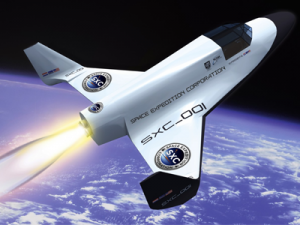
The business of taking paying passengers on trips into space for pleasure.
Space tourism is becoming a reality for wealthy individuals.
Le tourisme spatial devient une réalité pour les personnes fortunées.
SynonymesCommercial space travelSuborbital tourismAntonymesTraditional tourismDomestic travelévolution stellaire
The process by which a star changes over its lifetime, from its formation to its death.
Stellar evolution explains the life cycle of stars.
L'évolution stellaire explique le cycle de vie des étoiles.
Synonymesstar formationstar life cyclestar developmentAntonymesstellar creation