Lección 23/33 · 137 palabras · 0 aprendidas
Science
Ciencia
estrella
a large ball of burning gas in space that we see as a point of light in the sky at night
Sirius is the brightest star in the sky.
Sirio es la estrella más brillante del cielo.
She starred opposite Cary Grant in ‘Bringing up Baby’.
Sinónimoscelestial bodyluminarysuncelebrityidolAntónimosplanetdarknessobscuritynobodyfísica
the scientific study of matter and energy and the relationships between them, including the study of forces, heat, light, sound, electricity and the structure of atoms
I’m not good at physics.
No soy bueno en física.
particle/nuclear/theoretical physics
Sinónimossciencephysical sciencenatural philosophyAntónimosartshumanitiesquímica
the scientific study of the structure of substances, how they react when combined or in contact with one another, and how they behave under different conditions
I like learning Chemistry in the laboratory.
Me gusta aprender química en el laboratorio.
the university's chemistry department
Sinónimoschemical sciencechemical analysiscompositionchemical processesAntónimosphysical sciencegravedad
the force that attracts objects in space towards each other, and that on the earth pulls them towards the centre of the planet, so that things fall to the ground when they are dropped
Because of gravity, an apple falls to the ground when it drops from the tree.
Debido a la gravedad, una manzana cae al suelo cuando se desprende del árbol.
SinónimosseriousnessimportancesignificanceweightinessseveritycriticalityAntónimostrivialityunimportanceinsignificancelevitysatélite
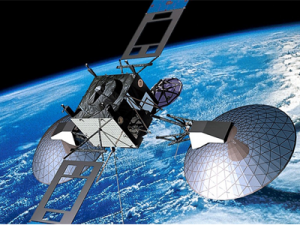
an electronic device that is sent into space and moves around the earth or another planet. It is used for communicating by radio, television, etc. and for gathering information.
a weather/communications satellite
un satélite meteorológico/de comunicaciones
SinónimosmoonorbiterspacecraftAntónimosplanetground stationestación espacial
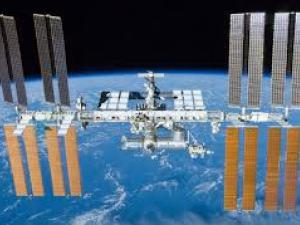
a large structure that is sent into space and remains above the earth as a base for people working and travelling in space
the International Space Station (ISS)
la Estación Espacial Internacional (EEI)
Sinónimosorbital stationoutpost in spaceAntónimosEarthbound facilityecología
the relation of plants and living creatures to each other and to their environment; the study of this
She hopes to study ecology at college.
Ella espera estudiar ecología en la universidad.
Sinónimosenvironmental scienceenvironmentalismbiotic scienceAntónimosnone (ecology as a field of study doesn't have a direct antonym. Related fields like urban planning might be considered distantly opposite in some contexts.)órbita
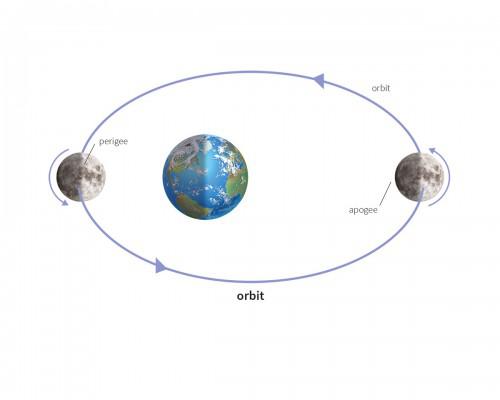
a curved path followed by a planet or an object as it moves around another planet, star, moon, etc.
The satellite is now in orbit around the Earth.
El satélite se encuentra ahora en órbita alrededor de la Tierra.
Sinónimosrevolvecircleencirclego aroundrotate aroundAntónimosstagnatestandstillstopremain stationarycohete
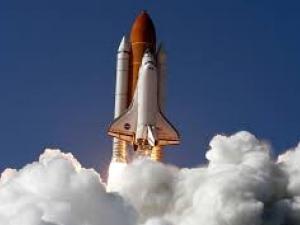
a spacecraft in the shape of a tube that is driven by a stream of gases let out behind it when fuel is burned inside
The rocket carried three astronauts into space last month.
El cohete llevó a tres astronautas al espacio el mes pasado.
Sinónimossoarsurgeskyrocketincrease rapidlyboomAntónimosplummetdecrease rapidlydeclinedropbiodiversidad
the existence of a large number of different kinds of animals and plants which make a balanced environment
A new National Biological Survey will protect species habitat and biodiversity.
Una nueva Encuesta Biológica Nacional protegerá el hábitat de las especies y la biodiversidad.
Sinónimosvariety of lifebiological diversityecological diversityspecies richnessgenetic diversityAntónimosmonocultureuniformitylack of diversitybiological uniformityenergía nuclear
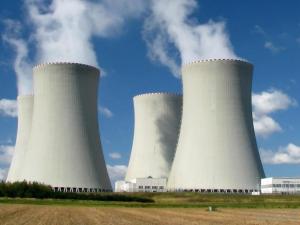
a powerful form of energy produced by changing matter into energy by splitting the nuclei (= central parts) of atoms . It is used to produce electricity.
I think nuclear energy will be widely used in the future.
Creo que la energía nuclear se utilizará ampliamente en el futuro.
Sinónimosatomic energyatomic powernuclear powerAntónimosrenewable energysolar energywind energyhydroelectric energycambio climático
changes in the earth’s weather, including changes in temperature, wind patterns and rainfall , especially the increase in the temperature of the earth’s atmosphere that is caused by the increase of particular gases, especially carbon dioxide
In any case, climate change is already disrupting the lives of millions of human beings.
En cualquier caso, el cambio climático ya está alterando la vida de millones de seres humanos.
Sinónimosglobal warmingclimatic changeenvironmental changeclimate crisisAntónimosclimate stabilityenvironmental equilibriumanatomía
the scientific study of the physical structure of humans, animals or plants
Medical students must study human anatomy in their first year.
Los estudiantes de medicina deben estudiar anatomía humana en su primer año.
Sinónimosstructurebodily structureorganizationmorphologyphysiologyformcompositionAntónimosdisorganizationformlessnessamorphousnessastrobiología
the scientific study of life on other planets
Astrobiology is the study of the origin, evolution, distribution, and future of life in the universe.
La astrobiología es el estudio del origen, la evolución, la distribución y el futuro de la vida en el universo.
SinónimosexobiologybioastronomyAntónimosNoneAstrogeología
the scientific study of the rocks, surfaces and structure of planets, moons and other bodies in space
Astrogeology helps us understand the surfaces of other planets.
La astrogeología nos ayuda a comprender las superficies de otros planetas.
SinónimosPlanetary geologyExogeologyAntónimosTerrestrial geologyastronomía
the scientific study of the sun, moon, stars, planets, etc.
Astronomy is the scientific study of celestial objects and phenomena.
La astronomía es el estudio científico de los objetos y fenómenos celestes.
Sinónimoscelestial mechanicsspace scienceastro-scienceAntónimosastrologyAstrofísica
the scientific study of the physical and chemical structure of the stars, planets, etc.
Astrophysics studies the physics of celestial objects.
La astrofísica estudia la física de los objetos celestes.
Sinónimosastronomical physicsspace physicsAntónimosgeophysicsterrestrial physicsbiofísica
the science that uses the laws and methods of physics to study biology
Biophysics applies physics principles to biological systems.
La biofísica aplica los principios de la física a los sistemas biológicos.
Sinónimosbiological physicsphysical biologyAntónimospure biologypure physicsagujero negro
an area in space that nothing, not even light, can escape from, because gravity (= the force that pulls objects in space towards each other) is so strong there
The black hole consumed the nearby star.
El agujero negro consumió la estrella cercana.
Sinónimosgravitational singularitycosmic vacuumAntónimoswhite hole (theoretical)neurociencia cognitiva
the scientific study of how the brain and nervous system make thinking, learning and memory possible
Cognitive neuroscience explores the neural mechanisms underlying thought and behavior.
La neurociencia cognitiva explora los mecanismos neuronales que subyacen al pensamiento y el comportamiento.
Sinónimosbehavioral neurosciencebiopsychologyneuropsychologyAntónimosN/Aciencia cognitiva
the study of the mind and how it works, combining ideas from psychology, linguistics, computer science and philosophy
Cognitive science explores how the mind processes information.
La ciencia cognitiva explora cómo la mente procesa la información.
Sinónimoscognitive studiesmind scienceAntónimosN/A (There is no direct antonym as it's a specific field of study.)cosmología
the scientific study of the universe and its origin and development
Cosmology seeks to understand the origin and evolution of the universe.
La cosmología busca comprender el origen y la evolución del universo.
Sinónimosastronomyastro physicsuniverse studiesorigin scienceAntónimosnonecibernética
the scientific study of communication and control systems, which involves comparing human and animal brains with machines and electronic devices
Cybernetics explores the relationship between biological and mechanical systems.
La cibernética explora la relación entre los sistemas biológicos y mecánicos.
Sinónimoscontrol systemsautomationsystems theoryAntónimosrandomnessdisorderchaosmateria oscura
according to some theories, material that exists in space but does not reflect any light
Scientists study dark matter to understand the universe's structure.
Los científicos estudian la materia oscura para comprender la estructura del universo.
Sinónimosunseen matterhidden massAntónimosluminous mattervisible matterElectromagnetismo
the production of a magnetic field by means of an electric current, or of an electric current by means of a magnetic field
Electromagnetism is a fundamental force of nature.
El electromagnetismo es una fuerza fundamental de la naturaleza.
SinónimosElectromagnetic forceEM interactionAntónimosGravityWeak nuclear forceStrong nuclear forceendocrinología
the branch of medicine that is the study of the endocrine system and hormones
Endocrinology is the study of hormones and their effects.
La endocrinología es el estudio de las hormonas y sus efectos.
Sinónimoshormone studyhormone scienceAntónimosexocrinologyevolución
the slow steady development of plants, animals, etc. during the history of the earth, as they adapt to changes in their environment
The evolution of species is a complex process.
La evolución de las especies es un proceso complejo.
SinónimosdevelopmentprogressgrowthadvancementAntónimosdevolutionregressionstagnationextraterrestre
(in stories) a creature that comes from another planet; a creature that may exist on another planet
The movie was about an extraterrestrial who visited Earth.
La película trataba sobre un extraterrestre que visitó la Tierra.
Sinónimosaliennon-terrestrialotherworldlyAntónimosterrestrialearthlygenética
the scientific study of the ways in which different characteristics are passed from each generation of living things to the next
Genetics plays a crucial role in determining our physical traits.
La genética juega un papel crucial en la determinación de nuestros rasgos físicos.
SinónimosheredityinheritancegenesAntónimosenvironmental factorsgeología
the scientific study of the physical structure of the earth, including the origin and history of the rocks and soil of which the earth is made
Geology helps us understand the Earth's history.
La geología nos ayuda a comprender la historia de la Tierra.
Sinónimosearth sciencegeoscienceGeofísica
the scientific study of the physics of the earth, including its atmosphere, climate and magnetism
Geophysics is used to study the Earth's subsurface.
La geofísica se utiliza para estudiar el subsuelo terrestre.
SinónimosEarth physicsSolid Earth geophysicsAntónimosNonemeteoro
a piece of rock from outer space that makes a bright line across the night sky as it burns up while falling through the earth’s atmosphere
A meteor streaked across the night sky.
Un meteoro cruzó el cielo nocturno.
Sinónimosshooting starfalling starbolideAntónimosasteroidcometplanetnebulosa
a mass of dust or gas that can be seen in the night sky, often appearing very bright; a bright area in the night sky caused by a large cloud of stars that are far away
The telescope revealed a beautiful nebula.
El telescopio reveló una hermosa nebulosa.
Sinónimosstar cloudinterstellar cloudAntónimosempty spacevoidpetrología
the scientific study of how rocks are made and what they are made of
The geologist specialized in petrology to understand the origin of the rocks.
El geólogo se especializó en petrología para comprender el origen de las rocas.
SinónimoslithologygeologyAntónimosnonefarmacología
the science of drugs, including how they act on the body and how they are used to treat disease
Pharmacology is a core subject for medical and pharmacy students.
La farmacología es una asignatura fundamental para los estudiantes de medicina y de farmacia.
Clinical pharmacology studies how drugs work in real patients.
Sinónimosdrug studymedicinal chemistrypharmaceuticsAntónimosnonefotosíntesis
the process by which green plants turn carbon dioxide and water into food using energy obtained from light from the sun
Photosynthesis is essential for plant life.
La fotosíntesis es esencial para la vida de las plantas.
Sinónimoscarbon assimilationphotosynthetic activityAntónimosrespirationespacio-tiempo
the universe considered as a continuum with four measurements—length, width , depth and time—inside which any event or physical object is located
Einstein's theory deals with space-time.
La teoría de Einstein trata sobre el espacio-tiempo.
Sinónimosspace and timecontinuumAntónimosspacetimetermodinámica
the science that deals with the relations between heat and other forms of energy
Thermodynamics explains how energy is converted and used.
La termodinámica explica cómo se convierte y utiliza la energía.
Sinónimosthermodynamic principlesthermal physicsAntónimosnoneingeniería genética
the science of changing how a living creature or plant develops by changing the information in its genes
Genetic engineering is used to modify crops for better yields.
La ingeniería genética se utiliza para modificar los cultivos para obtener mejores rendimientos.
Sinónimosgene editingbiotechnologygene manipulationAntónimosnatural selectiontraditional breedinginteligencia artificial, IA
the ability of computer systems to do tasks that normally need human intelligence, such as understanding language or making decisions
The bank uses artificial intelligence to detect unusual transactions.
El banco utiliza inteligencia artificial para detectar transacciones inusuales.
Artificial intelligence is changing how customer service teams work.
SinónimosAImachine intelligenceAntónimosnatural intelligencehuman intelligencenanotecnología
the branch of technology that deals with structures that are less than 100 nanometres long. Scientists often build these structures using individual molecules of substances.
Nanotechnology is used in many fields, including medicine and manufacturing.
La nanotecnología se utiliza en muchos campos, incluidos la medicina y la fabricación.
Sinónimosmolecular manufacturingnanoscale technologyAntónimosmacrotechnologyfísica nuclear
the area of physics which deals with the nucleus of atoms and with nuclear energy
Nuclear physics is crucial for understanding atomic energy.
La física nuclear es crucial para entender la energía atómica.
Sinónimosatomic physicsnuclear scienceAntónimosclassical physicspaleontología
the study of fossils (= the parts of dead animals or plants in rocks) as a guide to the history of life on earth
She studied paleontology to learn about dinosaurs.
Ella estudió paleontología para aprender sobre los dinosaurios.
Sinónimosfossil studyfossil scienceAntónimosnonesonda espacial
a spacecraft without people on board that obtains information and sends it back to earth
The space probe sent back images of Jupiter.
La sonda espacial envió imágenes de Júpiter.
Sinónimosunmanned spacecraftrobotic probeplanetary probeAntónimosmanned spacecraftpaseo espacial
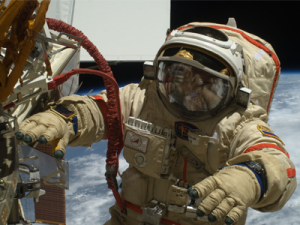
a period of time that an astronaut spends in space outside a spacecraft
The astronaut performed a spacewalk to repair the satellite.
El astronauta realizó un paseo espacial para reparar el satélite.
Sinónimosextravehicular activityEVAAntónimosindoor activitygrounded activityQuímica analítica
The branch of chemistry that identifies substances and measures their chemical components.
Analytical chemistry is used to identify and quantify the chemical components of substances.
La química analítica se utiliza para identificar y cuantificar los componentes químicos de las sustancias.
SinónimosChemical analysisQuantitative analysisQualitative analysisAntónimosOrganic chemistryBiochemistryComportamiento animal
The way animals act and respond, or the scientific study of this.
The students studied animal behavior in the wild.
Los estudiantes estudiaron el comportamiento animal en la naturaleza.
SinónimosEthologyAnimal conductAnimal psychologyAntónimosInanimate behaviorPlant behaviorFisiología animal
The scientific study of how the bodies and organs of animals work.
Animal physiology explores how animals function.
La fisiología animal explora cómo funcionan los animales.
Sinónimoszoophysiologycomparative physiologyAntónimosplant physiologyAstroquímica
The study of the chemical substances and reactions found in space.
Astrochemistry helps us understand the origin of life.
La astroquímica nos ayuda a comprender el origen de la vida.
SinónimosCosmochemistrySpace chemistryAntónimosTerrestrial chemistryGeochemistryEstructura atómica
The arrangement of protons, neutrons and electrons that make up an atom.
Understanding atomic structure is fundamental to chemistry.
Comprender la estructura atómica es fundamental para la química.
Sinónimosatomic arrangementnuclear structureAntónimosmacroscopic structuremolecular structureBioingeniería
The use of engineering methods to solve problems in biology and medicine.
Bioengineering has led to advancements in medical treatments.
La bioingeniería ha llevado a avances en los tratamientos médicos.
SinónimosBiomedical engineeringGenetic engineeringBiotechnologyAntónimosMechanical engineeringChemical engineeringBioética
The study of moral questions raised by advances in biology and medicine.
Bioethics explores the moral issues arising from advances in biology and medicine.
La bioética explora los problemas morales que surgen de los avances en biología y medicina.
SinónimosMedical ethicsEthics of scienceMoral philosophy of biologyAntónimosAmoral scienceUnethical researchBioinformática
The use of computers to store and analyse large amounts of biological data.
Bioinformatics combines biology and computer science to analyze large datasets.
La bioinformática combina la biología y la informática para analizar grandes conjuntos de datos.
SinónimosComputational biologyData science in biologyAntónimosExperimental biologyBiomecánica
The scientific study of the physical movement and structure of living things, using the principles of mechanics.
Biomechanics studies the mechanical aspects of living organisms.
La biomecánica estudia los aspectos mecánicos de los organismos vivos.
SinónimosKinesiologyHuman kineticsAntónimosNoneBiomecatrónica
The science of combining biology, mechanics and electronics to design devices that work with the human body.
Biomechatronics combines biology, mechanics, and electronics to design innovative devices.
La biomecatrónica combina biología, mecánica y electrónica para diseñar dispositivos innovadores.
SinónimosBioengineeringBiomechanical engineeringAntónimosNoneBiotecnología
The use of living cells and bacteria in industrial and scientific processes, for example to make medicines.
Biotechnology is being used to develop new medicines.
La biotecnología se está utilizando para desarrollar nuevos medicamentos.
SinónimosBioengineeringGenetic engineeringBiotechAntónimosConventional methodsTraditional techniquesDivisión celular
The process by which a cell divides to form two or more new cells.
Cell division is essential for growth and repair.
La división celular es esencial para el crecimiento y la reparación.
SinónimosMitosisCytokinesisCell proliferationAntónimosCell deathApoptosisreacciones químicas
Processes in which substances act on each other and are changed into different substances.
Chemical reactions are fundamental to understanding how the world works.
Las reacciones químicas son fundamentales para comprender cómo funciona el mundo.
Sinónimoschemical processeschemical changestransformationsAntónimosphysical changesstabilitymodelado climático
The use of computer models to simulate the earth's climate and predict how it may change.
Climate modeling is essential for understanding future climate change.
El modelado climático es esencial para comprender el cambio climático futuro.
Sinónimosclimate simulationclimate projectionclimate predictionAntónimosclimate observationhistorical weather dataBiología computacional
The use of computers and mathematical models to study and understand biological systems and data.
Computational biology uses computer algorithms to model biological systems.
La biología computacional utiliza algoritmos informáticos para modelar sistemas biológicos.
SinónimosBioinformaticsMathematical biologySystems biologyAntónimosExperimental biologyTraditional biologyBiología de la conservación
The scientific study of how to protect species, their habitats and the earth's biodiversity.
Conservation biology is crucial for protecting endangered species.
La biología de la conservación es crucial para proteger a las especies en peligro de extinción.
SinónimosConservation scienceEnvironmental biologyAntónimosExploitation biologyDestructive ecologyQuímica ambiental
The study of chemical processes in the environment and the effects of chemicals on air, water and soil.
Environmental chemistry studies the effects of chemicals on the environment.
La química ambiental estudia los efectos de los productos químicos en el medio ambiente.
SinónimosGreen chemistryEcological chemistryAntónimosIndustrial chemistryevaluación de impacto ambiental
An official study of the likely effects of a planned project on the environment.
The environmental impact assessment showed minimal damage.
La evaluación de impacto ambiental mostró daños mínimos.
Sinónimosenvironmental assessmentimpact studyecological assessmentAntónimosenvironmental neglectnon-assessmentciencia ambiental
The study of the natural environment and the ways in which humans affect it.
Environmental science is a multidisciplinary field.
La ciencia ambiental es un campo multidisciplinario.
Sinónimosecologyconservation scienceenvironmental studiesAntónimosN/ABiología evolutiva
The branch of biology that studies how living things have developed and changed over time.
Evolutionary biology explains how life on Earth has changed over time.
La biología evolutiva explica cómo la vida en la Tierra ha cambiado con el tiempo.
SinónimosEvolutionary scienceDarwinian biologyAntónimosCreation scienceConsejo genético
Advice given to people about the risk of passing on or having an inherited disease.
She sought genetic counseling before starting a family.
Ella buscó consejo genético antes de formar una familia.
SinónimosGenetic guidanceGenetic consultationAntónimosNoneVariación genética
The differences in genes between individual living things of the same species.
Genetic variation allows populations to adapt to changing environments.
La variación genética permite a las poblaciones adaptarse a los entornos cambiantes.
SinónimosGenetic diversityAllelic variationAntónimosGenetic uniformityGenetic homogeneitySecuenciación del genoma
The process of finding the exact order of all the DNA in an organism's genome.
Genome sequencing can help identify genetic diseases.
La secuenciación del genoma puede ayudar a identificar enfermedades genéticas.
SinónimosDNA sequencingGenetic mappingAntónimosN/ATelescopio Espacial Hubble
A large telescope in orbit around the earth that takes images of distant stars and galaxies.
The Hubble Space Telescope has provided stunning images of distant galaxies.
El Telescopio Espacial Hubble ha proporcionado imágenes impresionantes de galaxias distantes.
SinónimosHSTHubbleInmunoterapia
The treatment of disease by using or strengthening the body's immune system.
Immunotherapy has shown promise in treating certain types of cancer.
La inmunoterapia ha demostrado ser prometedora en el tratamiento de ciertos tipos de cáncer.
SinónimosBiological therapyImmune system therapyAntónimosChemotherapyRadiation therapyquímica inorgánica
The branch of chemistry that studies substances that do not contain carbon-hydrogen bonds.
Inorganic chemistry studies compounds that do not contain carbon-hydrogen bonds.
La química inorgánica estudia compuestos que no contienen enlaces carbono-hidrógeno.
Sinónimosnon-organic chemistrymineral chemistryAntónimosorganic chemistryEstación Espacial Internacional
A large spacecraft in orbit around the earth where astronauts from several countries live and work.
The International Space Station orbits the Earth.
La Estación Espacial Internacional orbita la Tierra.
SinónimosISSSpace StationAntónimosEarthGroundmódulo lunar
A small spacecraft that carries astronauts between the main spacecraft orbiting the moon and the moon's surface.
The lunar module successfully landed on the moon.
El módulo lunar aterrizó con éxito en la luna.
Sinónimosmoon landerLEM (Lunar Excursion Module)Antónimoscommand modulespacecraftVehículo explorador de Marte
A vehicle that is sent to Mars to move across its surface and collect scientific information.
The Mars Rover sent back stunning images of the Martian surface.
El vehículo explorador de Marte envió imágenes impresionantes de la superficie marciana.
SinónimosMars explorerPlanetary roverAntónimosStationary probeOrbiterEcología microbiana
The scientific study of how microorganisms interact with each other and with their environment.
Microbial ecology studies the interactions of microorganisms with each other and their environment.
La ecología microbiana estudia las interacciones de los microorganismos entre sí y con su entorno.
SinónimosMicrobial biogeochemistryEnvironmental microbiologyAntónimosMacrobial ecologyBiología molecular
The scientific study of the structure and function of the molecules that make up living things.
Molecular biology studies the structure and function of macromolecules.
La biología molecular estudia la estructura y función de las macromoléculas.
SinónimosNoneAntónimosClassical biologyOrganismal biologyGenética molecular
The branch of genetics that studies the structure and function of genes at the level of molecules.
Molecular genetics is used to study the structure and function of genes at a molecular level.
La genética molecular se utiliza para estudiar la estructura y función de los genes a nivel molecular.
SinónimosNoneGene scienceMolecular biology of heredityAntónimosClassical geneticsalunizaje
An occasion when a spacecraft lands on the moon, especially the first one in 1969.
The moon landing was a major achievement for humanity.
El alunizaje fue un gran logro para la humanidad.
Sinónimoslunar landingmoonshotApollo missionAntónimosspace launch failureearthboundNeuroquímica
The scientific study of the chemical processes that happen in the nervous system.
Neurochemistry studies the chemical processes within the nervous system.
La neuroquímica estudia los procesos químicos dentro del sistema nervioso.
SinónimosBrain chemistryNeurochemical processesAntónimosN/ANeuropsicología
The scientific study of the relationship between the brain and the way people think and behave.
Neuropsychology studies the relationship between the brain and behavior.
La neuropsicología estudia la relación entre el cerebro y el comportamiento.
SinónimosBehavioral neuroscienceBiological psychologyAntónimosNoneQuímica orgánica
The branch of chemistry that studies substances containing carbon.
She is studying organic chemistry at the university.
Ella está estudiando química orgánica en la universidad.
SinónimosCarbon chemistryChemistry of carbon compoundsAntónimosInorganic chemistryFisicoquímica
The branch of chemistry that uses the methods of physics to study chemical systems and reactions.
Physical chemistry explores the fundamental principles underlying chemical systems.
La fisicoquímica explora los principios fundamentales que subyacen a los sistemas químicos.
SinónimosChemical physicsTheoretical chemistryAntónimosOrganic chemistryBiochemistryciencia planetaria
The scientific study of planets, moons and planetary systems, and how they form and change.
Planetary science studies the formation and evolution of planets.
La ciencia planetaria estudia la formación y evolución de los planetas.
SinónimosplanetologycosmologyAntónimosnoneFisiología vegetal
The scientific study of how plants work, grow and stay alive.
Plant physiology explores how plants function and grow.
La fisiología vegetal explora cómo funcionan y crecen las plantas.
SinónimosPlant biologyPhytophysiologyAntónimosAnimal physiologyQuímica de polímeros
The branch of chemistry that studies polymers and how they are made and used.
Polymer chemistry is crucial for developing new materials.
La química de polímeros es crucial para desarrollar nuevos materiales.
SinónimosMacromolecular chemistryPolymer scienceAntónimosInorganic chemistryAtomic chemistryProteómica
The scientific study of all the proteins in a living thing, and their structure and function.
Proteomics is used to study protein structure and function.
La proteómica se utiliza para estudiar la estructura y función de las proteínas.
SinónimosProtein analysisProtein profilingProtein characterizationAntónimosGenomicsComputación cuántica
A type of computing that uses the principles of quantum mechanics to process information.
Quantum computing holds the potential to revolutionize various fields.
La computación cuántica tiene el potencial de revolucionar varios campos.
SinónimosQuantum information scienceQuantum computationAntónimosClassical computingMecánica cuántica
The branch of physics that studies the behaviour of atoms and very small particles.
Quantum mechanics governs the behavior of atoms and subatomic particles.
La mecánica cuántica rige el comportamiento de los átomos y las partículas subatómicas.
SinónimosQuantum physicsQuantum theoryAntónimosClassical mechanicsNewtonian mechanicsTeoría cuántica
A theory in physics based on the idea that energy exists in very small fixed units.
Quantum theory explains the behavior of matter and energy at the atomic and subatomic levels.
La teoría cuántica explica el comportamiento de la materia y la energía a nivel atómico y subatómico.
SinónimosQuantum mechanicsQuantum physicsAntónimosClassical mechanicsNewtonian physicsColonización espacial
The process of setting up permanent human communities on other planets or in space.
Space colonization could open up new resources for humanity.
La colonización espacial podría abrir nuevos recursos para la humanidad.
SinónimosSpace settlementOff-world colonizationAntónimosEarth-bound existencePlanetary confinementbasura espacial
Broken pieces of old satellites, rockets and other man-made objects that remain in orbit around the earth.
Space debris poses a threat to orbiting satellites.
La basura espacial representa una amenaza para los satélites en órbita.
Sinónimosspace junkorbital debrisspace wasteAntónimosfunctional satelliteoperational spacecraftIngeniería espacial
The design and building of spacecraft, rockets, satellites and other equipment used in space.
Space engineering is crucial for developing advanced rockets.
La ingeniería espacial es crucial para desarrollar cohetes avanzados.
SinónimosAerospace engineeringAstronautical engineeringAntónimosTerrestrial engineeringCivil engineeringExploración espacial
The use of spacecraft and technology to discover and study outer space.
Space exploration has led to numerous technological advancements.
La exploración espacial ha conducido a numerosos avances tecnológicos.
SinónimosSpace researchCosmic explorationAstronauticsAntónimosTerrestrial focusEarthbound researchMisiones de exploración espacial
Planned journeys or operations sent into space to discover and study planets, stars and other objects.
Space exploration missions are expensive but potentially very rewarding.
Las misiones de exploración espacial son costosas pero potencialmente muy gratificantes.
Sinónimosspace missionsastronautical missionscosmic explorationspace voyagesAntónimosearthbound researchground-based studiesFísica espacial
The branch of physics that studies plasma, radiation and magnetic fields in space, especially near planets and the sun.
Space physics studies the plasma environment of planets.
La física espacial estudia el entorno de plasma de los planetas.
SinónimosAstrophysicsSpace scienceAntónimosTerrestrial physicsInvestigación espacial
Scientific study of outer space and the objects in it.
Space research is crucial for understanding the universe.
La investigación espacial es crucial para comprender el universo.
SinónimosSpace explorationCosmic studyAstronautics researchAntónimosEarth-bound researchTerrestrial studiestecnología espacial
The machines, equipment and scientific methods used for travelling in and studying space.
Space technology has enabled us to explore other planets.
La tecnología espacial nos ha permitido explorar otros planetas.
SinónimosAerospace technologySpace exploration technologyAntónimosEarth-bound technologyTerrestrial technologytelescopio espacial
A telescope placed in orbit around the earth to observe distant objects without interference from the atmosphere.
The Hubble Space Telescope has provided stunning images of the universe.
El telescopio espacial Hubble ha proporcionado imágenes impresionantes del universo.
Sinónimosorbital telescopeastronomical satelliteAntónimosground-based telescopeTurismo espacial
The business of taking paying passengers on trips into space for pleasure.
Space tourism is becoming a reality for wealthy individuals.
El turismo espacial se está convirtiendo en una realidad para personas adineradas.
SinónimosCommercial space travelSuborbital tourismAntónimosTraditional tourismDomestic travelevolución estelar
The process by which a star changes over its lifetime, from its formation to its death.
Stellar evolution explains the life cycle of stars.
La evolución estelar explica el ciclo de vida de las estrellas.
Sinónimosstar formationstar life cyclestar developmentAntónimosstellar creation