पाठ 3/10 · 15 शब्द · 0 याद हो गए
Cells and tissues
कोशिकाएँ और ऊतक
अंग, अवयव
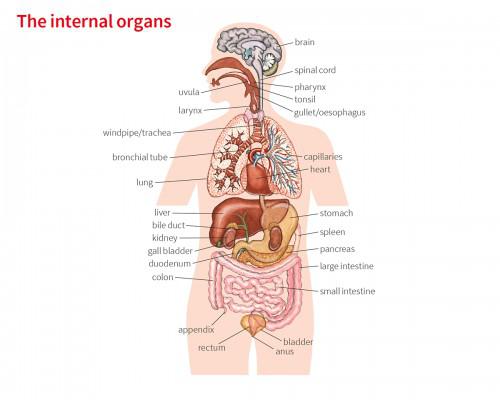
a part of the body made of several tissues that performs a particular function, such as the heart or liver
The liver is the largest internal organ in the body.
यकृत शरीर का सबसे बड़ा आंतरिक अंग है।
Severe sepsis can lead to multiple organ failure.
समानार्थीbody partmemberinstrumentpublicationvehicleagencyविलोमwholeentiretyinanimate objectकोलेजन
the main structural protein in skin, bone, tendons and other connective tissues
Tightly packed collagen fibers give tendons their great strength.
कसकर बंधे कोलेजन तंतु कंडराओं को उनकी अपार मज़बूती देते हैं।
Collagen production in the skin decreases with age.
समानार्थीproteinstructural proteinविलोमNone (Collagen does not have a direct antonym. Focus is on things that degrade/inhibit it)संयोजी ऊतक, संयोजी ऊतक (कनेक्टिव टिश्यू)
tissue that supports, connects and protects other tissues and organs, such as bone, cartilage, fat and tendons
Tendons and ligaments are made of dense connective tissue.
कंडरा (टेंडन) और स्नायुबंधन (लिगामेंट) सघन संयोजी ऊतक से बने होते हैं।
Lupus is a disease that mainly attacks the connective tissue.
समानार्थीsupporting tissuebinding tissueविलोमepithelial tissuenervous tissuemuscle tissueकोशिकाद्रव्य, साइटोप्लाज़्म
the jelly-like material inside a cell, around the nucleus, where many cell activities take place
Many chemical reactions of the cell take place in the cytoplasm.
कोशिका की कई रासायनिक अभिक्रियाएँ कोशिकाद्रव्य में होती हैं।
The stain colored the cytoplasm pink and the nucleus blue.
समानार्थीprotoplasmcell substanceविलोमnucleuscell membraneउपकला, एपिथीलियम
the layer of cells that covers the body surface and lines organs, vessels and cavities
The epithelium of the airways is covered with tiny hairs called cilia.
श्वास-नलिकाओं की उपकला सिलिया नामक सूक्ष्म रोमों से ढकी होती है।
Most cancers, such as skin and lung cancer, begin in the epithelium.
समानार्थीtissue liningsurface layercoveringविलोमnoneग्रंथि
an organ or group of cells that produces and releases substances such as hormones, sweat or saliva
The thyroid gland produces hormones that control metabolism.
थायराइड ग्रंथि ऐसे हार्मोन बनाती है जो चयापचय को नियंत्रित करते हैं।
Sweat glands in the skin help to regulate body temperature.
समानार्थीorgannodeacinusविलोमNoneस्टेम सेल, मूल कोशिका
an unspecialized cell that can divide and develop into many different types of cell
Bone marrow contains stem cells that produce all types of blood cells.
अस्थि मज्जा में स्टेम सेल होती हैं जो सभी प्रकार की रक्त कोशिकाएँ बनाती हैं।
Researchers are testing stem cells to repair damaged heart muscle.
समानार्थीprogenitor cellmother cellविलोमdifferentiated cellspecialized cellमाइटोकॉन्ड्रिया, सूत्रकणिका
a tiny structure inside a cell that produces energy from food; the plural is mitochondria
Muscle cells contain many mitochondria because they need a lot of energy.
मांसपेशी कोशिकाओं में बहुत अधिक माइटोकॉन्ड्रिया होते हैं क्योंकि उन्हें बहुत ऊर्जा की आवश्यकता होती है।
Some rare inherited diseases are caused by faulty mitochondria.
समानार्थीpowerhouseorganelleविलोमnoneसमस्थिति, होमियोस्टेसिस
the body's ability to keep its internal conditions, such as temperature and blood sugar, stable
The kidneys play a key role in maintaining fluid homeostasis.
गुर्दे तरल समस्थिति को बनाए रखने में महत्वपूर्ण भूमिका निभाते हैं।
Severe illness such as sepsis can disturb the body's homeostasis.
समानार्थीequilibriumstabilitybalanceविलोमimbalanceinstabilityकोशिका झिल्ली, कोशिका कला
the thin outer layer of a cell that controls what enters and leaves it
Small molecules such as oxygen pass easily across the cell membrane.
ऑक्सीजन जैसे छोटे अणु कोशिका झिल्ली के आर-पार आसानी से गुज़र जाते हैं।
Some antibiotics work by damaging the cell membrane of bacteria.
केंद्रक, कोशिका केंद्रक
the central part of a cell that contains its genetic material (DNA) and controls its activity
Red blood cells lose their nucleus as they mature.
लाल रक्त कोशिकाएँ परिपक्व होने पर अपना केंद्रक खो देती हैं।
Under the microscope, the cancer cells had large, dark nuclei.
कोशिकांग, अंगक
a small structure inside a cell that has a particular job, such as the nucleus or a mitochondrion
Each organelle performs a specific function within the cell.
प्रत्येक कोशिकांग कोशिका के भीतर एक विशिष्ट कार्य करता है।
Electron microscopes allow us to see organelles in great detail.
वसा ऊतक, वसीय ऊतक
body tissue that stores fat and helps to keep the body warm and protect organs
Adipose tissue is found under the skin and around internal organs.
वसा ऊतक त्वचा के नीचे और आंतरिक अंगों के आसपास पाया जाता है।
Excess adipose tissue around the waist increases the risk of heart disease.
श्लेष्मा झिल्ली, श्लेष्मकला
a moist layer of tissue that lines passages such as the mouth, nose and gut and produces mucus
The mucous membranes of her mouth looked pale and dry.
उसके मुँह की श्लेष्मा झिल्ली पीली और सूखी दिख रही थी।
Viruses often enter the body through the mucous membrane of the nose.