Bài 3/10 · 15 từ · đã thuộc 0
Cells and tissues
Tế bào và mô
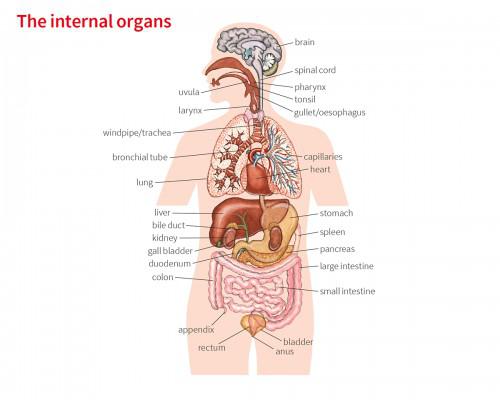
cơ quan, tạng
a part of the body made of several tissues that performs a particular function, such as the heart or liver
The liver is the largest internal organ in the body.
Gan là cơ quan nội tạng lớn nhất của cơ thể.
Severe sepsis can lead to multiple organ failure.
Nhiễm khuẩn huyết nặng có thể dẫn đến suy đa tạng.
Đồng nghĩabody partmemberinstrumentpublicationvehicleagencyTrái nghĩawholeentiretyinanimate objectcollagen, chất tạo keo
the main structural protein in skin, bone, tendons and other connective tissues
Tightly packed collagen fibers give tendons their great strength.
Các sợi collagen xếp sát nhau tạo nên độ bền rất lớn của gân.
Collagen production in the skin decreases with age.
Việc sản xuất collagen ở da giảm dần theo tuổi.
Đồng nghĩaproteinstructural proteinTrái nghĩaNone (Collagen does not have a direct antonym. Focus is on things that degrade/inhibit it)mô liên kết
tissue that supports, connects and protects other tissues and organs, such as bone, cartilage, fat and tendons
Tendons and ligaments are made of dense connective tissue.
Gân và dây chằng được cấu tạo từ mô liên kết đặc.
Lupus is a disease that mainly attacks the connective tissue.
Lupus là bệnh chủ yếu tấn công mô liên kết.
Đồng nghĩasupporting tissuebinding tissueTrái nghĩaepithelial tissuenervous tissuemuscle tissuetế bào chất, bào tương
the jelly-like material inside a cell, around the nucleus, where many cell activities take place
Many chemical reactions of the cell take place in the cytoplasm.
Nhiều phản ứng hóa học của tế bào diễn ra trong bào tương.
The stain colored the cytoplasm pink and the nucleus blue.
Thuốc nhuộm làm bào tương có màu hồng và nhân có màu xanh.
Đồng nghĩaprotoplasmcell substanceTrái nghĩanucleuscell membranebiểu mô
the layer of cells that covers the body surface and lines organs, vessels and cavities
The epithelium of the airways is covered with tiny hairs called cilia.
Biểu mô đường thở được phủ bởi những lông nhỏ gọi là lông chuyển.
Most cancers, such as skin and lung cancer, begin in the epithelium.
Phần lớn ung thư, như ung thư da và ung thư phổi, khởi phát từ biểu mô.
Đồng nghĩatissue liningsurface layercoveringTrái nghĩanonetuyến
an organ or group of cells that produces and releases substances such as hormones, sweat or saliva
The thyroid gland produces hormones that control metabolism.
Tuyến giáp sản xuất các hormone điều hòa chuyển hóa.
Sweat glands in the skin help to regulate body temperature.
Tuyến mồ hôi ở da giúp điều hòa thân nhiệt.
Đồng nghĩaorgannodeacinusTrái nghĩaNonetế bào gốc
an unspecialized cell that can divide and develop into many different types of cell
Bone marrow contains stem cells that produce all types of blood cells.
Tủy xương chứa các tế bào gốc tạo ra mọi loại tế bào máu.
Researchers are testing stem cells to repair damaged heart muscle.
Các nhà nghiên cứu đang thử dùng tế bào gốc để phục hồi cơ tim bị tổn thương.
Đồng nghĩaprogenitor cellmother cellTrái nghĩadifferentiated cellspecialized cellty thể
a tiny structure inside a cell that produces energy from food; the plural is mitochondria
Muscle cells contain many mitochondria because they need a lot of energy.
Tế bào cơ chứa nhiều ty thể vì chúng cần nhiều năng lượng.
Some rare inherited diseases are caused by faulty mitochondria.
Một số bệnh di truyền hiếm gặp do ty thể bị khiếm khuyết.
Đồng nghĩapowerhouseorganelleTrái nghĩanonecân bằng nội môi, hằng định nội môi
the body's ability to keep its internal conditions, such as temperature and blood sugar, stable
The kidneys play a key role in maintaining fluid homeostasis.
Thận đóng vai trò then chốt trong việc duy trì cân bằng nội môi về dịch.
Severe illness such as sepsis can disturb the body's homeostasis.
Bệnh nặng như nhiễm khuẩn huyết có thể làm rối loạn cân bằng nội môi của cơ thể.
Đồng nghĩaequilibriumstabilitybalanceTrái nghĩaimbalanceinstabilitymàng tế bào
the thin outer layer of a cell that controls what enters and leaves it
Small molecules such as oxygen pass easily across the cell membrane.
Các phân tử nhỏ như oxy dễ dàng đi qua màng tế bào.
Some antibiotics work by damaging the cell membrane of bacteria.
Một số kháng sinh tác dụng bằng cách phá hủy màng tế bào của vi khuẩn.
nhân tế bào, nhân
the central part of a cell that contains its genetic material (DNA) and controls its activity
Red blood cells lose their nucleus as they mature.
Hồng cầu mất nhân khi trưởng thành.
Under the microscope, the cancer cells had large, dark nuclei.
Dưới kính hiển vi, các tế bào ung thư có nhân to và sẫm màu.
bào quan
a small structure inside a cell that has a particular job, such as the nucleus or a mitochondrion
Each organelle performs a specific function within the cell.
Mỗi bào quan đảm nhận một chức năng riêng trong tế bào.
Electron microscopes allow us to see organelles in great detail.
Kính hiển vi điện tử cho phép quan sát các bào quan rất chi tiết.
mô
a group of similar cells that work together to do a particular job in the body
The surgeon removed a small piece of tissue for testing.
Phẫu thuật viên lấy một mẩu mô nhỏ để xét nghiệm.
Deep burns can damage the skin and the tissue underneath.
Bỏng sâu có thể làm tổn thương da và mô bên dưới.
mô mỡ
body tissue that stores fat and helps to keep the body warm and protect organs
Adipose tissue is found under the skin and around internal organs.
Mô mỡ có ở dưới da và quanh các cơ quan nội tạng.
Excess adipose tissue around the waist increases the risk of heart disease.
Mô mỡ dư thừa quanh vòng eo làm tăng nguy cơ mắc bệnh tim.
niêm mạc
a moist layer of tissue that lines passages such as the mouth, nose and gut and produces mucus
The mucous membranes of her mouth looked pale and dry.
Niêm mạc miệng của bà ấy trông nhợt và khô.
Viruses often enter the body through the mucous membrane of the nose.
Virus thường xâm nhập cơ thể qua niêm mạc mũi.