コンテンツへスキップ

レッスン3/10 · 15語 · 覚えた単語 0

Cells and tissues

細胞と組織

  1. 1

    organ(noun)

    /ˈɔːrɡən/

    臓器, 器官

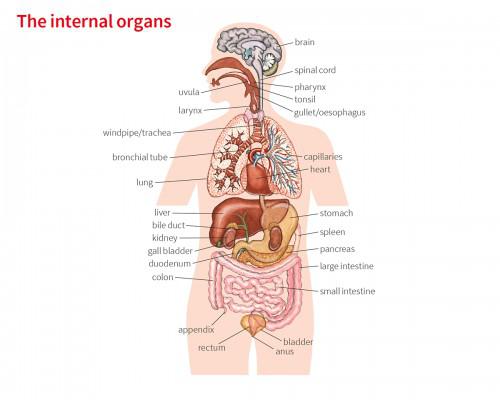
    a part of the body made of several tissues that performs a particular function, such as the heart or liver

    The liver is the largest internal organ in the body.

    肝臓は体内で最大の臓器です。

    Severe sepsis can lead to multiple organ failure.

    類義語body partmemberinstrumentpublicationvehicleagency
    対義語wholeentiretyinanimate object
  2. 2

    collagen(noun)

    /ˈkɑːlədʒən/

    コラーゲン

    the main structural protein in skin, bone, tendons and other connective tissues

    Tightly packed collagen fibers give tendons their great strength.

    密に並んだコラーゲン線維が、腱に大きな強度を与えている。

    Collagen production in the skin decreases with age.

    類義語proteinstructural protein
    対義語None (Collagen does not have a direct antonym. Focus is on things that degrade/inhibit it)
  3. 3

    connective tissue(noun)

    /kəˈnektɪv ˈtɪʃuː/

    結合組織

    tissue that supports, connects and protects other tissues and organs, such as bone, cartilage, fat and tendons

    Tendons and ligaments are made of dense connective tissue.

    腱と靭帯は密性結合組織でできている。

    Lupus is a disease that mainly attacks the connective tissue.

    類義語supporting tissuebinding tissue
    対義語epithelial tissuenervous tissuemuscle tissue
  4. 4

    cytoplasm(noun)

    /ˈsaɪtəʊplæzəm/

    細胞質

    the jelly-like material inside a cell, around the nucleus, where many cell activities take place

    Many chemical reactions of the cell take place in the cytoplasm.

    細胞内の多くの化学反応は細胞質で行われる。

    The stain colored the cytoplasm pink and the nucleus blue.

    類義語protoplasmcell substance
    対義語nucleuscell membrane
  5. 5

    epithelium(noun)

    /,epi'θ:ljəm/

    上皮, 上皮組織

    the layer of cells that covers the body surface and lines organs, vessels and cavities

    The epithelium of the airways is covered with tiny hairs called cilia.

    気道の上皮は、線毛と呼ばれる細かい毛で覆われている。

    Most cancers, such as skin and lung cancer, begin in the epithelium.

    類義語tissue liningsurface layercovering
    対義語none
  6. 6

    gland(noun)

    /ɡlænd/

    腺

    an organ or group of cells that produces and releases substances such as hormones, sweat or saliva

    The thyroid gland produces hormones that control metabolism.

    甲状腺は、代謝を調節するホルモンを分泌する。

    Sweat glands in the skin help to regulate body temperature.

    類義語organnodeacinus
    対義語None
  7. 7

    stem cell(noun)

    /stem sel/

    幹細胞

    an unspecialized cell that can divide and develop into many different types of cell

    Bone marrow contains stem cells that produce all types of blood cells.

    骨髄には、あらゆる種類の血液細胞をつくる幹細胞が含まれている。

    Researchers are testing stem cells to repair damaged heart muscle.

    類義語progenitor cellmother cell
    対義語differentiated cellspecialized cell
  8. 8

    mitochondrion(noun)

    /ˌmaɪtəʊˈkɑːndriən/

    ミトコンドリア

    a tiny structure inside a cell that produces energy from food; the plural is mitochondria

    Muscle cells contain many mitochondria because they need a lot of energy.

    筋細胞は多くのエネルギーを必要とするため、多数のミトコンドリアを含んでいる。

    Some rare inherited diseases are caused by faulty mitochondria.

    類義語powerhouseorganelle
    対義語none
  9. 9

    homeostasis(noun)

    ˌhoʊmioʊˈsteɪsəs

    恒常性, ホメオスタシス, 内部環境の恒常性

    the body's ability to keep its internal conditions, such as temperature and blood sugar, stable

    The kidneys play a key role in maintaining fluid homeostasis.

    腎臓は体液の恒常性の維持に重要な役割を果たしている。

    Severe illness such as sepsis can disturb the body's homeostasis.

    類義語equilibriumstabilitybalance
    対義語imbalanceinstability
  10. 10

    cell membrane(noun)

    /ˈsel ˌmembreɪn/

    細胞膜

    the thin outer layer of a cell that controls what enters and leaves it

    Small molecules such as oxygen pass easily across the cell membrane.

    酸素のような小さな分子は細胞膜を容易に通過する。

    Some antibiotics work by damaging the cell membrane of bacteria.

  11. 11

    nucleus(noun)

    /ˈnjuːkliəs/

    細胞核, 核

    the central part of a cell that contains its genetic material (DNA) and controls its activity

    Red blood cells lose their nucleus as they mature.

    赤血球は成熟する過程で核を失う。

    Under the microscope, the cancer cells had large, dark nuclei.

  12. 12

    organelle(noun)

    /ˌɔːɡəˈnel/

    細胞小器官, オルガネラ

    a small structure inside a cell that has a particular job, such as the nucleus or a mitochondrion

    Each organelle performs a specific function within the cell.

    それぞれの細胞小器官は、細胞内で特定の機能を果たしている。

    Electron microscopes allow us to see organelles in great detail.

  13. 13

    tissue(noun)

    /ˈtɪʃuː/

    組織

    a group of similar cells that work together to do a particular job in the body

    The surgeon removed a small piece of tissue for testing.

    外科医は検査のために組織を少量切除した。

    Deep burns can damage the skin and the tissue underneath.

  14. 14

    adipose tissue(noun)

    /ˌædɪpəʊs ˈtɪʃuː/

    脂肪組織

    body tissue that stores fat and helps to keep the body warm and protect organs

    Adipose tissue is found under the skin and around internal organs.

    脂肪組織は皮膚の下や内臓の周囲に存在する。

    Excess adipose tissue around the waist increases the risk of heart disease.

  15. 15

    mucous membrane(noun)

    /ˌmjuːkəs ˈmembreɪn/

    粘膜

    a moist layer of tissue that lines passages such as the mouth, nose and gut and produces mucus

    The mucous membranes of her mouth looked pale and dry.

    彼女の口腔粘膜は蒼白で乾燥していた。

    Viruses often enter the body through the mucous membrane of the nose.