Lição 3/10 · 15 palavras · 0 aprendidas
Cells and tissues
Células e tecidos
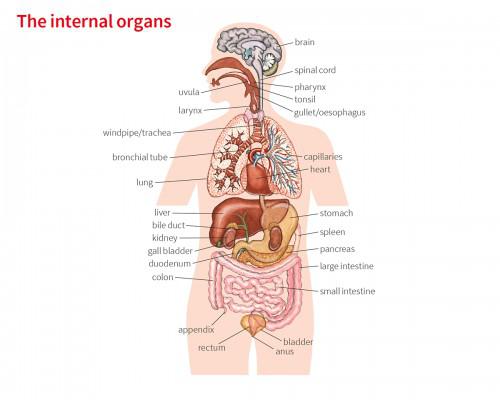
órgão
a part of the body made of several tissues that performs a particular function, such as the heart or liver
The liver is the largest internal organ in the body.
O fígado é o maior órgão interno do corpo.
Severe sepsis can lead to multiple organ failure.
Sinônimosbody partmemberinstrumentpublicationvehicleagencyAntônimoswholeentiretyinanimate objectcolágeno
the main structural protein in skin, bone, tendons and other connective tissues
Tightly packed collagen fibers give tendons their great strength.
Fibras de colágeno densamente compactadas dão aos tendões uma grande resistência.
Collagen production in the skin decreases with age.
Sinônimosproteinstructural proteinAntônimosNone (Collagen does not have a direct antonym. Focus is on things that degrade/inhibit it)tecido conjuntivo
tissue that supports, connects and protects other tissues and organs, such as bone, cartilage, fat and tendons
Tendons and ligaments are made of dense connective tissue.
Os tendões e os ligamentos são feitos de tecido conjuntivo denso.
Lupus is a disease that mainly attacks the connective tissue.
Sinônimossupporting tissuebinding tissueAntônimosepithelial tissuenervous tissuemuscle tissuecitoplasma
the jelly-like material inside a cell, around the nucleus, where many cell activities take place
Many chemical reactions of the cell take place in the cytoplasm.
Muitas reações químicas da célula ocorrem no citoplasma.
The stain colored the cytoplasm pink and the nucleus blue.
Sinônimosprotoplasmcell substanceAntônimosnucleuscell membraneepitélio
the layer of cells that covers the body surface and lines organs, vessels and cavities
The epithelium of the airways is covered with tiny hairs called cilia.
O epitélio das vias aéreas é recoberto por pequenos pelos chamados cílios.
Most cancers, such as skin and lung cancer, begin in the epithelium.
Sinônimostissue liningsurface layercoveringAntônimosnoneglândula
an organ or group of cells that produces and releases substances such as hormones, sweat or saliva
The thyroid gland produces hormones that control metabolism.
A glândula tireoide produz hormônios que controlam o metabolismo.
Sweat glands in the skin help to regulate body temperature.
SinônimosorgannodeacinusAntônimosNonecélula-tronco
an unspecialized cell that can divide and develop into many different types of cell
Bone marrow contains stem cells that produce all types of blood cells.
A medula óssea contém células-tronco que produzem todos os tipos de células sanguíneas.
Researchers are testing stem cells to repair damaged heart muscle.
Sinônimosprogenitor cellmother cellAntônimosdifferentiated cellspecialized cellmitocôndria
a tiny structure inside a cell that produces energy from food; the plural is mitochondria
Muscle cells contain many mitochondria because they need a lot of energy.
As células musculares contêm muitas mitocôndrias porque precisam de muita energia.
Some rare inherited diseases are caused by faulty mitochondria.
SinônimospowerhouseorganelleAntônimosnonehomeostase, homeostasia
the body's ability to keep its internal conditions, such as temperature and blood sugar, stable
The kidneys play a key role in maintaining fluid homeostasis.
Os rins desempenham um papel fundamental na manutenção da homeostase hídrica.
Severe illness such as sepsis can disturb the body's homeostasis.
SinônimosequilibriumstabilitybalanceAntônimosimbalanceinstabilitymembrana celular, membrana plasmática
the thin outer layer of a cell that controls what enters and leaves it
Small molecules such as oxygen pass easily across the cell membrane.
Moléculas pequenas, como o oxigênio, atravessam facilmente a membrana celular.
Some antibiotics work by damaging the cell membrane of bacteria.
núcleo, núcleo celular
the central part of a cell that contains its genetic material (DNA) and controls its activity
Red blood cells lose their nucleus as they mature.
As hemácias perdem o núcleo à medida que amadurecem.
Under the microscope, the cancer cells had large, dark nuclei.
organela, organelo
a small structure inside a cell that has a particular job, such as the nucleus or a mitochondrion
Each organelle performs a specific function within the cell.
Cada organela desempenha uma função específica dentro da célula.
Electron microscopes allow us to see organelles in great detail.
tecido adiposo
body tissue that stores fat and helps to keep the body warm and protect organs
Adipose tissue is found under the skin and around internal organs.
O tecido adiposo é encontrado sob a pele e ao redor dos órgãos internos.
Excess adipose tissue around the waist increases the risk of heart disease.
mucosa, membrana mucosa
a moist layer of tissue that lines passages such as the mouth, nose and gut and produces mucus
The mucous membranes of her mouth looked pale and dry.
As mucosas da boca dela estavam pálidas e secas.
Viruses often enter the body through the mucous membrane of the nose.