본문으로 건너뛰기

레슨 3/10 · 15단어 · 외운 단어 0

Cells and tissues

세포와 조직

  1. 1

    organ(noun)

    /ˈɔːrɡən/

    장기, 기관

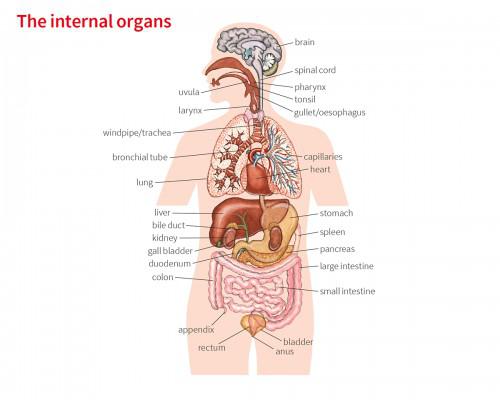
    a part of the body made of several tissues that performs a particular function, such as the heart or liver

    The liver is the largest internal organ in the body.

    간은 신체에서 가장 큰 내부 장기입니다.

    Severe sepsis can lead to multiple organ failure.

    유의어body partmemberinstrumentpublicationvehicleagency
    반의어wholeentiretyinanimate object
  2. 2

    collagen(noun)

    /ˈkɑːlədʒən/

    콜라겐

    the main structural protein in skin, bone, tendons and other connective tissues

    Tightly packed collagen fibers give tendons their great strength.

    촘촘하게 배열된 콜라겐 섬유 덕분에 힘줄은 매우 강한 힘을 지닌다.

    Collagen production in the skin decreases with age.

    유의어proteinstructural protein
    반의어None (Collagen does not have a direct antonym. Focus is on things that degrade/inhibit it)
  3. 3

    connective tissue(noun)

    /kəˈnektɪv ˈtɪʃuː/

    결합조직, 연결조직

    tissue that supports, connects and protects other tissues and organs, such as bone, cartilage, fat and tendons

    Tendons and ligaments are made of dense connective tissue.

    힘줄과 인대는 치밀결합조직으로 이루어져 있다.

    Lupus is a disease that mainly attacks the connective tissue.

    유의어supporting tissuebinding tissue
    반의어epithelial tissuenervous tissuemuscle tissue
  4. 4

    cytoplasm(noun)

    /ˈsaɪtəʊplæzəm/

    세포질

    the jelly-like material inside a cell, around the nucleus, where many cell activities take place

    Many chemical reactions of the cell take place in the cytoplasm.

    세포의 많은 화학 반응이 세포질에서 일어난다.

    The stain colored the cytoplasm pink and the nucleus blue.

    유의어protoplasmcell substance
    반의어nucleuscell membrane
  5. 5

    epithelium(noun)

    /,epi'θ:ljəm/

    상피, 상피조직

    the layer of cells that covers the body surface and lines organs, vessels and cavities

    The epithelium of the airways is covered with tiny hairs called cilia.

    기도의 상피는 섬모라고 불리는 미세한 털로 덮여 있다.

    Most cancers, such as skin and lung cancer, begin in the epithelium.

    유의어tissue liningsurface layercovering
    반의어none
  6. 6

    gland(noun)

    /ɡlænd/

    샘, 선

    an organ or group of cells that produces and releases substances such as hormones, sweat or saliva

    The thyroid gland produces hormones that control metabolism.

    갑상샘은 신진대사를 조절하는 호르몬을 만든다.

    Sweat glands in the skin help to regulate body temperature.

    유의어organnodeacinus
    반의어None
  7. 7

    stem cell(noun)

    /stem sel/

    줄기세포

    an unspecialized cell that can divide and develop into many different types of cell

    Bone marrow contains stem cells that produce all types of blood cells.

    골수에는 모든 종류의 혈액 세포를 만들어 내는 줄기세포가 들어 있다.

    Researchers are testing stem cells to repair damaged heart muscle.

    유의어progenitor cellmother cell
    반의어differentiated cellspecialized cell
  8. 8

    mitochondrion(noun)

    /ˌmaɪtəʊˈkɑːndriən/

    미토콘드리아

    a tiny structure inside a cell that produces energy from food; the plural is mitochondria

    Muscle cells contain many mitochondria because they need a lot of energy.

    근육 세포는 에너지가 많이 필요하기 때문에 미토콘드리아를 많이 가지고 있다.

    Some rare inherited diseases are caused by faulty mitochondria.

    유의어powerhouseorganelle
    반의어none
  9. 9

    homeostasis(noun)

    ˌhoʊmioʊˈsteɪsəs

    항상성

    the body's ability to keep its internal conditions, such as temperature and blood sugar, stable

    The kidneys play a key role in maintaining fluid homeostasis.

    신장은 체액 항상성을 유지하는 데 핵심적인 역할을 한다.

    Severe illness such as sepsis can disturb the body's homeostasis.

    유의어equilibriumstabilitybalance
    반의어imbalanceinstability
  10. 10

    cell membrane(noun)

    /ˈsel ˌmembreɪn/

    세포막, 형질막

    the thin outer layer of a cell that controls what enters and leaves it

    Small molecules such as oxygen pass easily across the cell membrane.

    산소와 같은 작은 분자는 세포막을 쉽게 통과한다.

    Some antibiotics work by damaging the cell membrane of bacteria.

  11. 11

    nucleus(noun)

    /ˈnjuːkliəs/

    세포핵, 핵

    the central part of a cell that contains its genetic material (DNA) and controls its activity

    Red blood cells lose their nucleus as they mature.

    적혈구는 성숙하면서 핵을 잃는다.

    Under the microscope, the cancer cells had large, dark nuclei.

  12. 12

    organelle(noun)

    /ˌɔːɡəˈnel/

    세포소기관, 세포기관

    a small structure inside a cell that has a particular job, such as the nucleus or a mitochondrion

    Each organelle performs a specific function within the cell.

    각 세포소기관은 세포 안에서 특정한 기능을 수행한다.

    Electron microscopes allow us to see organelles in great detail.

  13. 13

    tissue(noun)

    /ˈtɪʃuː/

    조직

    a group of similar cells that work together to do a particular job in the body

    The surgeon removed a small piece of tissue for testing.

    외과의사는 검사를 위해 조직 일부를 소량 절제했다.

    Deep burns can damage the skin and the tissue underneath.

  14. 14

    adipose tissue(noun)

    /ˌædɪpəʊs ˈtɪʃuː/

    지방조직

    body tissue that stores fat and helps to keep the body warm and protect organs

    Adipose tissue is found under the skin and around internal organs.

    지방조직은 피부 아래와 내부 장기 주변에서 발견된다.

    Excess adipose tissue around the waist increases the risk of heart disease.

  15. 15

    mucous membrane(noun)

    /ˌmjuːkəs ˈmembreɪn/

    점막

    a moist layer of tissue that lines passages such as the mouth, nose and gut and produces mucus

    The mucous membranes of her mouth looked pale and dry.

    그녀의 구강 점막은 창백하고 건조해 보였다.

    Viruses often enter the body through the mucous membrane of the nose.