Aralin 13/13 · 15 salita · 0 natutunan
Monetary policy
Patakarang pananalapi
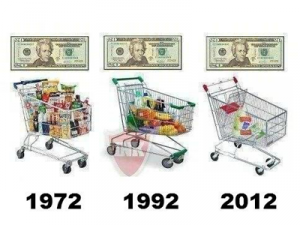
implasyon
a general rise in the prices of goods and services, which reduces the value of money
The government aims to keep inflation below 4.5 per cent.
Layunin ng pamahalaan na panatilihing mas mababa sa 4.5 porsyento ang implasyon.
High inflation reduces the real return on savings.
Kasingkahuluganprice increasecost-pushdemand-pulldevaluationKasalungatdeflationprice stabilitydeplasyon, pagbaba ng presyo
a general fall in prices over a period, often linked to weak demand in the economy
Deflation can make people delay spending because they expect lower prices.
Maaaring ipagpaliban ng mga tao ang paggastos dahil sa deplasyon, sapagkat inaasahan nilang bababa pa ang mga presyo.
The central bank cut rates to avoid deflation.
Kasingkahuluganprice decreaseeconomic contractionKasalungatinflationeconomic expansiontantos ng diskwento, tantos ng rediskwento
the interest rate a central bank charges when it discounts valuable papers, such as bills, for commercial banks
The rediscount rate is usually lower than the refinancing rate.
Karaniwang mas mababa ang tantos ng rediskwento kaysa sa tantos ng muling pagpopondo.
A cut in the discount rate makes short-term funding cheaper for banks.
Kasingkahuluganinterest rateyield rateKasalungatprime ratebase rateliquidity, likididad, kakayahang magamit na salapi
the availability of cash, or how easily an asset can be turned into cash without losing value
The central bank injected liquidity to calm the money market.
Nagpasok ang sentral na bangko ng likididad upang pakalmahin ang money market.
Government bonds have high liquidity because they are easy to sell.
KasingkahuluganSolvencyCash flowConvertibilityMarketabilityKasalungatIlliquidityInsolvencyStagnationFrozen assetspatakarang pananalapi, patakarang monetaryo
the actions of a central bank to control the money supply and interest rates in order to keep prices stable
The central bank tightened monetary policy to fight inflation.
Hinigpitan ng sentral na bangko ang patakarang pananalapi para labanan ang implasyon.
Loose monetary policy helped businesses borrow more cheaply.
KasingkahuluganEconomic policyFinancial regulationInterest rate managementKasalungatFiscal policypatakarang rate ng interes, rate ng patakaran
the key interest rate set by a central bank to guide other interest rates in the economy
The State Bank kept its policy rates unchanged this quarter.
Hindi binago ng State Bank ang mga patakarang rate ng interes nito ngayong kuwarter.
Commercial banks lowered lending rates after the policy rate cut.
rate ng muling pagpopondo, rate ng muling pagpapautang
the interest rate at which the central bank lends to commercial banks against eligible collateral
The central bank cut the refinancing rate to 4.5 per cent.
Ibinaba ng bangko sentral ang rate ng muling pagpopondo sa 4.5 porsiyento.
Banks borrow at the refinancing rate when they are short of funds.
kinakailangang reserba, reserbang sapilitan
the percentage of deposits that banks must keep at the central bank and cannot lend
The reserve requirement for short-term dong deposits is 3 per cent.
Ang kinakailangang reserba para sa mga panandaliang deposito sa dong ay 3 porsiyento.
Lowering the reserve requirement gives banks more money to lend.
operasyon sa bukás na pamilihan
the buying and selling of government securities by a central bank to add or remove money in the banking system
The central bank injected liquidity through open market operations.
Nagpasok ang bangko sentral ng pondo sa sistema sa pamamagitan ng operasyon sa bukás na pamilihan.
Through open market operations, the State Bank sold bills to absorb excess cash.
suplay ng salapi, suplay ng pera
the total amount of money circulating in an economy at a particular time
Rapid growth in money supply can push up inflation.
Ang mabilis na paglago ng suplay ng salapi ay maaaring magpataas ng implasyon.
The central bank reduced money supply by raising interest rates.
pamilihang interbangko, pamilihan sa pagitan ng mga bangko
the market in which banks lend money to each other, usually for short periods
Banks short of cash borrow overnight on the interbank market.
Ang mga bangkong kapos sa pera ay umuutang nang magdamag sa pamilihang interbangko.
Liquidity on the interbank market was tight before Tet.
rate ng interes sa interbangko, rate ng interbangko
the interest rate at which banks lend to each other
The overnight interbank rate jumped to 6 per cent last week.
Tumaas sa 6 na porsiyento ang rate ng interes sa interbangko para sa magdamag na pautang noong nakaraang linggo.
A falling interbank rate shows that banks have plenty of cash.
paglago ng kredito, paglaki ng pautang
the rate at which the total amount of bank lending in an economy increases
The central bank set a credit growth target of 15 per cent for the year.
Nagtakda ang bangko sentral ng target na paglago ng kredito na 15 porsiyento para sa taon.
Strong credit growth helped the bank increase its profit.
kwantitatibong pagluluwag, pagluluwag na kwantitatibo
a policy in which a central bank creates money to buy large amounts of bonds and support the economy
Several major central banks used quantitative easing after the financial crisis.
Gumamit ng kwantitatibong pagluluwag ang ilang malalaking bangko sentral matapos ang krisis pampinansyal.
Quantitative easing pushed long-term interest rates down in many developed economies.
huling tagapagpautang, huling takbuhan sa pautang
a central bank's role of lending to banks in trouble when no one else will, to protect the financial system
The central bank acted as lender of last resort during the bank run.
Kumilos ang sentral na bangko bilang huling tagapagpautang noong dumagsa ang mga depositor para bawiin ang kanilang pera.
As lender of last resort, the State Bank provided special loans to the weak bank.