Lektion 13/13 · 15 Wörter · 0 gelernt
Monetary policy
Geldpolitik
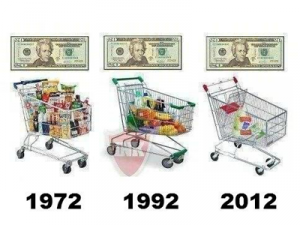
die Inflation, die Teuerung
a general rise in the prices of goods and services, which reduces the value of money
The government aims to keep inflation below 4.5 per cent.
Die Regierung strebt an, die Inflation unter 4,5 Prozent zu halten.
High inflation reduces the real return on savings.
Synonymeprice increasecost-pushdemand-pulldevaluationAntonymedeflationprice stabilitydie Deflation
a general fall in prices over a period, often linked to weak demand in the economy
Deflation can make people delay spending because they expect lower prices.
Deflation kann dazu führen, dass Menschen Ausgaben aufschieben, weil sie niedrigere Preise erwarten.
The central bank cut rates to avoid deflation.
Synonymeprice decreaseeconomic contractionAntonymeinflationeconomic expansionder Diskontsatz, der Rediskontsatz
the interest rate a central bank charges when it discounts valuable papers, such as bills, for commercial banks
The rediscount rate is usually lower than the refinancing rate.
Der Rediskontsatz liegt in der Regel unter dem Refinanzierungszinssatz.
A cut in the discount rate makes short-term funding cheaper for banks.
Synonymeinterest rateyield rateAntonymeprime ratebase ratedie Liquidität
the availability of cash, or how easily an asset can be turned into cash without losing value
The central bank injected liquidity to calm the money market.
Die Zentralbank stellte Liquidität bereit, um den Geldmarkt zu beruhigen.
Government bonds have high liquidity because they are easy to sell.
SynonymeSolvencyCash flowConvertibilityMarketabilityAntonymeIlliquidityInsolvencyStagnationFrozen assetsdie Geldpolitik
the actions of a central bank to control the money supply and interest rates in order to keep prices stable
The central bank tightened monetary policy to fight inflation.
Die Zentralbank straffte die Geldpolitik, um die Inflation zu bekämpfen.
Loose monetary policy helped businesses borrow more cheaply.
SynonymeEconomic policyFinancial regulationInterest rate managementAntonymeFiscal policyder Leitzins
the key interest rate set by a central bank to guide other interest rates in the economy
The State Bank kept its policy rates unchanged this quarter.
Die Staatsbank ließ ihre Leitzinsen in diesem Quartal unverändert.
Commercial banks lowered lending rates after the policy rate cut.
der Refinanzierungszins, der Refinanzierungssatz
the interest rate at which the central bank lends to commercial banks against eligible collateral
The central bank cut the refinancing rate to 4.5 per cent.
Die Zentralbank senkte den Refinanzierungszins auf 4,5 Prozent.
Banks borrow at the refinancing rate when they are short of funds.
die Mindestreserve, der Mindestreservesatz
the percentage of deposits that banks must keep at the central bank and cannot lend
The reserve requirement for short-term dong deposits is 3 per cent.
Der Mindestreservesatz für kurzfristige Dong-Einlagen beträgt 3 Prozent.
Lowering the reserve requirement gives banks more money to lend.
die Offenmarktgeschäfte, die Offenmarktpolitik
the buying and selling of government securities by a central bank to add or remove money in the banking system
The central bank injected liquidity through open market operations.
Die Zentralbank führte dem Markt durch Offenmarktgeschäfte Liquidität zu.
Through open market operations, the State Bank sold bills to absorb excess cash.
die Geldmenge
the total amount of money circulating in an economy at a particular time
Rapid growth in money supply can push up inflation.
Ein schnelles Wachstum der Geldmenge kann die Inflation anheizen.
The central bank reduced money supply by raising interest rates.
der Interbankenmarkt, der Geldmarkt unter Banken
the market in which banks lend money to each other, usually for short periods
Banks short of cash borrow overnight on the interbank market.
Banken mit Liquiditätsmangel leihen sich auf dem Interbankenmarkt Geld über Nacht.
Liquidity on the interbank market was tight before Tet.
der Interbankenzins, der Interbankensatz
the interest rate at which banks lend to each other
The overnight interbank rate jumped to 6 per cent last week.
Der Tagesgeld-Interbankenzins sprang letzte Woche auf 6 Prozent.
A falling interbank rate shows that banks have plenty of cash.
das Kreditwachstum
the rate at which the total amount of bank lending in an economy increases
The central bank set a credit growth target of 15 per cent for the year.
Die Zentralbank setzte für das Jahr ein Kreditwachstumsziel von 15 Prozent.
Strong credit growth helped the bank increase its profit.
die quantitative Lockerung, das Quantitative Easing
a policy in which a central bank creates money to buy large amounts of bonds and support the economy
Several major central banks used quantitative easing after the financial crisis.
Mehrere große Zentralbanken setzten nach der Finanzkrise auf quantitative Lockerung.
Quantitative easing pushed long-term interest rates down in many developed economies.
der Kreditgeber letzter Instanz
a central bank's role of lending to banks in trouble when no one else will, to protect the financial system
The central bank acted as lender of last resort during the bank run.
Die Zentralbank fungierte während des Ansturms auf die Banken als Kreditgeber letzter Instanz.
As lender of last resort, the State Bank provided special loans to the weak bank.