Leçon 13/13 · 15 mots · 0 appris
Monetary policy
Politique monétaire
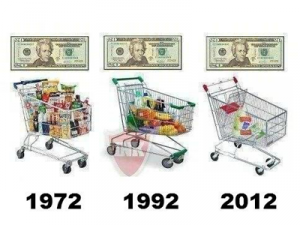
inflation
a general rise in the prices of goods and services, which reduces the value of money
The government aims to keep inflation below 4.5 per cent.
Le gouvernement vise à maintenir l'inflation sous 4,5 pour cent.
High inflation reduces the real return on savings.
Synonymesprice increasecost-pushdemand-pulldevaluationAntonymesdeflationprice stabilitydéflation
a general fall in prices over a period, often linked to weak demand in the economy
Deflation can make people delay spending because they expect lower prices.
La déflation peut inciter les gens à retarder leurs dépenses, car ils s'attendent à une baisse des prix.
The central bank cut rates to avoid deflation.
Synonymesprice decreaseeconomic contractionAntonymesinflationeconomic expansiontaux d'escompte, taux de réescompte
the interest rate a central bank charges when it discounts valuable papers, such as bills, for commercial banks
The rediscount rate is usually lower than the refinancing rate.
Le taux de réescompte est généralement inférieur au taux de refinancement.
A cut in the discount rate makes short-term funding cheaper for banks.
Synonymesinterest rateyield rateAntonymesprime ratebase rateliquidité, liquidités
the availability of cash, or how easily an asset can be turned into cash without losing value
The central bank injected liquidity to calm the money market.
La banque centrale a injecté des liquidités pour calmer le marché monétaire.
Government bonds have high liquidity because they are easy to sell.
SynonymesSolvencyCash flowConvertibilityMarketabilityAntonymesIlliquidityInsolvencyStagnationFrozen assetspolitique monétaire
the actions of a central bank to control the money supply and interest rates in order to keep prices stable
The central bank tightened monetary policy to fight inflation.
La banque centrale a resserré sa politique monétaire pour lutter contre l'inflation.
Loose monetary policy helped businesses borrow more cheaply.
SynonymesEconomic policyFinancial regulationInterest rate managementAntonymesFiscal policytaux directeur
the key interest rate set by a central bank to guide other interest rates in the economy
The State Bank kept its policy rates unchanged this quarter.
La Banque d'État a maintenu ses taux directeurs inchangés ce trimestre.
Commercial banks lowered lending rates after the policy rate cut.
taux de refinancement
the interest rate at which the central bank lends to commercial banks against eligible collateral
The central bank cut the refinancing rate to 4.5 per cent.
La banque centrale a abaissé le taux de refinancement à 4,5 %.
Banks borrow at the refinancing rate when they are short of funds.
réserves obligatoires, taux de réserves obligatoires
the percentage of deposits that banks must keep at the central bank and cannot lend
The reserve requirement for short-term dong deposits is 3 per cent.
Le taux de réserves obligatoires sur les dépôts à court terme en dongs est de 3 %.
Lowering the reserve requirement gives banks more money to lend.
opérations d'open market, opérations d'market ouvert
the buying and selling of government securities by a central bank to add or remove money in the banking system
The central bank injected liquidity through open market operations.
La banque centrale a injecté des liquidités par le biais d'opérations d'open market.
Through open market operations, the State Bank sold bills to absorb excess cash.
masse monétaire, offre de monnaie
the total amount of money circulating in an economy at a particular time
Rapid growth in money supply can push up inflation.
Une forte croissance de la masse monétaire peut faire monter l'inflation.
The central bank reduced money supply by raising interest rates.
marché interbancaire
the market in which banks lend money to each other, usually for short periods
Banks short of cash borrow overnight on the interbank market.
Les banques à court de liquidités empruntent au jour le jour sur le marché interbancaire.
Liquidity on the interbank market was tight before Tet.
taux interbancaire
the interest rate at which banks lend to each other
The overnight interbank rate jumped to 6 per cent last week.
Le taux interbancaire au jour le jour a bondi à 6 % la semaine dernière.
A falling interbank rate shows that banks have plenty of cash.
croissance du crédit, progression des encours de crédit
the rate at which the total amount of bank lending in an economy increases
The central bank set a credit growth target of 15 per cent for the year.
La banque centrale a fixé un objectif de croissance du crédit de 15 % pour l'année.
Strong credit growth helped the bank increase its profit.
assouplissement quantitatif
a policy in which a central bank creates money to buy large amounts of bonds and support the economy
Several major central banks used quantitative easing after the financial crisis.
Plusieurs grandes banques centrales ont recouru à l'assouplissement quantitatif après la crise financière.
Quantitative easing pushed long-term interest rates down in many developed economies.
prêteur en dernier ressort
a central bank's role of lending to banks in trouble when no one else will, to protect the financial system
The central bank acted as lender of last resort during the bank run.
La banque centrale a joué le rôle de prêteur en dernier ressort pendant la ruée sur les banques.
As lender of last resort, the State Bank provided special loans to the weak bank.