레슨 6/10 · 15단어 · 외운 단어 0
Mobility, walking aids and orthotics
이동, 보행 보조기구와 보조기
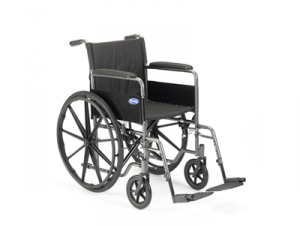
휠체어
a chair with wheels used by people who cannot walk or have great difficulty walking
He uses a lightweight wheelchair after his spinal cord injury.
그는 척수 손상 이후 경량 휠체어를 사용한다.
The occupational therapist checked that the wheelchair fitted through the bathroom door.
유의어invalid chairmobility aidwheelchair반의어able-bodiedambulatory보행, 걸음걸이
the pattern or manner in which a person walks
The physiotherapist watched his gait and noticed he was limping on the left.
물리치료사는 그의 보행을 관찰하다가 왼쪽 다리를 절고 있음을 알아챘다.
Video gait analysis showed that her knee did not straighten during walking.
유의어walkstridesteppace반의어immobilitystillness의지, 보철물
an artificial body part, such as a leg, hand or joint, that replaces one that is missing or damaged
After his below-knee amputation, he learned to walk with a prosthesis.
무릎 아래 절단 수술을 받은 후 그는 의족을 착용하고 걷는 법을 배웠다.
The prosthesis was adjusted because the socket rubbed his skin.
유의어artificial limbreplacement limbprosthetic device반의어natural limboriginal limb부목, 스플린트
a rigid support fixed to a body part to keep it still, protect it or hold it in a good position
She wears a resting hand splint at night to prevent finger contractures.
그녀는 손가락 구축을 예방하기 위해 밤에 휴식용 손 부목을 착용한다.
The therapist made a custom thermoplastic splint for his wrist.
유의어supportbracebandagecast반의어none보행器, 보행 보조기
a light metal frame with four legs that a person holds and moves forward for support when walking
He can walk about 20 metres with a walking frame.
그는 보행器를 사용하면 약 20미터를 걸을 수 있다.
Adjust the walking frame so that the handles are level with the wrists.
유의어walkerrollator목발
a pair of long sticks placed under the arms or held at the forearm to take weight off an injured leg
He will need crutches for about six weeks after the ankle fracture.
그는 발목 골절 후 약 6주 동안 목발이 필요할 것이다.
Check that the crutches are the right height before teaching stair climbing.
유의어supportassistanceaid반의어unsupportedunaidedindependent송영, 이동 서비스, 트랜스퍼
a journey arranged for travellers between two places, such as from the airport to their hotel
The price includes return airport transfers in an air-conditioned car.
가격에는 에어컨이 설치된 차량을 이용한 왕복 공항 송영이 포함되어 있습니다.
Your transfer to the hotel takes about forty minutes.
낙상 예방
actions taken to reduce the risk of patients falling and injuring themselves in hospital
Elderly patients are assessed for fall risk and fall prevention on admission.
고령 환자는 입원 시 낙상 위험도와 낙상 예방 필요성을 평가한다.
Bed rails and non-slip socks are part of our fall prevention program.
보행 훈련, 보행 재활
therapy that teaches a patient to walk safely and correctly again, often with aids or physical support
Gait training started in the parallel bars two days after surgery.
수술 2일 후부터 평행봉에서 보행 훈련을 시작했다.
Treadmill gait training with body-weight support is used after spinal cord injury.
체중 부하, 체중 지지
the amount of body weight a patient is allowed to put through an injured or operated leg
The surgeon allowed partial weight-bearing on the left leg for six weeks.
집도의는 왼쪽 다리에 6주 동안 부분 체중 부하를 허용했다.
Teach the patient non-weight-bearing walking with crutches before discharge.
환자 이송 리프트, 환자 리프트
a mechanical lifting device with a sling, used to move patients who cannot bear weight safely
Two staff members are needed when using the patient hoist.
환자 이송 리프트를 사용할 때는 직원 두 명이 필요하다.
A patient hoist protects both the patient and the nurses from injury during transfers.
보조기, 정형외과용 보조기
an external device such as a brace or splint that supports, corrects or protects a part of the body
An ankle-foot orthosis was made to stop his toes dragging when walking.
걸을 때 발끝이 끌리지 않도록 그에게 단하지 보조기를 제작해 주었다.
The orthosis should be checked regularly for pressure marks on the skin.