Lição 6/10 · 15 palavras · 0 aprendidas
Mobility, walking aids and orthotics
Mobilidade, auxiliares de marcha e órteses
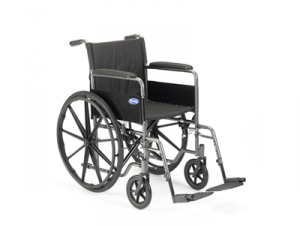
cadeira de rodas
a chair with wheels used by people who cannot walk or have great difficulty walking
He uses a lightweight wheelchair after his spinal cord injury.
Ele usa uma cadeira de rodas leve após a lesão na medula espinhal.
The occupational therapist checked that the wheelchair fitted through the bathroom door.
Sinônimosinvalid chairmobility aidwheelchairAntônimosable-bodiedambulatorymarcha, modo de andar
the pattern or manner in which a person walks
The physiotherapist watched his gait and noticed he was limping on the left.
O fisioterapeuta observou a marcha dele e notou que ele mancava do lado esquerdo.
Video gait analysis showed that her knee did not straighten during walking.
SinônimoswalkstridesteppaceAntônimosimmobilitystillnessprótese
an artificial body part, such as a leg, hand or joint, that replaces one that is missing or damaged
After his below-knee amputation, he learned to walk with a prosthesis.
Após a amputação abaixo do joelho, ele aprendeu a andar com uma prótese.
The prosthesis was adjusted because the socket rubbed his skin.
Sinônimosartificial limbreplacement limbprosthetic deviceAntônimosnatural limboriginal limbórtese, tala
a rigid support fixed to a body part to keep it still, protect it or hold it in a good position
She wears a resting hand splint at night to prevent finger contractures.
Ela usa uma órtese de repouso para a mão à noite para prevenir contraturas dos dedos.
The therapist made a custom thermoplastic splint for his wrist.
SinônimossupportbracebandagecastAntônimosnoneandador
a light metal frame with four legs that a person holds and moves forward for support when walking
He can walk about 20 metres with a walking frame.
Ele consegue andar cerca de 20 metros com um andador.
Adjust the walking frame so that the handles are level with the wrists.
Sinônimoswalkerrollatormuletas
a pair of long sticks placed under the arms or held at the forearm to take weight off an injured leg
He will need crutches for about six weeks after the ankle fracture.
Ele precisará de muletas por cerca de seis semanas após a fratura do tornozelo.
Check that the crutches are the right height before teaching stair climbing.
SinônimossupportassistanceaidAntônimosunsupportedunaidedindependenttraslado
a journey arranged for travellers between two places, such as from the airport to their hotel
The price includes return airport transfers in an air-conditioned car.
O preço inclui traslados de ida e volta do aeroporto em carro com ar-condicionado.
Your transfer to the hotel takes about forty minutes.
prevenção de quedas
actions taken to reduce the risk of patients falling and injuring themselves in hospital
Elderly patients are assessed for fall risk and fall prevention on admission.
Os pacientes idosos são avaliados quanto ao risco de queda e à prevenção de quedas na admissão.
Bed rails and non-slip socks are part of our fall prevention program.
treino de marcha, treinamento de marcha
therapy that teaches a patient to walk safely and correctly again, often with aids or physical support
Gait training started in the parallel bars two days after surgery.
O treino de marcha começou nas barras paralelas dois dias após a cirurgia.
Treadmill gait training with body-weight support is used after spinal cord injury.
deambulação
walking or moving about, especially for a patient who is recovering from illness or surgery
Early ambulation after surgery reduces the risk of blood clots.
A deambulação precoce após a cirurgia reduz o risco de trombose.
He achieved independent ambulation with a walking stick by the second week.
descarga de peso, carga
the amount of body weight a patient is allowed to put through an injured or operated leg
The surgeon allowed partial weight-bearing on the left leg for six weeks.
O cirurgião permitiu descarga parcial de peso na perna esquerda por seis semanas.
Teach the patient non-weight-bearing walking with crutches before discharge.
andador com rodas, rolator
a walking frame with wheels, hand brakes and often a seat
A rollator lets her walk to the shops and rest on the seat when tired.
O andador com rodas permite que ela vá às compras a pé e descanse no assento quando estiver cansada.
Make sure the patient can use the rollator brakes before going outdoors.
guincho de transferência, elevador de pacientes
a mechanical lifting device with a sling, used to move patients who cannot bear weight safely
Two staff members are needed when using the patient hoist.
São necessários dois profissionais para usar o guincho de transferência.
A patient hoist protects both the patient and the nurses from injury during transfers.
órtese
an external device such as a brace or splint that supports, corrects or protects a part of the body
An ankle-foot orthosis was made to stop his toes dragging when walking.
Foi confeccionada uma órtese suropodálica para impedir que os dedos dos pés dele arrastassem ao andar.
The orthosis should be checked regularly for pressure marks on the skin.