Leçon 4/9 · 17 mots · 0 appris
Four examinations: pulse and tongue
Les quatre examens : pouls et langue
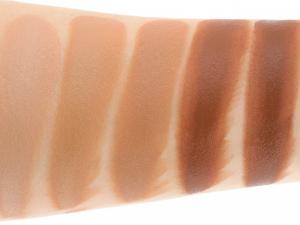
teint, couleur du visage
the natural color and condition of the skin on the face, which practitioners observe to judge health
A sallow complexion often suggests spleen deficiency.
Un teint jaunâtre évoque souvent un déficit de la rate.
The doctor noted her pale complexion and dull eyes.
Synonymesskin toneskin colorappearancehueAntonymesnonepalpation
examining the body by feeling it carefully with the hands to check organs, lumps or areas of pain
Palpation of the abdomen revealed an enlarged liver.
La palpation de l'abdomen a révélé un foie augmenté de volume.
On palpation, the lump was firm and did not move.
Synonymesfeelingexamination by touchAntonymesvisual inspectionauscultationdiagnostic par le pouls, prise du pouls chinoise
feeling the radial pulse at three positions on each wrist to assess the organs and the nature of an illness
Pulse diagnosis takes years of practice to master.
Le diagnostic par le pouls demande des années de pratique pour être maîtrisé.
During pulse diagnosis, the patient's wrist should rest at heart level.
SynonymesPulse readingSphygmologyAntonymesNonediagnostic par la langue, examen de la langue
examining the color, shape, coating and moisture of the tongue to assess the body's condition
Tongue diagnosis should be done in natural daylight.
Le diagnostic par la langue doit être réalisé à la lumière naturelle du jour.
Tongue diagnosis showed a red tongue with a thin yellow coating.
Synonymesglossoscopylingual examinationAntonymesNoneinspection
the first step of a physical examination, in which the doctor looks carefully at the patient's body
On inspection, the patient looked pale and short of breath.
À l'inspection, le patient paraissait pâle et essoufflé.
Inspection of the abdomen showed no visible swelling or scars.
les quatre examens, les quatre temps de l'examen
the four diagnostic methods of traditional medicine: inspection, listening and smelling, inquiry, and palpation
A full diagnosis combines information from all four examinations.
Un diagnostic complet associe les informations issues des quatre examens.
The four examinations take about twenty minutes at the first visit.
auscultation et olfaction
the diagnostic method of listening to the voice, breathing and cough and noticing body or breath odors
Listening and smelling revealed a weak voice and sour breath.
L'auscultation et l'olfaction ont révélé une voix faible et une haleine acide.
A loud cough with thick phlegm is noted during listening and smelling.
interrogatoire
in traditional medicine, the diagnostic method of asking about symptoms, sleep, appetite, sweating, bowels and medical history
During inquiry, the doctor asked about thirst and sleep quality.
Lors de l'interrogatoire, le médecin a posé des questions sur la soif et la qualité du sommeil.
The classic ten questions guide the practitioner during inquiry.
corps de la langue
the tongue itself, whose color, shape and texture reflect the state of qi, blood and the organs
A pale tongue body suggests blood or yang deficiency.
Un corps de la langue pâle évoque un déficit de sang ou de yang.
Tooth marks on the edge of the tongue body point to spleen weakness.
enduit lingual, saburre linguale
the thin layer on the surface of the tongue, which shows the nature and depth of a pathogen
A thick, greasy tongue coating indicates dampness.
Un enduit lingual épais et gras indique la présence d'humidité.
A yellow tongue coating usually suggests heat.
pouls superficiel
a pulse felt easily with light pressure that weakens with deeper pressure; it usually shows an exterior pattern
A floating pulse in a patient with chills suggests a common cold.
Un pouls superficiel chez un patient frissonnant évoque un rhume.
The floating pulse became deeper as the illness progressed.
pouls profond
a pulse that can only be felt with firm pressure, usually showing an interior pattern
A deep pulse indicates that the illness is in the interior.
Un pouls profond indique que la maladie est située à l'intérieur.
Her deep, weak pulse suggested kidney deficiency.
pouls lent
a pulse with fewer than four beats per breath of the practitioner, usually a sign of cold
A slow pulse with cold limbs suggests a cold pattern.
Un pouls lent associé à des membres froids évoque un syndrome de froid.
Well-trained athletes may have a slow pulse without any illness.
pouls tendu, pouls en corde
a long, tight pulse that feels like a guitar string, often linked to liver disorders and pain
A wiry pulse is common in patients with stress and liver qi stagnation.
Un pouls tendu est fréquent chez les patients souffrant de stress et de stagnation du qi du foie.
The wiry pulse was strongest at the left middle position.
pouls glissant
a smooth, flowing pulse that feels like beads rolling on a plate, seen with phlegm, food retention or pregnancy
A slippery pulse is a normal finding in a healthy pregnancy.
Un pouls glissant est une observation normale lors d'une grossesse saine.
Her slippery pulse and greasy coating suggested phlegm-dampness.
pouls filiforme, pouls fin
a very thin but clearly felt pulse, usually showing a deficiency of blood or yin
A thready pulse and a pale tongue indicate blood deficiency.
Un pouls filiforme et une langue pâle indiquent un déficit de sang.
After the long illness, her pulse was thready and weak.