레슨 8/13 · 15단어 · 외운 단어 0
Aircraft parts and cabin layout
항공기 구조와 객실 배치
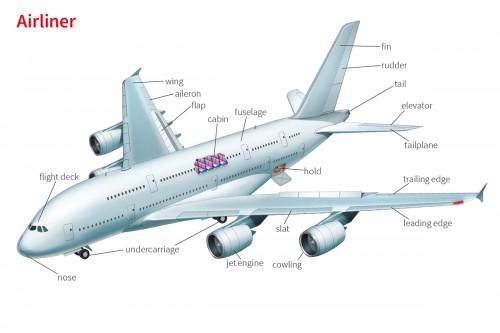
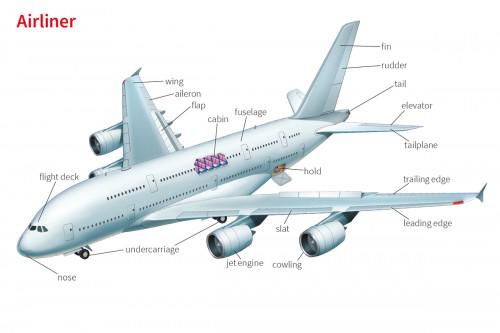
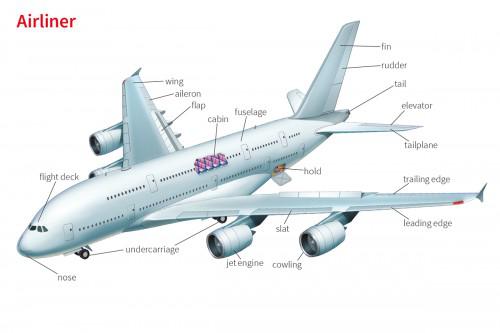
조종실, 콕핏
the area at the front of an aircraft where the pilots sit and fly it; also called the flight deck
The cockpit door stays locked throughout the flight for security reasons.
보안상의 이유로 조종실 문은 비행 내내 잠겨 있다.
Cabin crew must use the interphone before entering the cockpit.
유의어flight deckcontrolspilot's seatdriving seat반의어passenger cabincargo hold보조익, 에일러론
a movable part on the outer back edge of each wing that the pilot uses to roll the aircraft left or right
During the walkaround, the first officer checked both ailerons for damage.
외부 점검 중 부조종사가 양쪽 보조익에 손상이 없는지 확인했다.
The ailerons move in opposite directions to bank the aircraft into a turn.
유의어control surfaceflap반의어None (ailerons don't typically have direct antonyms; ratherother control surfaces provide opposing forces/movement)격벽, 벌크헤드
a wall that separates sections of an aircraft cabin; bulkhead seats are the first row behind it, with extra legroom
Bassinets can only be fitted at the bulkhead, so families with babies sit there.
유아용 바시넷은 벌크헤드에만 설치할 수 있어서 아기를 동반한 가족이 그곳에 앉는다.
Bulkhead seats have no storage under the seat in front.
유의어partitionwallbarriershield반의어openingpassagegateway랜딩 기어, 착륙장치
the wheels and supporting legs under an aircraft that hold it on the ground and fold up after take-off
You may hear a loud noise when the landing gear is lowered.
랜딩 기어를 내릴 때 큰 소리가 들릴 수 있습니다.
The flight returned because a light showed a landing gear problem.
유의어undercarriagegear화장실, 기내 화장실
a toilet, especially the small toilet room on an aircraft
Smoking in the lavatory is forbidden and will set off the smoke detector.
화장실에서의 흡연은 금지되어 있으며 연기 감지기가 작동합니다.
Please use the lavatory at the rear of the cabin during the meal service.
유의어toiletbathroomrestroomwashroom반의어living roombedroom방향타
a movable flat part at the back of an aircraft's tail, or of a boat, used to turn its nose left or right
Pilots use the rudder pedals to keep the aircraft straight in a crosswind.
조종사는 방향타 페달을 사용해 옆바람 속에서 항공기를 직진 상태로 유지한다.
Engineers replaced a damaged hinge on the rudder overnight.
유의어helmsteering mechanismguidecontrol반의어none플랩, 고양력장치
movable panels on the back edge of the wings that are extended to give more lift at low speed for take-off and landing
The pilots extended the flaps as the aircraft slowed down for landing.
조종사들은 착륙을 위해 항공기가 감속하자 플랩을 내렸습니다.
The noise you hear after take-off is the flaps being retracted.
보조동력장치, APU
auxiliary power unit: a small engine, usually in the tail, that supplies power and air conditioning when the main engines are off
The APU was not working, so we needed ground power and air conditioning.
APU가 작동하지 않아 지상 전원과 에어컨이 필요했습니다.
Some airports limit APU use at the gate to reduce noise and emissions.
오버헤드 빈, 머리 위 수하물 보관함
a closed storage space above the passenger seats for cabin bags and coats; also called an overhead locker
Please place smaller items under the seat to leave room in the overhead bins.
오버헤드 빈의 공간을 확보할 수 있도록 작은 짐은 좌석 아래에 두십시오.
Cabin crew closed all overhead bins before the aircraft pushed back.
트레이 테이블, 접이식 테이블
a small folding table attached to the back of the seat in front, used for meals and personal items
Please stow your tray table and bring your seat back to the upright position.
트레이 테이블을 접어 넣고 좌석 등받이를 원래 위치로 세워 주십시오.
Cleaners wipe every tray table and seat pocket between flights.
협동체
describing an aircraft with one aisle in the cabin, such as an A321 or Boeing 737, used mainly on short routes
Our domestic network is flown entirely with narrow-body aircraft.
우리의 국내선 노선망은 전부 협동체 항공기로 운항됩니다.
A narrow-body cabin usually has three seats on each side of the aisle.
광동체
describing a large aircraft with two aisles in the cabin, such as a Boeing 787 or A350, used mainly on long routes
The airline will use wide-body aircraft on the Hanoi to Paris route.
항공사는 하노이–파리 노선에 광동체 항공기를 투입할 예정입니다.
Crew need extra training before they can work on wide-body types.