Aralin 8/13 · 15 salita · 0 natutunan
Aircraft parts and cabin layout
Mga bahagi ng eroplano at ayos ng kabina
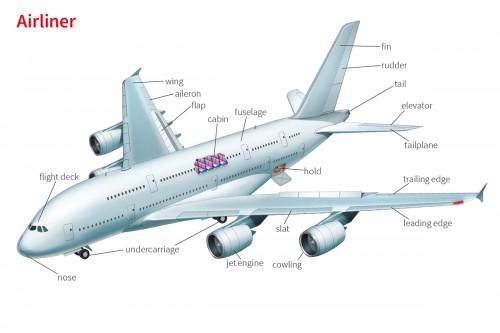
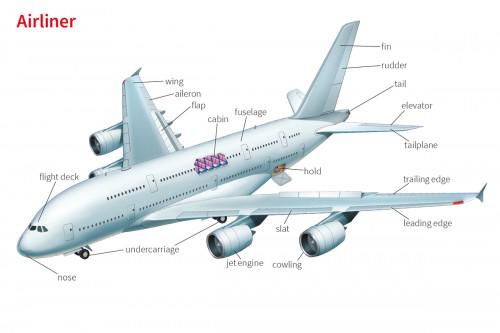
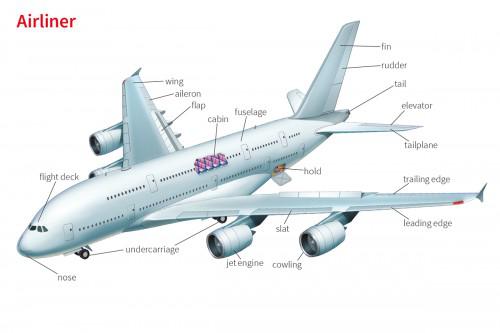
kokpit, kabina ng piloto
the area at the front of an aircraft where the pilots sit and fly it; also called the flight deck
The cockpit door stays locked throughout the flight for security reasons.
Nananatiling nakakandado ang pinto ng kokpit sa buong biyahe para sa seguridad.
Cabin crew must use the interphone before entering the cockpit.
Kasingkahuluganflight deckcontrolspilot's seatdriving seatKasalungatpassenger cabincargo holdaileron, plapa ng pakpak
a movable part on the outer back edge of each wing that the pilot uses to roll the aircraft left or right
During the walkaround, the first officer checked both ailerons for damage.
Sa paglilibot na inspeksyon, sinuri ng pangalawang piloto ang magkabilang aileron kung may pinsala.
The ailerons move in opposite directions to bank the aircraft into a turn.
Kasingkahulugancontrol surfaceflapKasalungatNone (ailerons don't typically have direct antonyms; ratherother control surfaces provide opposing forces/movement)dingding na panghati sa kabina
a wall that separates sections of an aircraft cabin; bulkhead seats are the first row behind it, with extra legroom
Bassinets can only be fitted at the bulkhead, so families with babies sit there.
Sa bulkhead lang maikakabit ang mga duyan ng sanggol, kaya doon umuupo ang mga pamilyang may sanggol.
Bulkhead seats have no storage under the seat in front.
KasingkahuluganpartitionwallbarriershieldKasalungatopeningpassagegatewaykatawan ng eroplano, pusilahe
the long main body of an aircraft that holds the crew, passengers and cargo
Engineers found a small dent on the fuselage near the rear cargo door.
Nakakita ang mga inhinyero ng maliit na lukot sa katawan ng eroplano malapit sa likurang pintuan ng kargamento.
The airline's logo is painted along the side of the fuselage.
Kasingkahuluganbodyshellkasangkapang panlapag, gulong ng eroplano
the wheels and supporting legs under an aircraft that hold it on the ground and fold up after take-off
You may hear a loud noise when the landing gear is lowered.
Maaari kang makarinig ng malakas na ingay kapag ibinababa ang kasangkapang panlapag.
The flight returned because a light showed a landing gear problem.
Kasingkahuluganundercarriagegearbanyo, palikuran, kasilyas
a toilet, especially the small toilet room on an aircraft
Smoking in the lavatory is forbidden and will set off the smoke detector.
Ipinagbabawal ang paninigarilyo sa banyo at tutunog ang smoke detector kapag ginawa ito.
Please use the lavatory at the rear of the cabin during the meal service.
KasingkahulugantoiletbathroomrestroomwashroomKasalungatliving roombedroomrudder, timon ng eroplano
a movable flat part at the back of an aircraft's tail, or of a boat, used to turn its nose left or right
Pilots use the rudder pedals to keep the aircraft straight in a crosswind.
Ginagamit ng mga piloto ang rudder pedal upang panatilihing tuwid ang eroplano kapag may hanging pahalang.
Engineers replaced a damaged hinge on the rudder overnight.
Kasingkahuluganhelmsteering mechanismguidecontrolKasalungatnonepakpak, pakpak ng eroplano
one of the two long flat parts on the sides of an aircraft that lift it into the air and usually hold fuel
Passengers in the exit rows over the wing must be able to open the doors.
Ang mga pasaherong nasa exit row sa ibabaw ng pakpak ay dapat na kayang magbukas ng mga pinto.
The engineer checked the wing for ice before departure.
flaps
movable panels on the back edge of the wings that are extended to give more lift at low speed for take-off and landing
The pilots extended the flaps as the aircraft slowed down for landing.
Inilabas ng mga piloto ang mga flaps habang bumabagal ang eroplano para lumapag.
The noise you hear after take-off is the flaps being retracted.
APU, pantulong na yunit ng kuryente
auxiliary power unit: a small engine, usually in the tail, that supplies power and air conditioning when the main engines are off
The APU was not working, so we needed ground power and air conditioning.
Hindi gumagana ang APU, kaya kailangan namin ng ground power at air conditioning.
Some airports limit APU use at the gate to reduce noise and emissions.
overhead bin, lalagyan sa itaas ng upuan
a closed storage space above the passenger seats for cabin bags and coats; also called an overhead locker
Please place smaller items under the seat to leave room in the overhead bins.
Pakilagay po ang mas maliliit na gamit sa ilalim ng upuan upang magkaroon ng espasyo sa mga overhead bin.
Cabin crew closed all overhead bins before the aircraft pushed back.
tray table, natitiklop na mesa
a small folding table attached to the back of the seat in front, used for meals and personal items
Please stow your tray table and bring your seat back to the upright position.
Pakitiklop po ang inyong tray table at ibalik sa patayong posisyon ang sandalan ng upuan.
Cleaners wipe every tray table and seat pocket between flights.
seat pitch, pagitan ng hanay ng upuan
the distance between a point on one seat and the same point on the seat in front, which shows legroom
Our new economy seats have a seat pitch of 31 inches.
Ang aming mga bagong economy seat ay may seat pitch na 31 pulgada.
Low-cost carriers often reduce seat pitch to add more rows.
narrow-body, makitid ang katawan
describing an aircraft with one aisle in the cabin, such as an A321 or Boeing 737, used mainly on short routes
Our domestic network is flown entirely with narrow-body aircraft.
Ang aming domestic network ay ganap na pinalilipad gamit ang mga narrow-body na eroplano.
A narrow-body cabin usually has three seats on each side of the aisle.
wide-body, malapad ang katawan
describing a large aircraft with two aisles in the cabin, such as a Boeing 787 or A350, used mainly on long routes
The airline will use wide-body aircraft on the Hanoi to Paris route.
Gagamit ang airline ng mga wide-body na eroplano sa rutang Hanoi–Paris.
Crew need extra training before they can work on wide-body types.